








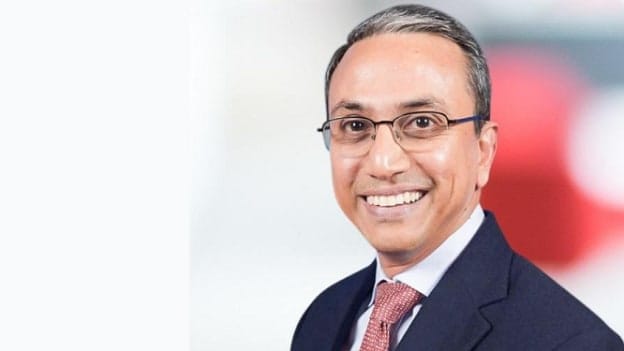
Satish Shankar, the Regional Managing Partner of Bain & Company Asia-Pacific, shares his thoughts on the accelerated evolution of workforce management as a result of COVID-19.
Satish is the leader of Bain's APAC Agribusiness practice, as well as an expert in the firm's Advanced Manufacturing & Services, Airlines & Transportation, Energy & Natural Resources, and Mergers & Acquisitions practices. He joined Bain in 1997 and his career has spanned a wide range of engagements, fields of expertise, and clients.
Here are the excerpts of the interview.
With the new normal shaping the future of HR, how do you see the larger HR landscape evolve in 2021? How should talent leaders reimagine workforce management?
We’ve seen the full power of HR at its best on display over the last nine months. The best teams have demonstrated their ability to stabilize challenges in a very dynamic and uncertain environment, to re-tool in fundamental ways for long-term shifts, and to bring a very personal touch to what has ultimately been the worst global humanitarian crisis since the Second World War. In short, the best teams have proven they can manage, strategize, and inspire at the same time.
It is these same capabilities that will position the best HR teams to drive strategic differentiation for their organizations going forward—installing what my colleagues have called a ‘new deal for talent’. At the crux of this new deal is a shift away from traditional professional modes of management toward talent management models that promote ‘scale insurgency’—speed, innovation, customer intimacy, ecosystem partnerships, and flexible capital structures and scale. Mission-critical roles closer to the front-lines, spiky leaders vs. ‘general managers’, agile teams that swarm problems with a test and learn methodology, the use of networks and platform partners to amplify innovation, ‘career passports’ instead of ladders, and mission-driven firm objectives are all more critical than ever in the new era.
What are some of the top questions that leaders need to ask to prepare the workforce for the future of work as we strive to come out stronger from this pandemic?
COVID in many ways forced us to look at the ‘new deal’ in earnest and accelerate our movement towards it—especially in terms of mission-critical roles at the front lines and an agile innovation methodology. As the world returns to ‘normal’, there are a few questions we should ask ourselves to ensure we continue to make progress on our journeys:
- How do we avoid a “snapback” to old ways of working and, at the same time, respond to customer and employee desires for a return to normalcy?
- How do we continue to celebrate the ‘essential’ front line workers as the heroes of our organizations?
- How do we keep up the spirit of agile innovation?
- How do we embrace the benefits of remote work and virtual collaboration while mitigating their downsides?
- What are the most precious elements of our culture and how do we reinforce those with new energy coming out of the pandemic?
- How do we look after the total well-being of our employees as the lines between work and home blur?
Can you share some insights on some of your most impactful initiatives around employee wellness, productivity, and engagement?
Many of the initiatives that made a difference here at Bain during the worst moments of COVID were the result of grassroots innovation at the front lines, scaled up quickly for broad dissemination.
- Productivity: The first thing we did was to ensure everyone was physically enabled for remote work. This involved providing allowances for individuals to set up ergonomic at-home workspaces, accelerating the roll-out of virtual collaboration tools (not only video conferencing but virtual workshopping and agile work planning), and launching a host of crowd-sourced rapid-fire hard skills and soft skills training around remote collaboration. A central team sprinted to make all of this happen within weeks so that we all turned the page of new ways of working in a very short period.
- Engagement: Next, we wanted to keep the Bain spirit alive, so we unleashed the creativity of our teams to find innovative ways to connect. In Australia, we hosted ‘Coffee Roulette’ virtual one-on-ones to keep people connected. In China, we hosted an inspiring learning series in which different team members volunteered to host seminars on a variety of work and non-work related topics. We shifted our culture-building off-site and team events online, as well. To facilitate continuous innovation and experience-sharing, we asked everyone to post their best tips and ideas online for all to learn from.
- Wellness: As time wore on, we started to see signs of stress, anxiety, and exhaustion. We’ve launched regular pulse check surveys on top of our case team survey cadence to monitor the health of each cohort. We launched personal capacity building training to give individuals the tools to manage these challenges, and trained our leadership team on how to spot the warning signs and respond effectively. In some offices, we hired counselors on retainer to provide confidential drop-in counseling support. In others, we’ve subsidized wellness apps.
What's your take on remote work? Is it going to stick around for longer? What's Bain's plan moving forward in line with this?
We have seen the power of remote work and virtual collaboration. There are some undeniable benefits that we should embrace and build into our BAU. Most importantly, a more flexible hybrid model that allows employees to work where they are most productive at different points in a project life cycle or depending on the nature of the function. We’ve also seen that collaboration can be enhanced in virtual modes—we can ‘bring in’ an expert from the other side of the planet at very short notice, facilitate very effective small group break-outs at the click of a button, conduct workshops through virtual brainstorming tools more efficiently than ever before.
Of course, we also need to be very mindful of the unique challenges and mitigate them. Developing relationships in a new team or with new clients is something we need to over-invest in upfront. Onboarding of new joiners is also an area where selective in-person time will always be very important. Soft apprenticeship also needs to be made much more intentional.
Moving forward, we have developed a playbook that embraces the best of remote and in-person, giving "omnichannel" flexibility to individuals to pick the appropriate mode at different points in time. We expect this to enhance our productivity while driving work-life balance benefits to our teams. It is very important that we not ‘snap back’ to old ways of working, so have designed a change management program to ensure we all build the muscles to talk through these new norms as teams and also manage boundaries as individuals.
One lesson you have learned from this pandemic and why it matters?
Common wisdom suggests and a tremendous amount of empirical data confirms that organizations should never waste a crisis. These are moments in which the ‘cement is soft’ and we have opportunities to innovate, leapfrog, and shake things up. The data shows that it is during downturns that we see the birth or rebirth of the best performing organizations of the following decade. Whether it is your social contract with your talent or your supply chain, it is important to seize the moment not just to crisis-manage but to retool. This is the mindset with which we approach this moment internally at Bain and the spirit with which we are advising our clients across the globe.