







Business
How Bridgestone India is turning institutional knowledge into competitive advantage: Head - HR Sudhir Kulkarni
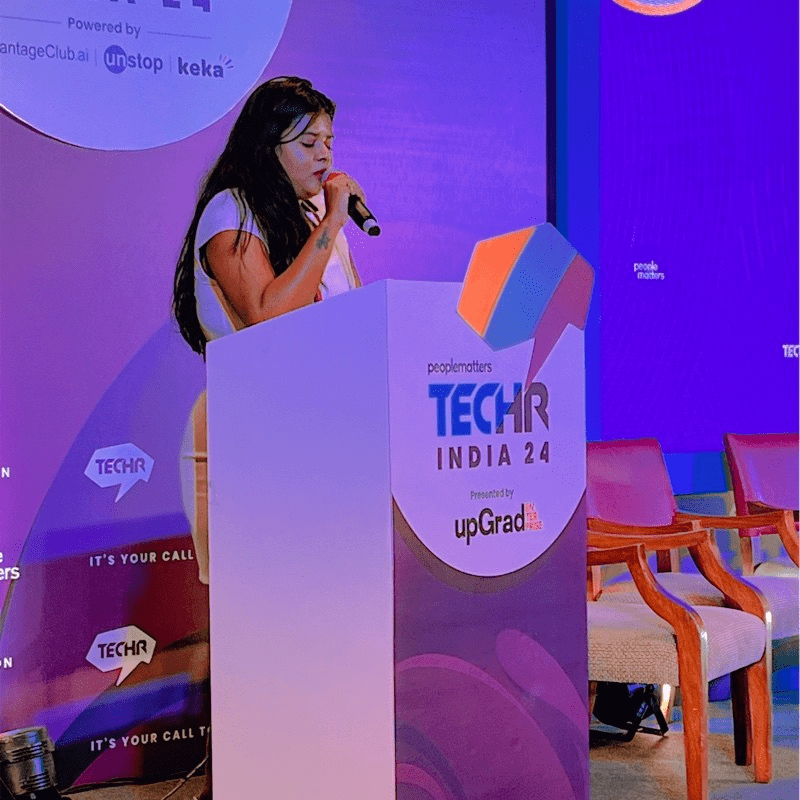


As Bridgestone India marks three decades of operations, Executive Director and Country Head - HR, Admin and CSR Sudhir Kulkarni explains how institutional knowledge, cross-generational collaboration and continuous learning can help established organisations remain adaptable.
For organisations that have operated for decades, experience can be an important source of business knowledge. The challenge is to preserve this institutional memory while remaining open to new ideas, technologies and ways of working.
At Bridgestone India, this balance has become an important part of its organisational evolution over the past three decades. Since establishing its first plant in Pithampur, Dhar district, Madhya Pradesh, the company has expanded its workforce across multiple disciplines while adapting to changing technologies, market expectations and talent requirements.
For Sudhir Kulkarni, Executive Director and Country Head - HR, Admin and CSR, Bridgestone India, the experience accumulated by long-serving employees is not simply a record of the organisation's past. It can also inform how the business responds to future challenges.
Some employees have remained with the company since it began operations in India, with several having completed more than 20 years. Kulkarni believes their understanding of the business, customers and operating environment offers value that cannot be acquired overnight.
However, retaining this knowledge does not mean holding on to established practices without question. The organisation's approach, he explains, involves combining experience with fresh thinking and continuously reviewing how work gets done.
Turning experience into an organisational advantage
Bridgestone India's long-serving employees carry an understanding of its business, customer expectations and ecosystem challenges. Kulkarni sees this institutional knowledge as an asset, particularly when experienced employees work alongside younger colleagues.
He explains: "It may come as a surprise to many that Bridgestone India still has employees who have been with us ever since we commenced operations. Some of our teammates have been with us for over twenty years. These teammates are the inheritors of our legacy and are valuable assets because of the knowledge and experience they bring. They, along with other teammates, have developed a good understanding of the business, customer expectations and ecosystem challenges. This knowledge is acquired over time, not overnight."
The opportunity, in his view, lies in ensuring this experience does not become a barrier to new ideas. Experienced employees bring organisational understanding and practical knowledge, while younger talent introduces different perspectives.
"We have a firm conviction that when experienced employees and younger talent work together, newer ideas and fresh thinking emerge. At Bridgestone, we believe there is a lot to be gained when experienced employees and younger talent work together. Older employees bring a firm grounding in corporate culture and ethos, coupled with a clear perspective and practical knowledge, while new talent brings fresh ideas."
For Kulkarni, the ability to combine these contributions is central to making institutional knowledge relevant to a changing business environment.
"We should take pride in what we have built over the years but never assume that we have stopped learning. That, in my view, is how institutional knowledge becomes a competitive advantage."
Agility requires a willingness to revisit established practices
Bridgestone India's evolution over three decades has involved responding to changes in technology, market expectations and the skills available in India. Kulkarni says the company has grown into a more mature organisation, with a larger workforce across the country and a stronger market presence.
He identifies continuous improvement as a consistent part of this journey, alongside the company's commitment to quality and customer satisfaction.
"We recognise that best practices of the past may not necessarily be the best way to work in the future. Therefore, we have continually reviewed and strengthened our processes across technology and market access, encouraged cross-functional collaboration, and provided employees with opportunities for career growth, skill development and professional advancement."
This approach places organisational agility within everyday processes rather than treating it as a separate transformation exercise. It also requires established companies to recognise when existing methods need to change.
Kulkarni sees operational excellence and innovation as complementary priorities. Strong processes and standards provide consistency, but employees must also have room to question existing approaches and experiment with better ways of working.
"The key is to establish a clear operating framework while empowering teams to challenge existing approaches and explore better ways of working. Leaders must encourage a mindset of continuous improvement, where learning, agility, and innovation are embedded into everyday operations rather than treated as separate initiatives."
Governance must create clarity, not complexity
As organisations expand, decision-making processes and governance structures can become increasingly layered. Kulkarni believes the purpose of governance should be to establish accountability and enable timely decisions, rather than introduce unnecessary bureaucracy.
At Bridgestone, he identifies clearly defined roles, transparent communication and alignment with shared values and business objectives as important elements of effective governance.
"As organisations grow, the key is to ensure that governance creates clarity, not complexity. Processes should provide a strong framework for decision-making while empowering people to act with confidence and accountability."
He also emphasises the importance of employees understanding why processes exist, rather than simply following prescribed procedures.
"When employees are aligned with the organisation’s vision and empowered to take ownership, governance becomes an enabler of performance rather than a control mechanism."
For leaders, this means regularly reviewing processes, simplifying where necessary and removing barriers that affect execution. Kulkarni also points to ethics, integrity and trust as important foundations for responsible decision-making.
Culture provides continuity through change
Organisational culture can influence how established businesses respond to changing priorities, technologies and employee expectations. At Bridgestone, Kulkarni traces this foundation to the company's founder, Shojiro Ishibashi, and the mission of "Serving Society with Superior Quality".
He says the company's culture continues to be shaped by values including quality, continuous improvement and respect for people and the communities it serves.
"It is an organisation’s culture that guides and determines how corporations respond to change. An organisation that has a deep-rooted culture of innovation will be able to adapt and adopt newer ideas, technologies and processes, as well as relevant policies, at a faster pace than others."
These values, he explains, influence how employees work and interact with one another. They also provide continuity as business requirements and operating practices evolve.
For Kulkarni, culture is closely connected to how employees are empowered to contribute to organisational change. Leadership, he believes, should not be limited to formal positions or seniority.
"Empowering employees begins with trust, clarity, and purpose. When individuals understand the organisation’s goals and how their contributions create impact, they are more likely to take ownership and make confident decisions. At Bridgestone, we believe leadership can be demonstrated at every level of the organisation."
He adds that employees closest to customers and operations can offer perspectives that help organisations respond to changing requirements. Open communication, collaboration and opportunities to learn from experience are therefore important to creating an environment where people participate in shaping change.
Building capabilities without losing existing expertise
Preserving institutional knowledge also requires organisations to create ways for employees to share experience and develop new capabilities. Kulkarni sees this as a shared responsibility for HR and business leaders.
Rather than focusing exclusively on acquiring new skills, he believes organisations must help employees strengthen their existing expertise while preparing for future business requirements.
"HR and business leaders must work together to create a culture of continuous learning, where employees can strengthen existing expertise while preparing for future business needs. The objective is not only to build new capabilities but also to ensure that institutional knowledge and experience continue to create value."
He identifies cross-functional exposure, mentoring, learning opportunities and on-the-job development as ways to support this process. These approaches can help employees respond to changing technologies, customer expectations and market dynamics.
Kulkarni also emphasises the importance of aligning talent development with business strategy, so learning remains connected to the capabilities organisations need.
The leadership capabilities established businesses will need
Looking ahead, Kulkarni believes organisations will continue to navigate changes driven by technology, digitalisation, artificial intelligence, sustainability and evolving customer expectations. These shifts are also influencing leadership approaches and the capabilities required to remain competitive.
While digital capabilities and data-driven decision-making have become important, he believes interpersonal skills remain equally relevant.
"Leadership mindsets have already adapted to digital capabilities and data-driven decision-making. While these are essential to remain competitive, soft skills such as communication, empathy, creativity and the ability to work across teams will also hold leaders in good stead."
For Bridgestone, the mission of "Serving Society with Superior Quality" will continue to provide a foundation as the organisation responds to changing business and workforce needs.
"These principles have served us well over the years, and they remain relevant as we allow them to evolve alongside changing business and workforce needs."
Kulkarni's perspective highlights a central challenge for established organisations: experience and continuity must work alongside experimentation and learning. Preserving institutional knowledge is valuable, but its longer-term relevance depends on how effectively organisations share it, question established practices and develop the capabilities needed for what comes next.
Author
Loading...