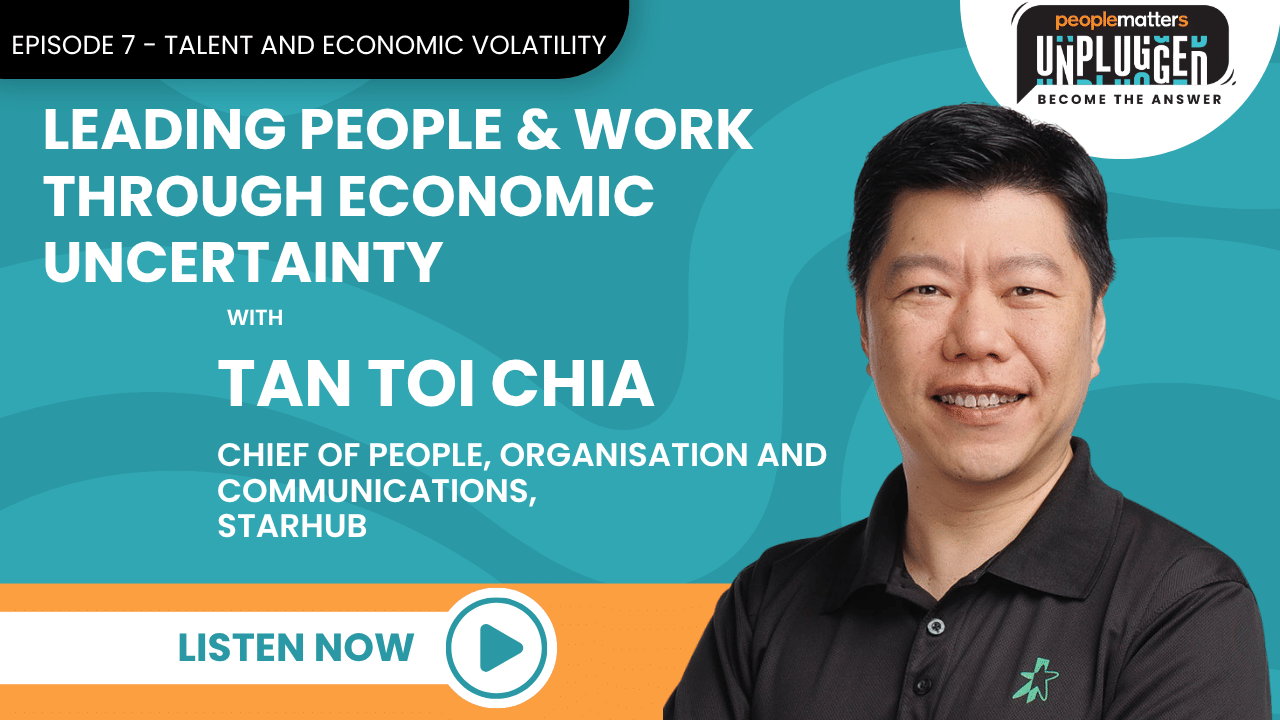






A pensioner wants a better return on deposits. A small business wants cheaper credit. Both live in the same economy, but the same interest-rate decision can help one and hurt the other. At the People Matters Total Rewards & Wellbeing Conference 2026, former Reserve Bank of India Governor Duvvuri Subbarao used that contrast to explain a central challenge of policymaking: how to balance competing needs across age and income groups without losing sight of sustainable growth.
Speaking with People Matters CEO Pushkar Bidwai in a session titled Economic Intelligence for People Decisions, Subbarao recalled asking an audience in Chennai to choose between lower interest rates that support growth and higher rates that help contain inflation. He remembered the room being roughly split. Younger attendees appeared more inclined to favour growth, while many of those managing household budgets put a greater emphasis on containing inflation. A central bank cannot set a different interest rate for every group. It has to weigh those competing priorities and consider how a decision will play out over time.
A common policy does not mean a common experience
Bidwai brought that trade-off into the workplace. Someone repaying a home loan, someone nearing retirement and someone starting a career may feel the same economic shift differently. The parallel for rewards leaders is that an organisation can have a common pay and benefits framework without assuming it delivers the same value to everyone.
Subbarao illustrated the point with a simple example. If inflation is 4% and wages rise 6%, employees gain purchasing power. If wages rise just 2% against the same inflation rate, employees lose purchasing power even though their payslips show an increase.
For employers, inflation is therefore a useful benchmark for judging what a raise buys, but it cannot tell them where financial pressure is greatest or which benefits employees will value. That distinction matters when leaders are deciding whether to change the overall pay budget or make existing benefits more useful to employees at different stages of their working lives.
Resilience is an investment, not a by-product of growth
Subbarao took charge of the RBI in September 2008, as a financial crisis that began in the US spread across the world. The experience exposed the downside of global integration: India could benefit from being connected to the world economy, but it could not insulate itself from shocks that originated elsewhere. “The most we can do is to build resilience,” he said.
He drew on pandemic-era supply disruptions to make the business case. Companies may have to accept higher production costs in the short term to make their supply chains less vulnerable. Even businesses that sell mainly to domestic customers, he noted, need to account for global uncertainty in their planning.
He applied a similar logic to skills. As AI changes what jobs require, employers need to develop people continuously and revisit long-term plans as the work changes. In his closing remarks, he identified the mismatch between the skills employers need and those workers bring as a key challenge for India. He also called for greater investment in innovation and R&D to sustain growth.
For leaders, the discussion brings two decisions into the same budget conversation: whether pay is keeping up with what employees need to spend today, and whether the organisation is investing enough in the skills it will need when conditions change again.