







Economy Policy
The Workforce Shift 2030: Forget AI for a moment. Demographics may be the bigger workforce story





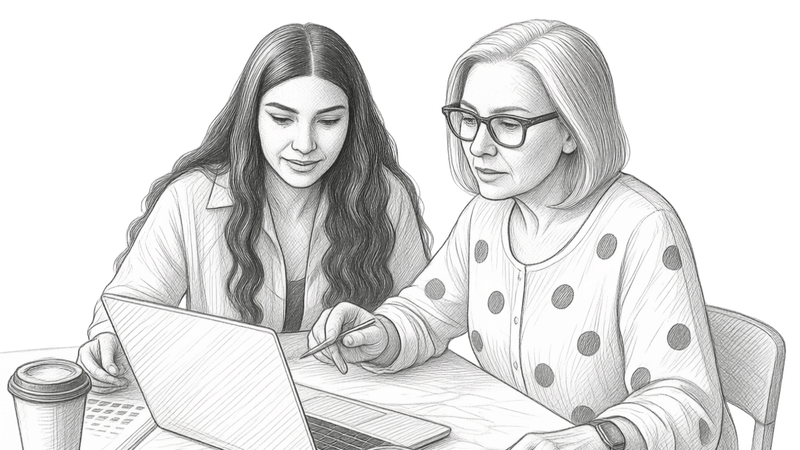
Because long after the AI hype cycle moves to its next chapter, organisations will still be grappling with older employees, younger workers with different expectations, mobile talent, caregiving responsibilities and increasingly multigenerational teams.
This article was first published in the latest edition of People Matters Perspectives.
I spend a lot of time writing about AI.
New models. New tools. New jobs. New fears.
But every once in a while, a different set of numbers lands on my desk and reminds me that the biggest workforce story of the next decade may have nothing to do with technology at all.
It may be demographics. Because while we are busy asking whether AI will replace jobs, India is quietly undergoing one of the most significant demographic transitions in its history. And unlike AI, this shift isn't theoretical. It's already happening.
The workforce is getting older
A recent white paper by Transform Rural India (TRI) projects that India will have 347 million people above the age of 60 by 2050. That's roughly one in every five Indians.
Even more striking, nearly 70% of them will live in rural India. For years, India's "young population" story has been treated as an endless competitive advantage. But demographics don't stand still. People age. Families shrink. Life expectancy rises.
Suddenly, the question isn't whether we have enough young talent. It's whether we have enough people to support an ageing population. A statistic from the TRI report stayed with me.
The number of working-age adults available to support each older person is expected to fall from 8.4 in 2001 to 5.2 by 2026. That's not a healthcare story. That's a workforce story.
Migration is becoming a business issue
Then there is migration. The Ministry of Statistics and Programme Implementation (MoSPI) is conducting India's first comprehensive National Migration Survey in nearly two decades.
That alone tells us something important. We don't fully understand how much the workforce has moved since Covid.
Who left? Who returned? Who stayed? Which cities gained talent and which lost it?
For employers, migration isn't just a census exercise. It affects hiring, skilling, housing, mobility, wages and workforce planning.
The next talent hotspot may not be where companies think it is today. And the next labour shortage may emerge in places nobody is currently watching.
More women are working. Now what?
Another shift deserves far more attention than it gets. According to the latest Periodic Labour Force Survey, female labour force participation reached 41.7% in 2024-25, up sharply from 23% in 2017-18.
That's a major change. For years, conversations about women and work focused on getting more women into the workforce.
Now a different question is emerging. What happens after they enter? Because participation is rising faster than representation in leadership.
If millions more women are joining the workforce, organisations will need to rethink everything from career progression and flexibility to leadership pipelines and caregiving support.
Demographics are not just changing who works. They're changing who leads.
The care economy may become the next jobs engine
One of the most overlooked ideas in the TRI report is that ageing populations don't only create challenges.
They create jobs.
The organisation estimates that investing 2% of GDP in the care economy could generate around 11 million jobs, many of them for women in rural India.
Think about that for a moment. While we debate whether AI will eliminate jobs, an ageing population may simultaneously create entirely new categories of work around caregiving, healthcare support, community services and elder care.
The future of work isn't only about algorithms. It's also about humans looking after humans.
The decade ahead will be shaped by people
AI will absolutely transform work. No argument there. But if I had to place a bet on what will keep CEOs, CHROs and policymakers busy over the next decade, it wouldn't be technology alone.
It would be this combination:
An ageing population
Changing migration patterns
Rising female workforce participation
Four and sometimes five generations working together
Growing pressure on care systems
Technology may change how we work. Demographics will change who works. And that distinction matters.
Because long after the AI hype cycle moves to its next chapter, organisations will still be grappling with older employees, younger workers with different expectations, mobile talent, caregiving responsibilities and increasingly multigenerational teams.
That's why I keep coming back to the same thought. Perhaps the biggest workforce disruption of the next decade won't arrive through a chatbot. It will arrive through a census table.
Author
Loading...