In today’s dynamic world or the ‘VUCA’ world — characterized by volatility, uncertainty, complexity and ambiguity; strategic decision making is increasingly critical. In an era of disruptive change when even the most established business models come under threat; organisations need to make good strategic decisions and then deliver on their choices.
The need to professionalize the decision-making process has never been so challenging. To secure a competitive advantage for the short, medium and long term, organisations must get better in connecting the most relevant information and people from across the organization when making decisions.
With the business world becoming more and more challenging and dynamic, decision making gets impacted by the following major factors which in turn affects the entire organization. Bhaskar Ranjan Das presented simple illustrations of how decision making around the world gets impacted:
Uncertainty in challenges
Rich in opportunities
Competition
'Competition and technological advancements will change the way we do business”.
Cisco came up with this technology named Telepresence which helps in overcoming geographical barriers, enabling in-person collaboration with more ease by incorporating state-of-the-art technology.
Sony came up with 3D telepresence solution for video conferencing. This provides eye contact and a true sense of presence with the exceptional quality of Sony high definition.
As a result of the above technological disruption, the industry most affected was the airline industry as people stopped traveling for meeting purposes as they has access to this kind of technology. This is one example how competition influences decision making in the new era.
Technology
We need to embrace technological changes, its bound to happen and it is going to impact our lives and if we can leverage it we can use it for our own advantages and if we don’t give importance, we will be left behind. Thus quality decision making is essential. Most of the time leaders take decision based on impulse rather than an insight.
Every day, senior business leaders and executives across the world make decisions that define the success or failure of their organizations. The research mentioned explores the effectiveness and flaws of C-level decision-making practices in large organisations across the globe and shows on what parameters senior leaders struggle to make the right decisions.
One solution to overcome the decision-making challenges can be achieved through more integrated thinking — cutting through silos to connect the relevant people and information from across the organisation. As our key findings demonstrate, many companies are struggling to:

This shows that there is a huge gap in our decision making and we don’t have a real solid framework on which we can make a robust risk-proof decision.
Way forward
We need to develop a set of behaviors and therefore measurement needs to be aligned for each set of behaviors.
'Culture eats strategy for breakfast”- Peter Drucker
Strategy can be copied but not culture. Thus we also need to develop a culture which will aid in decision making across various functions in an organization.
It’s a framework and should not look only at one objective but should consider a variety of factors which will eventually impact decision making.

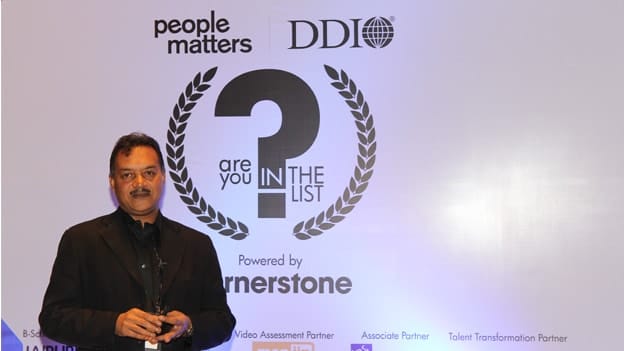
This article has been built from the masterclass delivered by Bhaskar Ranjan Das, Head of Markets (South Asia) at CIMA at CHRO Workshop & Awards Evening 2016 on 15th December, 2016.