








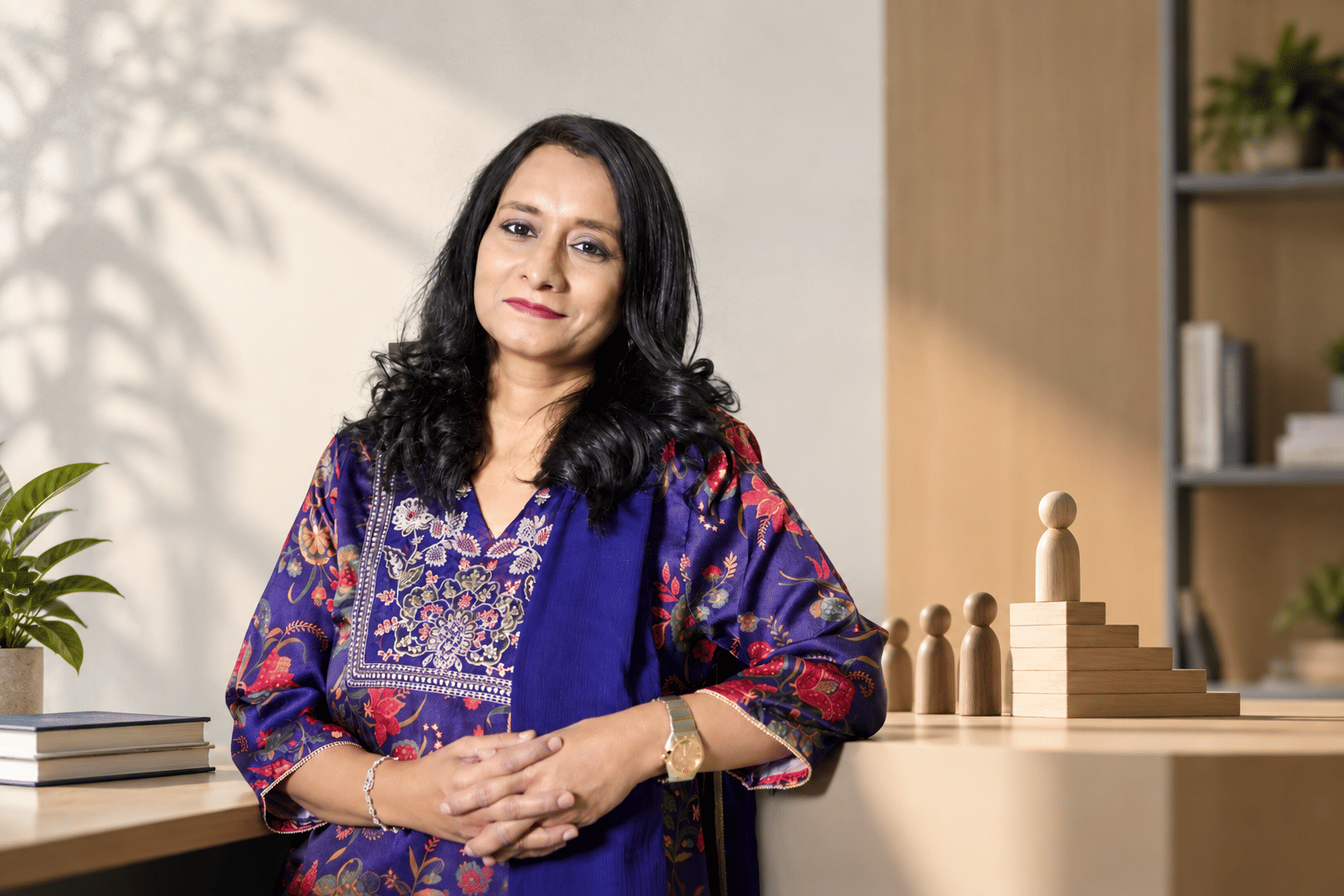
The debate around future-ready organisations often centres on technology, transformation and growth. Yet, according to Saba Adil, Chief Human Resources Officer at Edelweiss Life Insurance, sustainable business performance depends on something more fundamental: building the capabilities, leadership and culture required to execute strategy.
That philosophy is reflected in one statistic. Nearly 70% of Edelweiss Life's senior leaders have been developed internally, while 85% of employees who completed the company's talent development programme have moved into larger roles.
In an interview with People Matters, Adil discussed why people strategy can no longer operate independently of business priorities, how cross-functional leadership is reshaping HR, and why future leaders will need far more than functional expertise to succeed.
When business strategy becomes a people challenge
For Adil, the traditional distinction between business leadership and people leadership is steadily disappearing.
"People strategy no longer sits separately from business strategy because every major business priority ultimately has a people dimension," she said.
Whether organisations are pursuing growth, customer experience improvements, productivity gains, AI adoption or large-scale transformation, she believes success ultimately depends on leadership capability, workforce readiness and organisational culture.
The implication is significant. Discussions around technology investment, for example, cannot end with implementation plans.
"If a business is pursuing digital transformation or AI adoption the conversation cannot stop at technology investment, it must include roles, learning requirements, culture and the entire change management process," she said.
Adil views the role of HR through a broader enterprise lens. Rather than focusing solely on people processes, she believes leaders must understand customers, growth levers, economic ecosystems and strategic priorities before translating them into workforce decisions.
Her conclusion is straightforward: "Most people decisions influence business quality."
Why internal talent matters more than ever
While many organisations continue to compete aggressively for external talent, Edelweiss Life has placed a significant emphasis on developing capability from within.
Adil identified talent continuity as a critical requirement, particularly in businesses where customer relationships are built over long periods of time.
Key indicators shared by Adil include:
- Nearly 70% of senior leaders have been developed internally
- 85% of talent programme participants have progressed into larger roles
- 96% key talent retention achieved in FY26
- Recognition as a Great Place to Work for six consecutive years
"To sustain that experience, we need to invest in our talent and leadership for long term and build continuity of capability within the organisation," she said.
For Adil, these outcomes reflect more than succession planning. They indicate an organisation's ability to build future capability instead of continually sourcing it from the market.
The advantage of seeing the business beyond HR
Adil's perspective has also been shaped by roles spanning operations, customer service, risk and marketing. That experience, she said, changed how she approaches workforce decisions.
"People challenges don't exist in isolation," she said.
A productivity issue, a growth challenge or an operational bottleneck may initially appear to be a business problem. Often, however, there is an underlying capability, culture, leadership or talent dimension.
As a result, Adil starts with the business objective before determining the people interventions required to support it.
"I start by understanding what the business is trying to achieve, what is getting in the way, and then ask what needs to be changed in terms of people, capabilities, behaviours or organisation design."
This approach also shapes how she views customer outcomes.
According to Adil, employee experience and customer experience are closely connected, particularly in insurance where trust and quality of advice remain central to the customer relationship.
"If the employee feels empowered, supported and equipped to do their jobs well, that confidence and mindset reflects in the way they engage with customers," she said.
Developing leaders with an enterprise mindset
As organisations become increasingly interconnected, Adil believes future leadership development must extend beyond technical expertise.
"Future leaders need to understand the business beyond their own function, make decisions with an enterprise lens and create value beyond their immediate areas of responsibility," she said.
To achieve that, she highlighted several development mechanisms:
- Cross-functional assignments
- Internal mobility opportunities
- Career conversations
- Individual Development Plans
- Early leadership pipeline programmes
These experiences, she said, help leaders build commercial understanding, collaboration skills and the ability to navigate complexity.
The organisation also places emphasis on developing leadership talent early through structured management trainee programmes that combine business exposure, learning opportunities and clearly defined career pathways.
At the same time, Adil believes retaining existing talent and creating opportunities for growth remains equally important.
"That's why we have a strong focus on developing talent from within first before we look out for new skills," she said.
The next generation of leadership
As AI reshapes work and workforce expectations continue to evolve, Adil expects leadership requirements to change as well.
The most important capability, she said, will be the ability to lead through continuous change.
"The environment is evolving too quickly for leaders to rely on what has worked in past."
Future leaders, according to Adil, will need:
- Curiosity and continuous learning
- Comfort with ambiguity
- Technology and data fluency
- Adaptability
- Reskilling and capability-building skills
- Empathy and trust-building capabilities
While AI will increase the importance of technology understanding, she does not believe leaders need to become technology specialists.
"They need to understand how technology can create business value, ask the right questions of data and know that human judgement and empathy need to come in."
She also expects organisations to shift away from a hiring-first mindset towards one focused on continuously building and redeploying talent.
From partnership to shared ownership
Perhaps the most notable shift Adil sees is in the relationship between HR and business leadership itself.
Rather than functioning as separate partners, she believes both sides are moving towards shared accountability for organisational performance.
"The strongest organisations are those where the People function brings commercial and operational thinking into people decisions, and business leaders treat people leadership as a core capability."
For Adil, the future belongs to organisations that stop viewing business strategy and people strategy as parallel conversations.
"Ultimately for future ready organisations there is no separate people agenda and business agenda," she said. "There is one organisational agenda where people capability is treated as a core driver of business performance."
As businesses navigate disruption, AI adoption and changing workforce expectations, that integration may become one of the clearest markers of organisational resilience.