On Thursday, the conversation around skills moves from identification to action.
Organisations have invested in learning platforms, talent reviews, skills taxonomies and workforce data. Yet knowing which capabilities exist is only the beginning. The harder questions are operational: Can talent move quickly towards emerging priorities? Can learning change performance? Can leaders redesign work across people, partners and technology? And can culture support that movement without leaving employees behind?
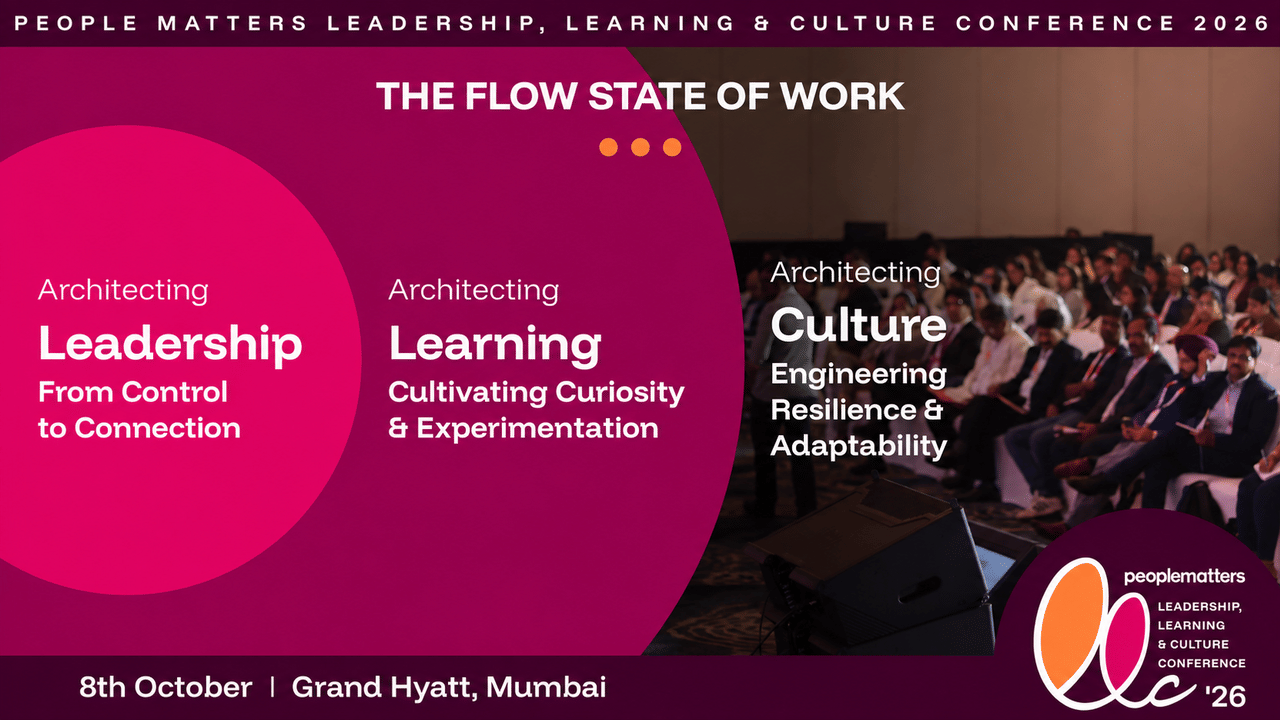
These questions will take centre stage at People Matters Leadership, Learning & Culture Conference 2026, taking place on 8th October at Grand Hyatt, Mumbai.
Under the theme Skills Intelligence 2.0: Optimising Workforce Liquidity Through Strategic Orchestration, the conference will bring together more than 500 delegates, 40 speakers and 25 solution partners for over 10 hours of learning across the Leadership Studio, Learning Studio, and Culture Lab & Workshop.
The ambition is clear: help organisations move from collecting skills to orchestrating their impact.
The next workforce advantage is the ability to move
Skills intelligence has helped organisations understand what their people know and where capability gaps exist. But insight produces value only when it changes what happens next.
Workforce liquidity captures that next step: the speed and precision with which an organisation can move people, skills and capacity towards its highest-value opportunities. It connects skills data with decisions about internal mobility, work redesign, learning, deployment and performance.
The conference will begin by challenging the assumptions that can prevent such movement. Jimbo Clark’s immersive opening experience, Think Outside The Box, will invite participants to step beyond familiar ways of seeing and solving problems.
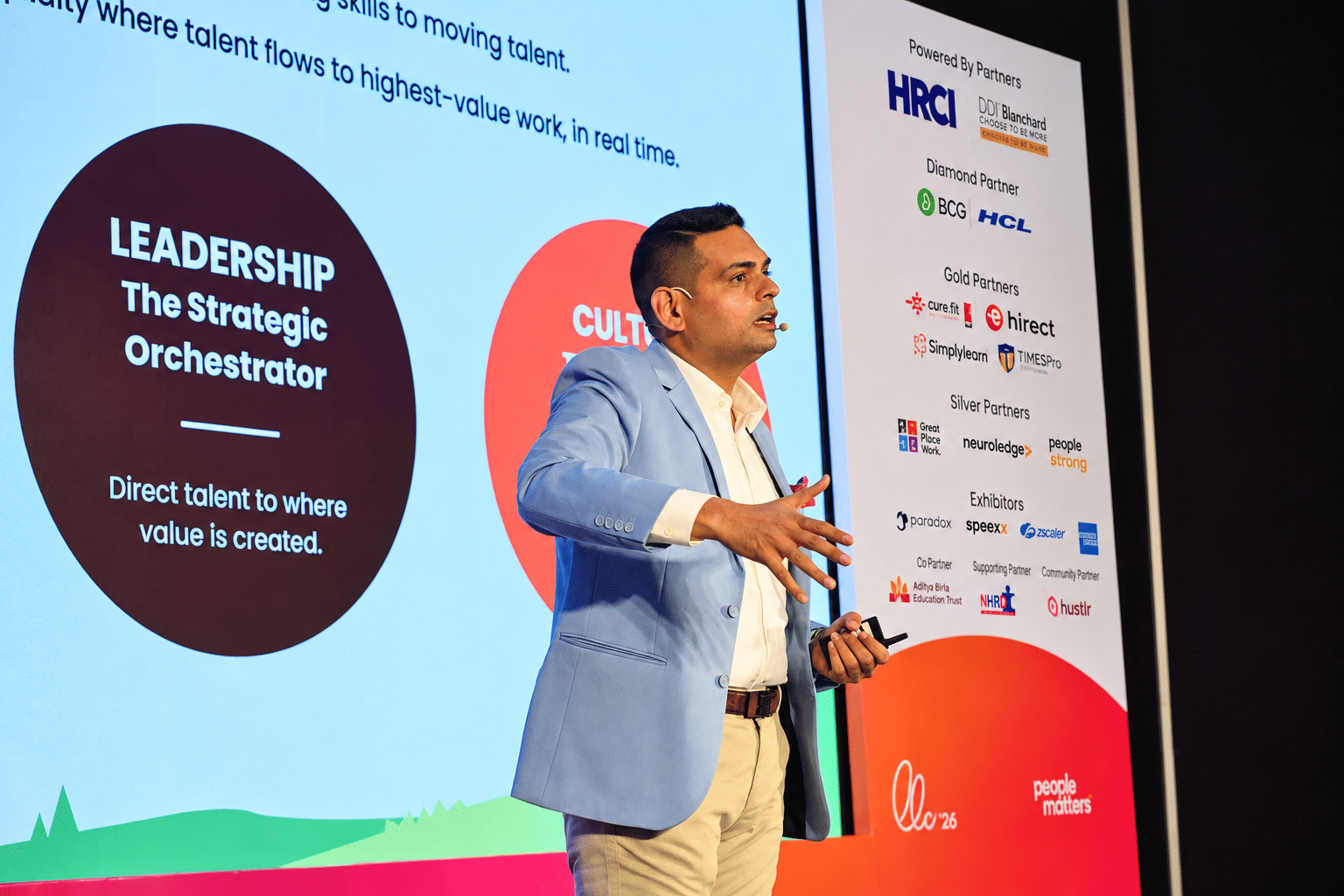
Pushkar Bidwai, CEO of People Matters, will then frame the strategic shift from Skills Intelligence 1.0 to 2.0, placing HR and learning leaders at the centre of decisions about how work gets done, rather than limiting their role to managing talent processes.
CEOs will reveal where they are placing their talent bets
The strongest signal about the future of talent often comes from the business decisions being made at the top.
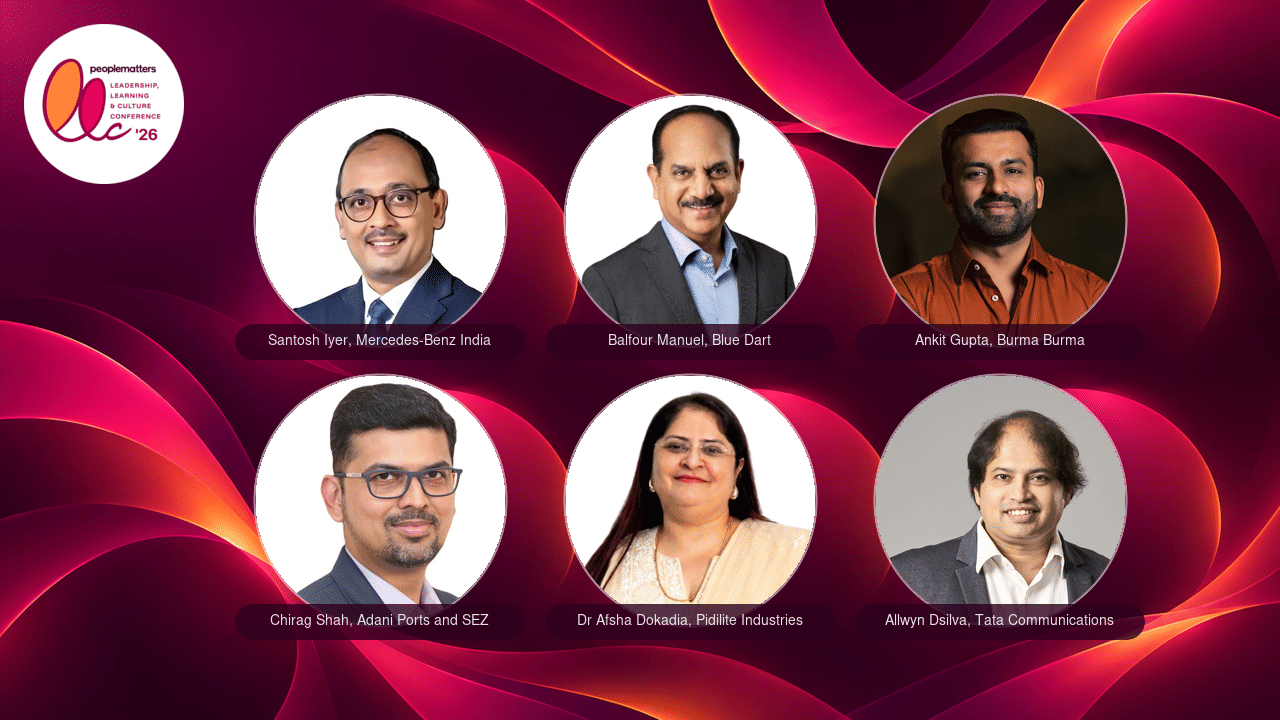
In CEO’s Bet: How Talent Priorities Are Being Rewritten at the Top, Santosh Iyer, MD & CEO of Mercedes-Benz India, and Balfour Manuel, Managing Director of Blue Dart, will bring perspectives from two industries navigating transformation at different speeds.
Chaired by Cheshta Dora of People Matters, the conversation will explore what CEOs now seek in talent, which capabilities they are prepared to invest in before outcomes are certain and how transformation is changing the expectations placed on people leaders.
For attendees, the value lies in understanding the choices behind the strategy: what should be built internally, where specialist expertise is required and what gives business leaders confidence that the workforce can deliver growth.
Leadership must adapt as quickly as the work
The Leadership Studio will examine the capabilities required to lead organisations where technologies, teams and priorities are being continually reconfigured.
Reinventing HR Leadership: Building the Function for What’s Next will bring together Dr Afsha Dokadia of Pidilite Industries, Nabamita Banerjee of Shoppers Stop and Trushant Mehta of HRCI. The session will ask what HR should own, how the function should operate and where its leaders must invest next, from data and AI fluency to business acumen, workforce strategy and organisation design.
The agenda will also move succession planning towards a more continuous model of leadership readiness. Who’s Next? Building a Deeper, Stronger Leadership Pipeline Across the Enterprise will consider how organisations can use coaching, mentoring, cross-functional exposure, targeted upskilling, P&L experience and stretch assignments to prepare people for larger mandates.
Importantly, the conversation will extend beyond small CXO cohorts to the business-unit heads, functional leaders and middle managers who form the critical feeder layer for enterprise leadership.
AI raises the value of distinctly human leadership
As AI makes knowledge and execution more accessible, leadership value will increasingly depend on what cannot be reduced to generating a technically correct answer.
In Personality in the Age of AI: The Human Differentiator, Dr Pradnya Parasher will explore the importance of leader personality in building trust, navigating uncertainty, making difficult decisions and taking responsibility for outcomes.
The Power Panel: Building the Composable Leader will advance this discussion by asking how leaders can combine strategic thinking, technological fluency, empathy and execution according to the situation before them.
Kathy Claytor, Anil Joseph and Deepika Banerjee will consider how leadership development can shift towards shorter, applied capability cycles that help leaders learn, unlearn and adapt while the work itself is changing.
Gen Z is testing the leadership playbook
Tomorrow’s workforce cannot be led entirely through assumptions inherited from the past.
The flipped panel Leading a Workforce That Didn’t Sign Up for Your Playbook will address how Gen Z is reshaping expectations around authority, feedback, loyalty and career progression.
Manavi Pathak of Samsung R&D Institute India, Shreyas Haridas of Spotify and Rajani Athreya of Kantar will join moderator Manpreet Kaur of IBDIC to discuss what is helping organisations earn trust and drive performance with younger talent.
The conversation is larger than accommodating one generation. It asks whether leadership practices built around hierarchy, delayed feedback and tenure-based progression remain effective in a workforce seeking greater transparency, purpose and visible growth.
Learning must prove what changes after the programme
The Learning Studio will focus on the gap between learning activity and business capability.
The agenda will explore how skills intelligence can translate into career paths and internal mobility; how employees can progress from AI awareness to applied fluency within real work; and how organisations should evaluate capability when AI can produce much of the final output.
These conversations converge in Designing the Capability Engine: Connecting Skills, Learning and Performance. Organisations may be investing in AI fluency, skills data, career pathways, knowledge transfer and impact measurement, but those efforts often remain disconnected. The opportunity is to build a learning system that responds continuously to business demand.
Proving the Performance Link: From Learning Activity to Business Impact will challenge L&D leaders to look beyond participation, course completion and training hours. Stronger evidence must show whether learning changed behaviour, improved productivity, enabled mobility or influenced performance.
The Learning Studio will also address capability transfer across generations. Experienced employees bring context, judgement and institutional knowledge, while younger colleagues contribute emerging skills, digital behaviours and different ways of questioning work. Organisations need systems that enable knowledge to move in both directions.
Culture will move from declaration to daily experience
Policies may articulate a culture, but employees experience it through everyday decisions and interactions.
The Culture Lab & Workshop will create space for participants to work directly with the human dynamics shaping organisations. Its experiences will focus on social awareness, LGBT+ inclusion and adaptive leadership.
From Intent to Impact: Crafting LGBT+ Inclusion Every Day will explore the distance between publishing an inclusion statement and creating a workplace in which employees feel safe, seen and supported.
Breaking the Invisible Box: Rewiring Mindsets for Adaptive Leadership will help participants surface unconscious assumptions and habitual ways of thinking. Working with real leadership and business challenges, they will be encouraged to turn a shift in perspective into a concrete action plan.
The aim is to make culture actionable: visible in whose voices are heard, how safely people can question established thinking and how leaders respond when familiar methods stop producing results.
Purpose and culture will be tested through real business stories
The agenda will also look beyond conventional corporate case studies.
Sushmita Agnihotri of Jaipur Rugs will explore how human dignity and purpose can shape business value, leadership and relationships with a wider community.
Ankit Gupta will take leaders inside the journey of Burma Burma, from introducing an unfamiliar cuisine to building a distinctive experience across cities. His story will show how culture is created through small, deliberate and repeatable moments rather than a statement displayed on a wall.
For leaders managing growth, both conversations carry a common lesson: values create value only when they influence how the organisation actually operates.
The day will close by recognising work with depth and impact
The Leadership, Learning & Culture Awards 2026 will conclude the conference by recognising organisations that have treated leadership, learning and culture as strategic levers.
Unlike recognition built mainly around polished submissions or surface-level metrics, the LLC Awards look deeper into the purpose, design, execution and impact of an initiative. The evaluation considers organisational context and the ability of an intervention to build future capability, leadership agility and cultural resilience.
The awards will celebrate what works, but they will also give leaders credible examples of how intentions can be converted into systems and measurable outcomes.
Arrive ready to question what is holding movement back
The real value of LLC 2026 will not lie in how many ideas attendees collect. It will lie in the decisions those ideas help them make.
Which work should remain with people, and which should move to technology or partners? Can employees see credible routes towards emerging roles? Is learning changing performance? Are future leaders being developed through real experiences? Does culture enable talent to move, or quietly keep it in place?
Across candid conversations, panels, masterclasses, live experiments and workshops, People Matters LLC 2026 will give business, HR and learning leaders a space to work through these choices with peers from across industries.