








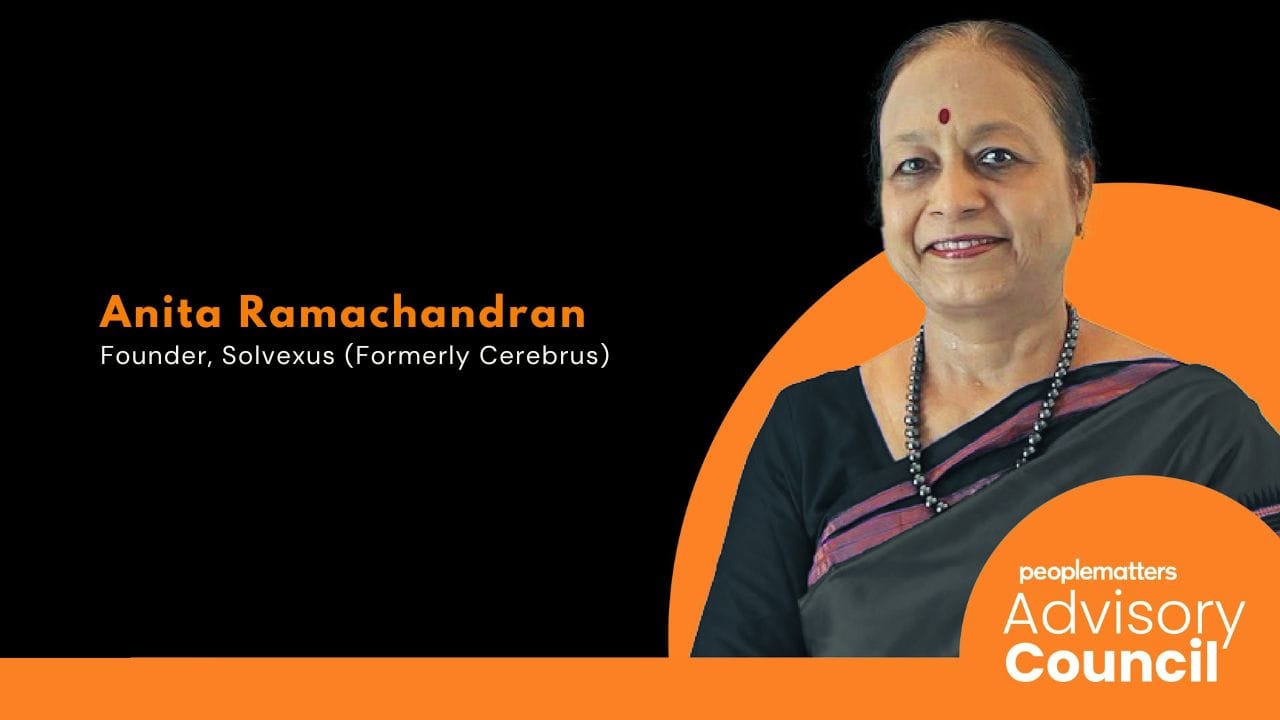
In an era when the tectonic plates of work, talent, and technology are shifting beneath our feet, few voices command as much respect and insight as Anita Ramachandran, Founder of Solvexus (Formerly Cerebrus) and a Member of People Matters Content Advisory Council. In a recent conversation with her, we explored the evolving compensation landscape, the motivations of a new workforce, and the strategic transformation of HR leadership. What emerged was an unvarnished, deeply intelligent perspective that urges both talent leaders and employees to confront the realities of a market in relentless flux.
The End of Role-Based Pay? Not quite, but the shift has begun
As organisations grapple with an increasingly dynamic talent market, the buzz around shifting from role-based to skill-based pay has reached a fever pitch. But Ramachandran quickly clarifies that the conversation is often misunderstood.
“Whenever you talk about compensation structures, people think about elements like fixed salary, variable pay, allowances. But that’s not what this shift is truly about,” she explains. The real transition, she argues, is from a system that rewards tenure and roles to one that values the actual currency of skills and the quality of experience.
This is most visible at the junior and mid-levels, especially in the technology sector. “There’s a syndrome where after two years, engineers expect the next level, and compensation has traditionally followed a batch-wise, role-based logic,” she observes. But as technology cycles accelerate, and rare skills such as AI or advanced analytics become highly sought-after, companies are increasingly forced to pay premiums to secure talent, upending traditional norms.
“It’s simple supply and demand economics,” she notes, “and it’s leading us towards an individual marketplace for skills.”
But the journey is fraught. In India, where pay transparency is high and salary comparisons are the norm, moving to an individualised, skill-based compensation model brings its own set of tensions. “Fairness is a very big thing in compensation here. People need to see a clear, articulated basis for pay differences. Without that, you risk destabilising teams and morale,” Ramachandran warns.
Defining and Rewarding Skills: The devil is in the detail
It’s one thing to declare a shift to skill-based pay; it’s another to actually execute it. For Ramachandran, the challenge lies in clearly defining what constitutes a “valuable skill” and, more importantly, distinguishing quality within those skills.
She points to some major IT companies that have long used frameworks for skill-based pay. “But what’s often missing is the nuance. Are you an ace Java programmer or just an average one? Historically, companies assessed this only after hiring, through performance. Going forward, companies must calibrate for competence and quality at the point of entry.”
This challenge is further compounded by how fast the target moves. In a market-driven environment, companies must remain agile and constantly refresh their definitions of key skills—a shifting landscape that creates a massive hurdle for continuous employee education, internal communication, and organisational alignment.
Add AI to the mix, and the next two to three years promise even deeper volatility. With role definitions and career paths morphing in real-time, the entire framework of roles and skills will undergo dramatic upheaval before finding any true stability.
Consequently, Ramachandran contends that scaling this shift will take time—possibly up to a decade before a true individual marketplace for skills fully takes hold. “We’ve stopped worrying about tenure and years of experience. Now, the focus is shifting to the actual quality of experience and impact, and we will pay differently for it. But at the mass level, this transition is still in its infancy.”
The road ahead is not just about changing frameworks but also, crucially, about communication and education. Organisations must prepare their workforces for a new reality; one where skill acquisition, experience, and ongoing learning become non-negotiable.
At the same time, the onus cannot rest solely on employers. Employees must actively manage their own market relevance if they want to command the compensation growth they expect.
“If you have a skill that is valuable and you’re not using it in your current job, you need to move. Otherwise, you’re just collecting paper degrees,” Ramachandran remarks, underscoring the importance of self-driven upskilling and career planning.
Beyond the Paycheque: What truly motivates the modern workforce?
Conventional wisdom holds that today’s employees are motivated by a complex cocktail of compensation, flexibility, well-being, and equity. But Ramachandran offers a refreshingly candid take: “At some level, things haven’t changed as much as we like to think. Job security and a good cash salary remain paramount.”
She recounts empirical surveys in which employees were asked whether they’d trade off 20% of salary for flexibility or well-being benefits. “Almost no one would. Flexibility is valued, but not at the cost of compensation.” Only when pay is equal between two organisations do secondary factors like flexibility, culture, and well-being tip the scales.
That said, medical benefits have emerged as a significant priority post-pandemic, and employees today are more discerning about equity than they were a decade ago, having seen both its highs and disappointments.
But what, beyond compensation, truly drives retention and engagement? “Quality of work and culture,” asserts Ramachandran. “People want meaningful work, good teams, and a healthy cultural fit. Increasingly, I see employees walking away from lucrative roles if the culture is toxic or work-life balance is unsustainable.”
The spectre of burnout is real, especially as ambitious companies push for high performance year after year. And as AI disrupts roles, the pressure to differentiate oneself only intensifies. “In a world where everyone has access to the same AI tools, what is your unique value-add? That’s the question every professional must answer,” she says.
AI, productivity, and the new value equation
The arrival of AI is fundamentally altering the value equation in organisations. As entry-level and even mid-level tasks are automated, employees must bring creative thinking, domain expertise, or other differentiators to stay relevant.
Ramachandran highlights a conversation with a business leader who questioned whether a reduced human workforce (supplemented by bots) necessitated the same level of HR leadership. Her response: “Who governs the bots? Who ensures accountability, ethics, and integration? The scope of HR is expanding, not shrinking.”
She believes that as AI commoditises certain skills, measuring individual productivity and value will become more complex and more important. “Traditional notions of productivity must evolve. The challenge is not only about cost or output, but also about the unique contributions—creative, relational, strategic—that humans make.”
The HR Leadership Conundrum: Do CHROs really have a seat at the table?
Perhaps the most provocative part of our conversation centred on the often repeated claim that HR now sits at the strategic table. Ramachandran’s verdict is clear-eyed and unsentimental: “No, not really. In large IT companies, yes. But in most other sectors, especially BFSI, HR is still not at the table, sometimes not even at the second level.”
The fundamental reason, she argues, is that business is governed by profit and growth, and functions that directly impact these, like sales, business development, and finance, dominate the boardroom. “HR is still seen predominantly as a cost management function, except in sectors where talent is the primary driver of value, like R&D.”
So what will it take for HR to be taken seriously? Ramachandran outlines three imperatives:
Create a Direct Link Between Culture and Business Performance:
A strong employer brand and culture affect share prices and business outcomes. HR needs to make and communicate this connection persuasively.Demonstrate the Impact of Talent on Growth and Profitability:
We talk about talent in financial terms, but rarely overlay this with stories of how high-quality talent has driven superior business outcomes. That narrative needs to change.Speak the Language of Business:
HR initiatives must be articulated in terms of business priorities, costs, and measurable outcomes—not just engagement or happiness. Too often, HR presents ideas in isolation, without tying them to P&L impact.
While HR's role has undoubtedly evolved, thanks to automation, data, and the push toward strategic issues, Ramachandran maintains that the profession is still on a journey.
“The processes have changed, and HR professionals are more conversant with business metrics. But the leap to being true business partners, driving and owning outcomes alongside the CEO, is still a work in progress.”
A Call to Action: Building the next generation of talent and HR
As the conversation drew to a close, Ramachandran’s advice was both pragmatic and inspiring. For talent leaders, the message is clear: embrace nuance, invest in communication, and relentlessly anchor HR initiatives to business impact. For employees, the imperative is to own their learning, seek out meaningful experiences, and remain agile as the market for skills evolves.
And for HR, the challenge and opportunity lie in moving beyond the “seat at the table” rhetoric towards a future where talent, culture, and business outcomes are inextricably linked and where their stewardship is recognised as central to organisational success.
As Ramachandran sums up, “The conversation about what is productivity, what is value, and how we reward it, is changing fundamentally. It’s time for both talent and talent leaders to engage with these questions, honestly and bravely.”