The HR function sits at the heart of organisational
strategy, charged with shaping culture, driving engagement, and fuelling
growth. Yet the journey from manual processes to intelligent, AI-powered
systems is not without its complexities or risks.
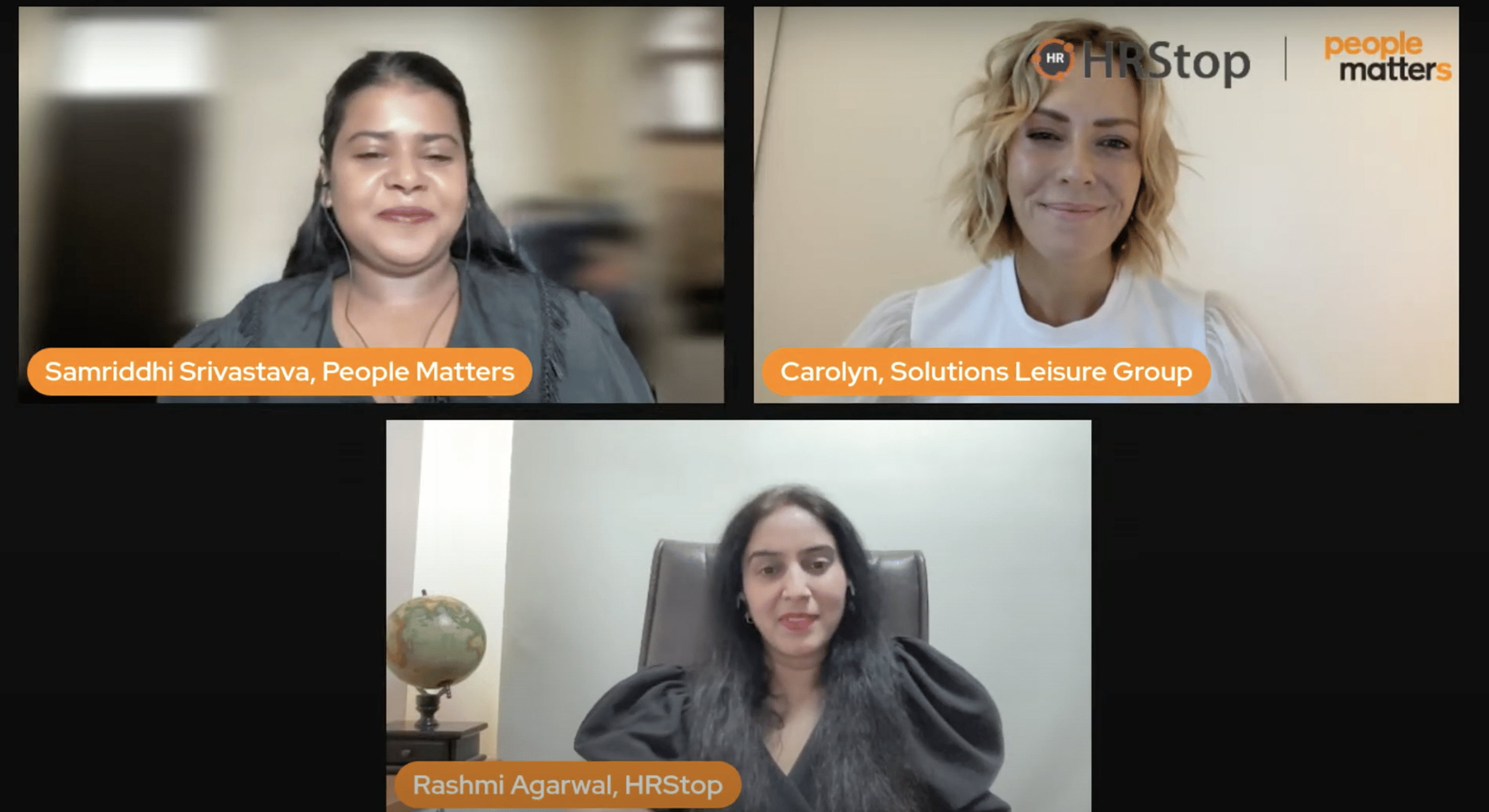
To understand the shifts, the webcast on the theme, Unlock
HR Efficiency with AI Tech Stack: Design, Simplify and Automate, was hosted
by People Matters in partnership with HRStop. The session brought together
Rashmi Agarwal, Co-Founder & COO at HRStop, and Carolyn Mitchell, Group HR
– Talent and Development Director at Solutions Leisure Group, to explore how AI
can transform HR, without losing sight of what makes workplaces truly human.
AI as a strategic lever, not just an efficiency tool
One of the central themes of the discussion was the shift in
HR’s role from an operational support function to a strategic business partner.
Rashmi shared that HR is like the backbone of an organisation, connecting every part to ensure smooth functioning. The arrival of AI has given HR leaders tools to strengthen that backbone further, moving beyond clerical tasks into realms like predictive insights and proactive talent management.
And it’s this vision that underpins HRStop’s approach. As a
homegrown HR and payroll platform, HRStop empowers organisations to move beyond
manual processes and leverage AI-driven insights that elevate HR from routine
administration to a strategic force in business growth.
Carolyn Mitchell echoed this, reflecting on how far HR has
come. A decade ago, her team was buried in spreadsheets and manual processes.
Today, tasks like payroll can be handled in minutes thanks to integrated
systems. Yet for her, the real excitement lies ahead: “I want to be able to think of the perfect candidate, and
that person automatically appears in my system. And if someone leaves, I want
my ecosystem to instantly show me how it impacts the business and where talent
gaps might emerge.” It’s a vision of HR not just reacting to business needs but anticipating
them, powered by AI insights.
Building AI workflows with empathy and clarity
Yet the speakers were clear: technology alone doesn’t guarantee a better employee experience. The real value lies in designing AI systems that enhance, rather than replace, human connection.
Rashmi urged organisations to approach AI adoption with
three principles in mind:
- Start with empathy. HR processes touch deeply personal moments, from onboarding to performance reviews. AI must support, not blunt, those experiences.
- Prioritise clarity over complexity. Overly complex systems risk becoming unused. Simplicity and user-friendliness should be non-negotiable.
- Keep the human lens open. For sensitive situations like denying promotions or handling grievances, human judgment remains irreplaceable.
It’s why HRStop’s solutions are designed to be intuitive and user-friendly, ensuring even sophisticated AI capabilities remain accessible and relevant to HR professionals and employees alike.
Carolyn added that AI should complement a company’s culture,
not try to create it. The danger, she warned, is believing a platform alone can
make a workplace more human. In reality, empathy flows from leadership and
culture, and AI must be an enabler, not the driver.
Overcoming legacy challenges: Start small, think big
Many organisations struggle to integrate AI into their
existing, often fragmented, HR systems. Rashmi offered practical guidance: don’t
start with technology, start with processes.
Too many companies invest in flashy platforms without first
defining what problems they’re trying to solve. Rashmi likened it to owning a
car with a top-tier navigation system but no idea where you want to go.
Equally crucial is ensuring data hygiene.
Inconsistent or duplicate data can derail even the most advanced AI tools.
Rashmi highlighted that billions are lost annually in the US alone due to poor
data quality, a stark reminder that digital transformation is as much about
clean data as it is about new technology.
This emphasis on data quality is built into how HRStop
partners with clients. Every HRStop implementation includes data health
checkups and structured onboarding, ensuring clients can rely on their HR
systems as a single, trusted source of truth.
Carolyn added that, as tempting as speed can be, businesses
must balance tech adoption with realistic assessments of their people’s
capabilities. Integrations should happen in phases, starting with low-risk,
high-impact areas. Early wins build trust and pave the way for more
ambitious transformations.
Budget realities: Scaling AI without breaking the bank
A pressing question for many HR leaders is how to embrace AI
without blowing their budgets.
Carolyn shared her experience growing a privately-owned
business with limited resources, “You don’t need to go out and buy a Ferrari
when you just need something to get you from A to B.”
Instead, organisations should:
- Identify their biggest pain points.
- Work with vendors willing to tailor solutions for immediate needs.
- Avoid paying for features they won’t use.
Rashmi added that starting small isn’t just budget-friendly, it’s strategic. As systems begin to automate tasks and deliver tangible ROI, leaders often become more willing to invest further, expanding their AI stack gradually and sustainably.
It’s an approach HRStop champions, offering modular solutions that let businesses scale their tech stack as their needs and budgets grow.
Balancing speed with empathy
While AI’s promise of speed is undeniable, the speakers
warned against overlooking empathy and human connection.
Rashmi stressed that systems should be designed with exception
handling in mind. Automation works well for routine tasks, but unique human
situations require flexibility and nuance. AI tools should also collect
feedback, helping HR understand how employees feel and adjust accordingly.
Carolyn emphasised that empathy can’t be outsourced to
algorithms. Leaders must remain the stewards of culture, using data to inform
decisions but never letting it replace human wisdom. “Data is great, but
it’s what you learn from it and how you empower your people that makes the
difference.”
The mindset shift: HR as change leaders
Perhaps the most thought-provoking part of the session
centred on the mindset shift HR professionals need to embrace AI
confidently.
Both Rashmi and Carolyn highlighted that HR professionals
must first redefine how they see themselves. Are they purely
administrators, or are they strategic partners helping shape the future of the
business? That internal narrative, they argued, influences how teams approach
technology.
Rashmi encouraged HR professionals not to fear what they
don’t know. Instead, she advised a spirit of curiosity and continuous learning:
“It’s absolutely okay to not know certain things. What matters is being
willing to learn, experiment, and grow.”
Carolyn agreed, suggesting that while HR leaders don’t need
to become AI experts, they should seek partners and resources to help them
navigate this rapidly evolving landscape.
Turning data into actionable insights
Ultimately, the speakers agreed that AI’s true power lies
in transforming data into actionable insights.
From predicting employee burnout to identifying cultural
fits in recruitment, AI can detect patterns and flag potential issues long
before they become business crises. This predictive capability allows HR
leaders to move from reactive problem-solving to proactive strategy.
With HRStop’s integrated AI capabilities, organisations can
translate complex data into clear, actionable insights that drive smarter
decisions, turning information overload into a strategic advantage.
Carolyn captured it well, describing AI as an extra set of
eyes scanning both the rear-view mirror and the road ahead, helping HR navigate
challenges while planning for the future.
Embrace AI as an ally
As the webcast wrapped up, both speakers offered an
optimistic outlook. AI, they emphasised, isn’t something to fear; it’s a tool
to help HR professionals become faster, smarter, and more human.
Rashmi concluded with a reminder that AI is simply an
assistant, not a replacement. It exists to help HR leaders reclaim time for
strategic thinking and human connection, ultimately enabling both businesses
and people to thrive.
Carolyn agreed, “Use it as the tool to help your business be even better than it already is.”
The session made one thing clear: the future of HR belongs
to those who can blend technology’s power with humanity’s irreplaceable touch.
AI may be transforming the tools HR uses, but empathy, insight, and leadership
will always remain at the heart of the profession.
Watch the complete conversation on our YouTube Channel.