







Talent Management
India was once known for scale. Its next advantage will be expertise: GlobalLogic APAC CHRO






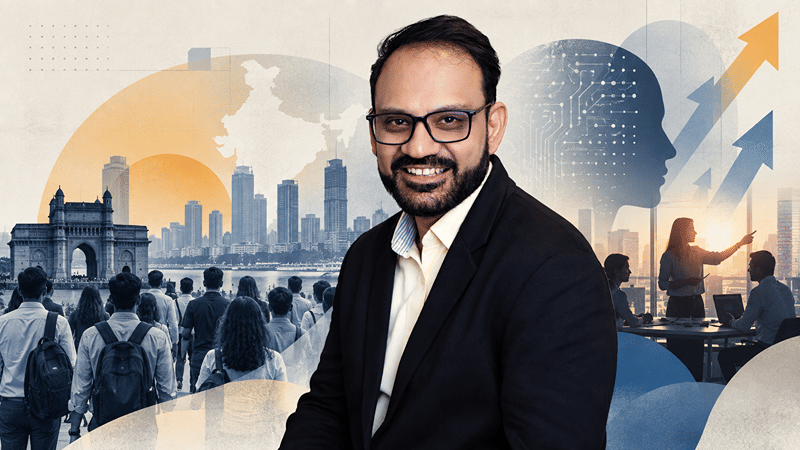
As AI reshapes global talent markets, Rajesh Rai, SVP and CHRO, APAC, GlobalLogic, believes India's future competitiveness will depend less on workforce scale and more on specialised skills, learning agility and business value creation.
India's rise as a global technology and services powerhouse has long been built on two pillars: scale and cost competitiveness. For decades, organisations looked to India for large talent pools capable of supporting global operations efficiently.
According to Rajesh Rai, SVP and CHRO, APAC, GlobalLogic, that equation is changing.
In a conversation with People Matters, Rai said India's talent advantage remains significant, but the factors defining competitiveness are shifting rapidly as AI transforms business models, client expectations and workforce requirements.
The transition, he noted, is moving the conversation away from labour arbitrage and towards capability, innovation and continuous learning.
Why scale alone is no longer enough
Rai believes India's reputation is evolving beyond workforce size and cost efficiency.
"India's talent advantage remains hugely significant, but the nature of that advantage is evolving," he said.
"Traditionally, for some time, India's reputation rested on workforce scale and cost efficiency. No longer, today, has the focus definitely and increasingly shifted toward learning agility, specialised expertise, and the ability to adapt continuously as AI reshapes the workplace. India is seen as an innovation hub."
Industry demand patterns are already reflecting this change.
Citing Adecco's projections, Rai noted that India's technology sector is expected to add nearly 1.25 lakh jobs in 2026 through AI-led growth. Much of this demand is concentrated in emerging areas rather than traditional technology roles.
According to Rai, organisations are increasingly prioritising professionals who can:
- Learn quickly and adapt continuously
- Apply judgement in complex situations
- Collaborate effectively across teams
- Navigate change with confidence
- Demonstrate digital fluency and critical thinking
- Make contextual business decisions
"As technology becomes more integrated into everyday work, digital fluency, critical thinking, and contextual decision-making are becoming increasingly important differentiators," he said.
Clients are demanding outcomes, not just skills
The shift is also visible in what clients expect from talent.
Rai said organisations are no longer evaluating employees solely on technical expertise. Increasingly, clients want professionals who can translate technology into measurable business outcomes.
"Client expectations today are closely tied to business outcomes, innovation, and specialised expertise."
He pointed to growing demand across AI, cloud, data and AI-native engineering, but emphasised that technical capabilities alone are no longer sufficient.
"There is strong demand for capabilities across AI, cloud, data, and AI native engineering, but the difference is that these skills are now needed alongside the skills of problem-solving, collaboration, and business understanding and advisory."
As AI becomes embedded into daily workflows, Rai believes the most valuable professionals will be those who combine technology expertise with commercial understanding and cross-functional collaboration.
"Today, organisations are looking for talent that can create business value, not just execute predefined tasks."
Automation is reshaping the labour-cost equation
One of the strongest challenges to India's traditional advantage, Rai said, comes from AI and automation itself.
Recent industry reports, he noted, suggest AI is already beginning to reshape labour-intensive delivery models across India's $283 billion IT industry.
"Automation helping compress project timelines and reduce reliance on large teams for routine work."
As efficiency becomes less dependent on workforce size, organisations are being pushed to differentiate themselves in new ways.
"Scale alone is no longer the differentiator it once was."
Rai said clients increasingly want innovation, faster outcomes and stronger alignment between talent capabilities and business objectives.
"As a result, the conversation has moved beyond cost efficiency toward value creation, specialised expertise, adaptability, and measurable business impact."
The capabilities Indian organisations need to build
If cost is becoming less important, Rai believes organisations must compete through capability, speed and innovation.
He highlighted several areas likely to shape future competitiveness:
- Agentic AI
- Cybersecurity
- Data engineering
- Design engineering
- AI data centre ecosystems
- Internal talent mobility
- Continuous workforce learning
"If cost is becoming a less significant differentiator, organisations will need to compete on capability, speed, and innovation."
Yet Rai also pointed to a less-discussed capability.
"Empathy in the age of AI is going to be the biggest edge in the fast-moving world."
He added that organisations must strengthen governance, accountability and human oversight as AI becomes increasingly integrated into business operations.
"Governance, human oversight, accountability, and trust will become important differentiators as AI becomes embedded across business processes."
Career growth is becoming a competitive advantage
The changing nature of work is also influencing employee expectations.
According to Rai, professionals are continuously building new capabilities and increasingly expect organisations to create opportunities that evolve at the same pace.
"Career expectations have changed significantly over the last few years."
"Competitiveness increasingly depends on making career growth more visible, flexible, and skill-led rather than limiting progression to traditional role structures."
He argued that retention is becoming closely linked to opportunity visibility and internal mobility rather than compensation alone.
"Retention today is highly linked to opportunity visibility and continuous movement, not just rewards or compensation."
The trend reflects a broader workforce shift in which employees are looking for learning opportunities, career flexibility and access to emerging skills alongside traditional rewards.
Managers are becoming capability builders
Rai also sees a fundamental shift underway in leadership expectations.
"The role of the manager has changed and is further changing as well."
He believes managers are no longer simply responsible for performance reviews. Instead, they are increasingly becoming the link between learning, performance and career progression.
"Managers are not mere performance reviewers; they act as the critical bridge between learning, performance, and career growth."
This places greater emphasis on coaching, empowerment, experimentation and continuous capability development.
"Leadership is increasingly moving from command-and-control towards coaching, empowerment, and enablement."
Rai added that organisations will need to invest consistently in managerial capabilities such as coaching, empathy and active listening as workplaces become more technology-driven.
India's next chapter will be defined by innovation
Looking ahead, Rai believes India's position in the global talent landscape will depend on its ability to move beyond execution and contribute more directly to innovation and industry transformation.
"India's position over the next decade will be defined by its ability to innovate and transform different industries rather than just being a backend support team."
He expects demand to grow for talent that combines AI capabilities with human-centred strengths.
"As AI adoption accelerates, organizations will need talent that combines AI-led digital fluency with empathy, critical thinking, and contextual decision-making."
Rai also stressed the importance of maintaining a people-centric approach to technology adoption.
"Equally important will be ensuring that AI adoption remains deeply people-centric, with strong governance, transparency, and human oversight."
For India, the next phase of competitiveness may look very different from the last. Workforce scale remains a strength, but Rai believes long-term success will increasingly depend on how effectively organisations build specialised expertise, develop talent continuously and translate technology investments into business value.
Author
Loading...