India's AI ambitions have largely focused on technology, investment and innovation. Yet the workforce required to support that growth is becoming increasingly complex.
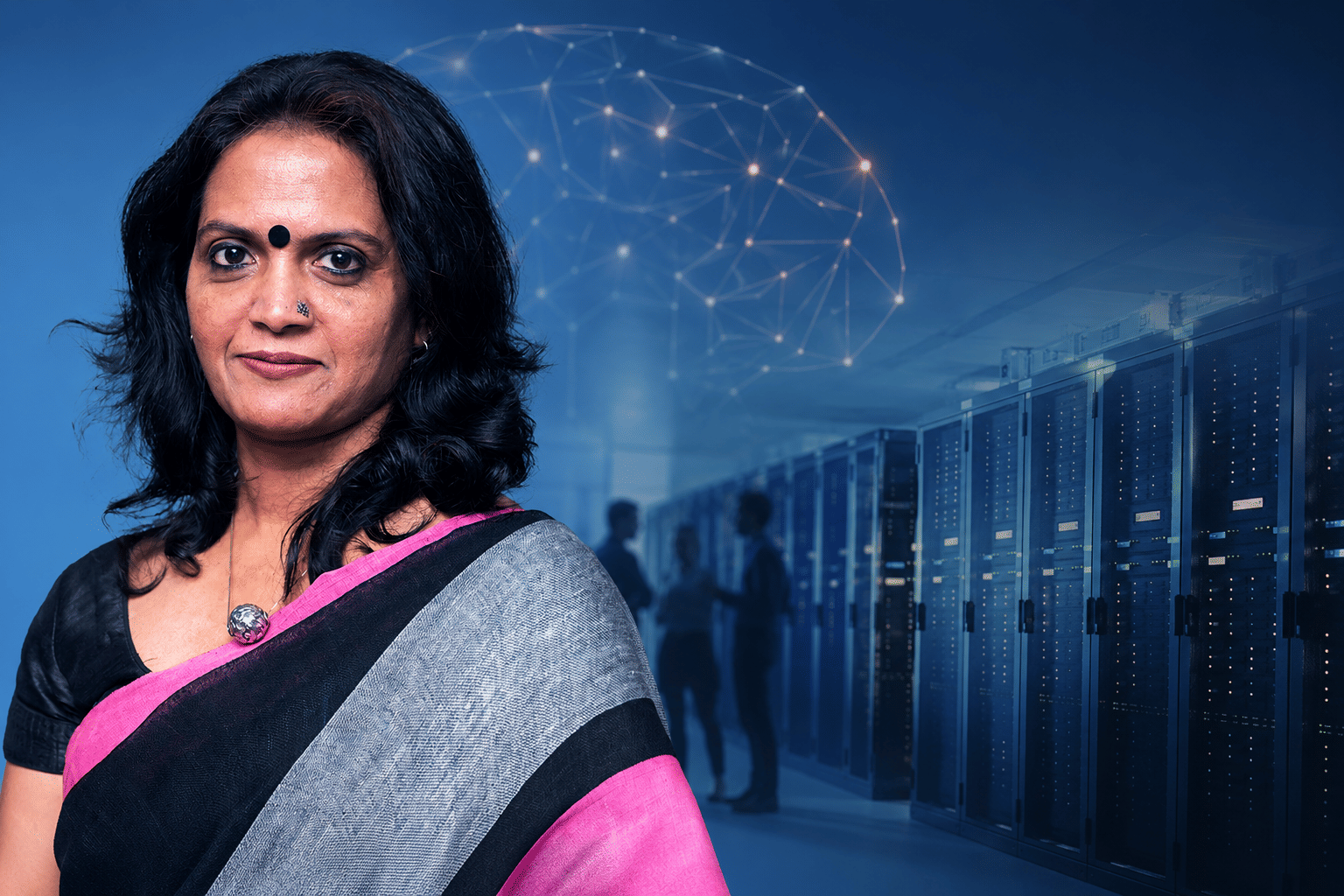
In an interview with People Matters, Swapna Uchil, Chief Human Resources Officer at Neysa, highlighted a challenge that extends beyond hiring technical specialists. As AI infrastructure expands, organisations will need professionals who understand how multiple technologies, teams and business functions come together to support enterprise AI.
For Uchil, one of the most valuable learning environments may not be a classroom or training programme. It may be the data centre itself.
Why exposure to AI infrastructure matters
India has a strong technology talent base and growing interest in AI-related careers. However, Uchil believes the next capability gap will emerge in AI infrastructure.
According to her, AI infrastructure requires expertise across:
• Linux administration
• Cloud operations
• Networking
• Infrastructure engineering
• Service operations
She noted that technical skills alone are not enough.
"AI infrastructure, however, calls for a specialised mix of skills across Linux administration, cloud operations, networking, infrastructure engineering and service operations. Equally important is the ability to understand how these functions come together to support enterprise AI."
Uchil said many professionals already possess strong technical foundations. The opportunity now is to increase exposure to real-world infrastructure environments where different technologies operate together at scale.
"Many professionals have strong technical foundations, and hands-on experience helps them understand how different technologies work together to support customers at scale. That kind of learning builds both technical confidence and a much broader perspective."
The data centre as a learning environment
One of the most distinctive aspects of Uchil's perspective is her emphasis on infrastructure awareness across all functions.
She said every new employee at Neysa spends time understanding the data centre environment where the company's AI infrastructure is deployed, regardless of role.
"Whether someone joins engineering, HR, finance or marketing, we want them to understand the platform, how it is delivered and what customers expect from it."
The objective is not to turn every employee into an engineer. Instead, it is to create a shared understanding of how the organisation delivers value.
"Once people have that context, they ask better questions, collaborate more effectively and make stronger decisions in their own roles."
The approach reflects a broader workforce challenge facing AI infrastructure businesses. Technical depth remains important, but organisations increasingly need people who understand the connections between systems, functions and customer outcomes.
Breaking down functional silos
AI infrastructure brings together hardware, cloud infrastructure, networking, software and high-performance computing.
Uchil believes India's talent ecosystem is progressing within individual technology domains. The next step is developing professionals who can operate across those boundaries.
"I think the talent is evolving, and we are seeing professionals develop deep expertise across individual technology domains. The next step is bringing those capabilities together because AI infrastructure is built through multiple technologies working seamlessly with each other."
She pointed to the benefits of cross-functional collaboration.
"A software engineer gains a much better understanding of the product when they appreciate the cloud and infrastructure their application runs on. Similarly, infrastructure and operations teams benefit from working closely with engineering."
That exchange, she said, strengthens both organisations and individuals.
At Neysa, which has more than doubled its workforce over the past 18 months while remaining lean, employees regularly work across functions and learn from colleagues with different expertise.
"That exposure helps build professionals who have technical depth along with a broader understanding of the business."
Building talent pipelines before the need arises
As AI evolves rapidly, Uchil sees a larger role for industry in shaping future talent.
She stressed the importance of ongoing collaboration between industry and academia, particularly through practitioner engagement and research partnerships.
"Students benefit when they interact with practitioners who are building these technologies every day and gain visibility into how the industry is evolving."
She also identified several areas where industry and academic institutions can work together, including:
• Distributed computing
• Infrastructure optimisation
• AI security
• Energy-efficient computing
Beyond curriculum development, Uchil believes organisations should focus on long-term talent creation rather than hiring only when vacancies emerge.
"For organisations, the focus should be on building long-term talent pipelines rather than hiring only when there is an immediate requirement."
She described internships and campus programmes as investments in future capability, helping organisations identify potential while exposing students to emerging technologies.
What attracts and retains AI infrastructure talent
Competition for specialised AI talent continues to intensify globally.
For Uchil, attracting professionals in AI infrastructure involves more than compensation.
"People want to work on meaningful technology, solve complex problems and be part of organisations where they can see the impact of their work."
She also highlighted the importance of looking beyond conventional career paths during recruitment.
"Curiosity, ownership and the willingness to learn often tell us far more about someone's long-term potential than a perfectly structured resume."
The same philosophy extends to professionals returning after career breaks.
"If someone has the capability and the intent to contribute, we are happy to create that opportunity."
On retention, Uchil emphasised trust, learning and visible growth opportunities.
"People stay where they feel respected, where learning remains part of everyday work and where they can see a clear path to grow alongside the organisation."
The capabilities organisations may be overlooking
While technical expertise remains essential, Uchil identified several capabilities that she believes will become increasingly important as AI matures.
The first is business understanding.
"As AI becomes part of core business operations, professionals across every function need to understand how the technology creates value for customers."
The second is adaptability.
"Professionals who stay curious, embrace change and continuously build new skills will be far better positioned to grow with the industry."
The third is communication.
AI infrastructure connects engineering, product, operations, customer success, sales and support. Uchil believes the ability to explain complex ideas clearly across those groups will become a key leadership differentiator.
"The ability to explain complex ideas clearly and work effectively across diverse teams is what turns strong technical professionals into future leaders."
Workforce readiness requires long-term investment
For organisations balancing external hiring with internal development, Uchil does not see the decision as a choice between one or the other.
"It is rarely an either-or decision."
Specialist expertise may be required immediately, but sustainable capability comes from developing people over time.
She highlighted mentoring, knowledge-sharing and career development as important mechanisms for building internal strength.
"Internal development also creates stronger career pathways. As people take on new responsibilities, they build institutional knowledge and strengthen collaboration across teams."
Looking ahead, Uchil believes workforce readiness in AI infrastructure will depend less on short-term recruitment goals and more on sustained investment.
She identified three factors that will separate organisations that build durable talent ecosystems from those that struggle:
• Trust and stability
• Visible growth pathways
• A culture of continuous building
"The organisations that succeed will be the ones that think beyond immediate hiring targets. Workforce readiness is built through consistent investment over several years."
For leaders navigating the AI transition, the message is clear. Building AI talent is not only about acquiring specialised skills. It is also about helping people understand the systems, infrastructure and business context that sit behind the technology. In that respect, the lessons may start in the data centre but extend far beyond it.