








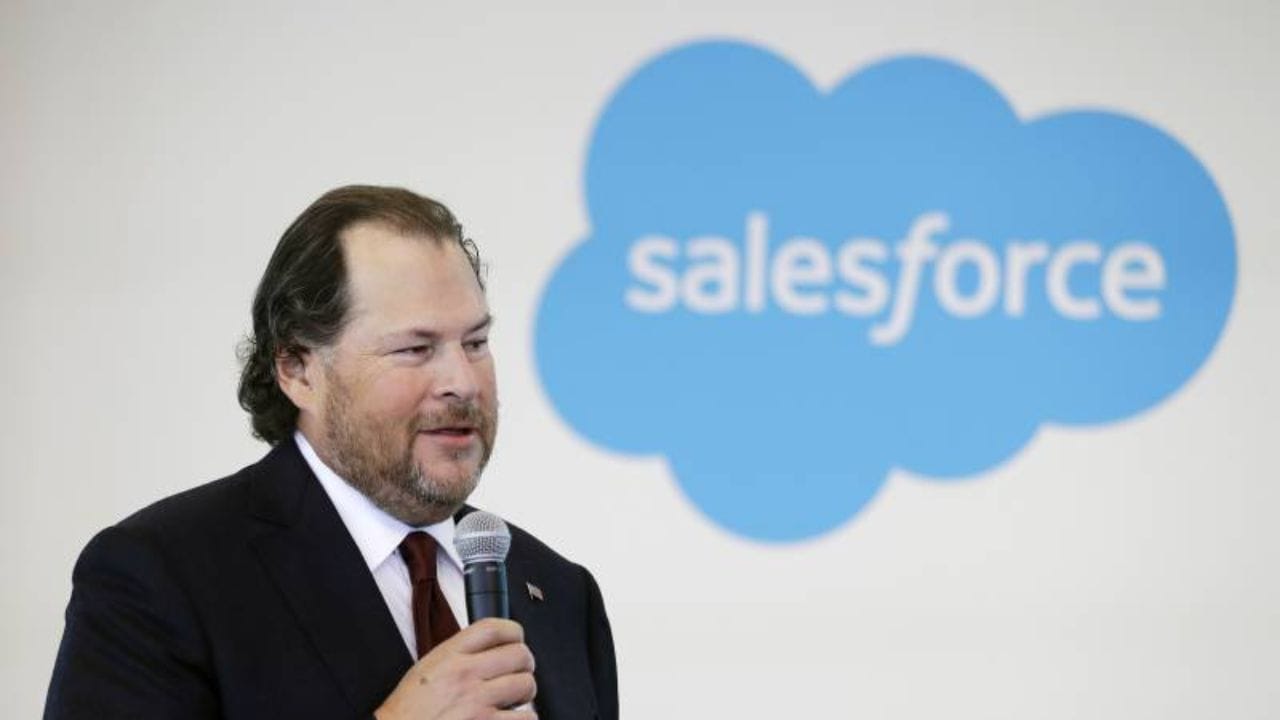
Salesforce is preparing to spend around $300 million on Anthropic tokens in 2026 as the enterprise software company deepens its investment in artificial intelligence tools while maintaining a freeze on software engineer hiring.
Speaking on the All-In podcast, Salesforce Chief Executive Officer Marc Benioff said a large portion of the projected spending would support coding-related work powered by AI systems and software agents.
The spending plans underline a broader shift underway across the technology industry, where companies are redirecting investments from workforce expansion towards AI infrastructure, coding assistants and automation tools.
Benioff described AI coding agents as “awesome” and said they were helping lower software development costs while improving engineering speed and productivity.
Hiring freeze tied to AI productivity gains
Benioff first announced in 2024 that Salesforce would stop hiring software engineers in 2025 after internal AI tools improved engineering productivity by more than 30 per cent.
“We’re not adding any more software engineers next year because we have increased the productivity this year with Agentforce and with other AI technology that we’re using for engineering teams by more than 30%,” Benioff had said at the time.
According to the CEO, AI integration significantly increased development velocity across Salesforce engineering teams.
However, Salesforce did continue recruitment in other divisions, particularly sales.
Benioff previously stated that the company planned to hire between 1,000 and 2,000 sales employees to help explain AI products and their business applications to customers.
Engineers increasingly work alongside AI agents
While Salesforce has paused additional software engineering hiring, Benioff clarified that the company does not believe AI can yet fully replace human engineers.
Instead, he said engineers are increasingly operating in partnership with AI coding tools and autonomous software agents.
Salesforce’s engineering teams currently work with:
- Anthropic AI models
- OpenAI Codex
- Cursor AI coding tools
- Agentforce AI systems
Benioff said Salesforce’s roughly 15,000 engineers were evolving into supervisory roles where they increasingly oversee AI-generated coding workflows.
“When they start to use these models, they’re now working not only with the AI, but agents to help them code,” he said.
He added that engineers remain necessary because AI systems cannot yet function fully autonomously.
“We’re not at that level yet of AI,” Benioff said.
Anthropic partnership expands across Salesforce products
The projected token spending reflects Salesforce’s growing integration of Anthropic’s AI models across its enterprise software ecosystem.
Salesforce has already invested more than $300 million in Anthropic and reportedly holds a stake in the artificial intelligence company.
Anthropic’s Claude models are increasingly being integrated into Salesforce platforms, including:
- Slack
- Agentforce
- Enterprise AI workflows
- Coding and developer tools
Benioff also indicated that Salesforce was building systems capable of routing AI tasks between larger and smaller language models depending on complexity and cost efficiency.
The approach is designed to reduce operational expenses while improving AI performance across customer-facing and internal tools.
AI business becomes central growth engine
Salesforce’s AI-focused business unit, Agentforce, has emerged as a major revenue contributor for the company.
According to Benioff, Agentforce has already reached approximately $800 million in annual recurring revenue.
The company has positioned AI as a central pillar of its future business model, with Benioff describing the broader transformation as a “digital labour revolution”.
He said artificial intelligence now accounts for between 30 per cent and 50 per cent of Salesforce’s overall workload.
The company’s evolving strategy reflects a wider trend across Silicon Valley, where AI tools are increasingly reshaping engineering operations, software development economics and workforce planning.