








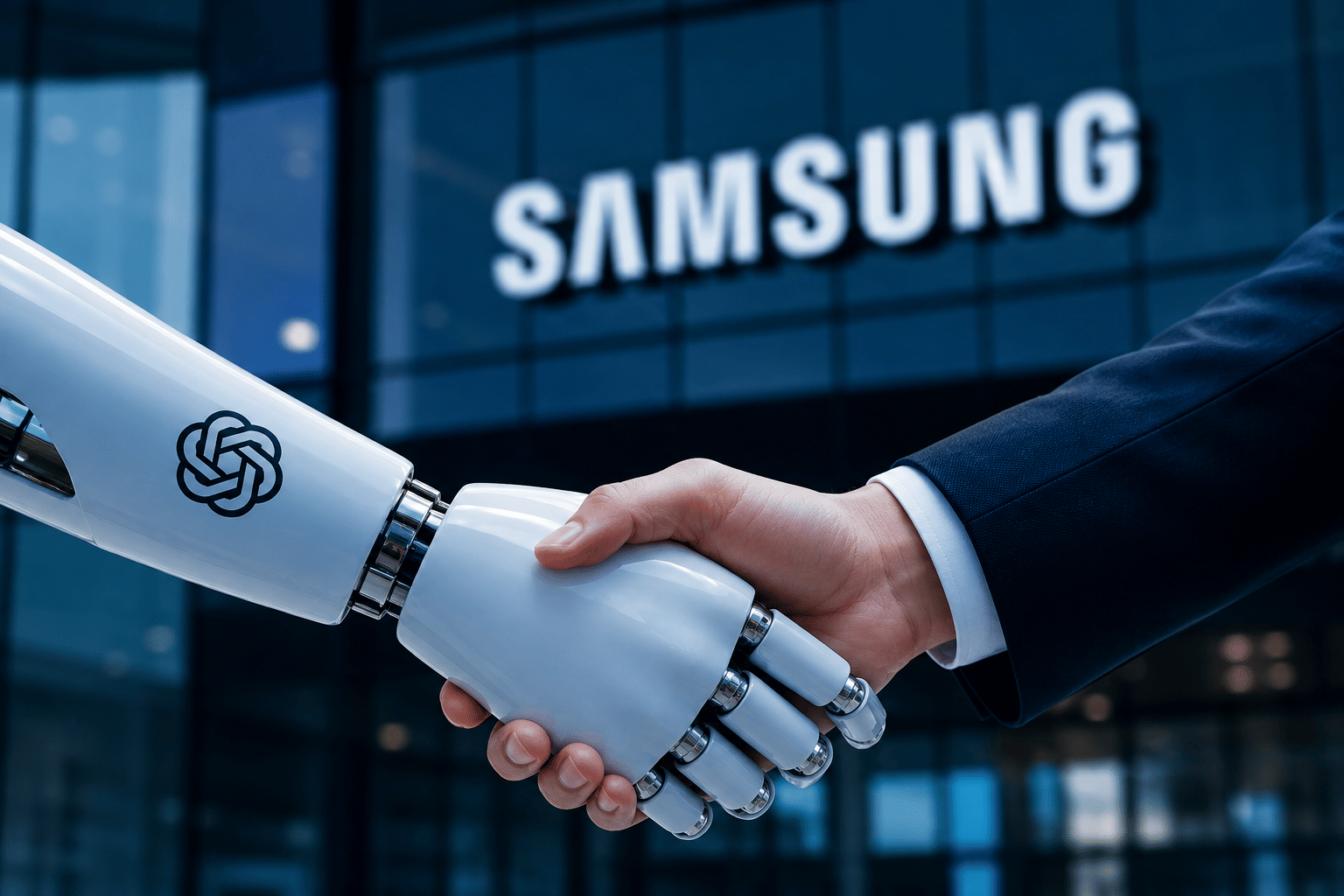
Samsung Electronics is deploying ChatGPT Enterprise and Codex to employees across key parts of its global workforce, in a move that underscores the growing role of generative AI in large-scale corporate operations.
The announcement, made by OpenAI on June 21, will see ChatGPT Enterprise and Codex made available to all Samsung Electronics employees in South Korea and to all employees worldwide within the company’s Device eXperience (DX) division, which oversees its mobile, consumer electronics and related businesses.
According to OpenAI, the rollout represents one of the company’s largest enterprise deployments to date, reflecting Samsung’s efforts to embed AI tools more broadly across its operations.
AI tools move beyond software teams
Samsung Electronics plans to use ChatGPT and Codex across both technical and non-technical functions, spanning software development, product development, manufacturing, marketing and corporate operations.
The company said employees will be able to use ChatGPT for knowledge-based work such as information gathering, data analysis, document drafting and idea generation.
Meanwhile, Codex will support a broader range of workflows. While originally developed for software engineering tasks such as writing, reviewing and debugging code, OpenAI said the tool is increasingly being adopted by non-technical teams as well.
According to OpenAI, employees can use Codex to transform ideas into software applications, internal tools, websites and automated workflows, extending its utility beyond traditional coding environments.
Key details of the deployment
Highlights of the agreement include:
• ChatGPT Enterprise access for all Samsung Electronics employees in South Korea
• Global access for all employees within Samsung’s Device eXperience (DX) division
• Use cases across R&D, manufacturing, product development, marketing and corporate functions
• Deployment of enterprise-grade AI capabilities including data protection, access controls and security management
• Expansion of collaboration between Samsung Electronics and OpenAI beyond infrastructure into workforce-wide AI adoption
OpenAI said ChatGPT Enterprise includes governance and security features designed to help organisations deploy AI tools while maintaining internal security policies and compliance requirements.
Growing adoption of Codex
The Samsung deployment comes as OpenAI reports rising adoption of Codex globally.
According to the company, more than five million people now use Codex every week for both technical and non-technical work.
OpenAI also said that weekly active Codex users in South Korea have increased by nearly 800% since February 1, 2026, highlighting growing demand for AI-assisted productivity tools in the market.
Commenting on the deployment, Harrison Kim, General Manager of OpenAI Korea, described the rollout as significant because Samsung is adopting AI as a platform that can support employees across different functions rather than limiting its use to specialist teams.
Kim said OpenAI would work closely with Samsung Electronics to help employees use ChatGPT and Codex to accelerate execution, solve complex challenges and support the development of new products and services.
Partnership expands beyond AI infrastructure
The latest agreement builds on an existing relationship between the two companies.
OpenAI noted that Samsung Electronics has been working with the company on AI infrastructure initiatives, including supplying advanced memory semiconductors used in next-generation AI systems.
With the adoption of ChatGPT Enterprise and Codex, the relationship is now expanding into workforce productivity and enterprise AI deployment.
The move also comes amid wider AI adoption across South Korea. OpenAI recently announced that Seoul National University had introduced ChatGPT Edu for its entire community of around 47,000 students, faculty and staff as part of its push to become an AI-native campus.
The company has also partnered with Kakao to integrate ChatGPT capabilities into KakaoTalk group chats.
Enterprise AI race accelerates
Samsung’s decision to deploy ChatGPT Enterprise and Codex at scale reflects a broader shift among large enterprises seeking to integrate AI into day-to-day operations rather than limiting adoption to pilot projects.
OpenAI said a growing number of South Korean organisations are already using ChatGPT Enterprise, OpenAI APIs and Codex, including LG Electronics, LG Uplus, LG CNS, GS E&C, Samsung SDS, TVING, Krafton, Toss, MUSINSA, Korea Zinc, Nexen Tire and HanaTour.
As organisations move from experimentation to implementation, large-scale deployments such as Samsung’s are likely to become a key indicator of how enterprise AI adoption evolves across global industries.
The latest agreement builds on an existing relationship between the two companies.
OpenAI noted that Samsung Electronics has been working with the company on AI infrastructure initiatives, including supplying advanced memory semiconductors used in next-generation AI systems.
With the adoption of ChatGPT Enterprise and Codex, the relationship is now expanding into workforce productivity and enterprise AI deployment.
The move also comes amid wider AI adoption across South Korea. OpenAI recently announced that Seoul National University had introduced ChatGPT Edu for its entire community of around 47,000 students, faculty and staff as part of its push to become an AI-native campus.
The company has also partnered with Kakao to integrate ChatGPT capabilities into KakaoTalk group chats.
Enterprise AI race accelerates
Samsung’s decision to deploy ChatGPT Enterprise and Codex at scale reflects a broader shift among large enterprises seeking to integrate AI into day-to-day operations rather than limiting adoption to pilot projects.
OpenAI said a growing number of South Korean organisations are already using ChatGPT Enterprise, OpenAI APIs and Codex, including LG Electronics, LG Uplus, LG CNS, GS E&C, Samsung SDS, TVING, Krafton, Toss, MUSINSA, Korea Zinc, Nexen Tire and HanaTour.
As organisations move from experimentation to implementation, large-scale deployments such as Samsung’s are likely to become a key indicator of how enterprise AI adoption evolves across global industries.