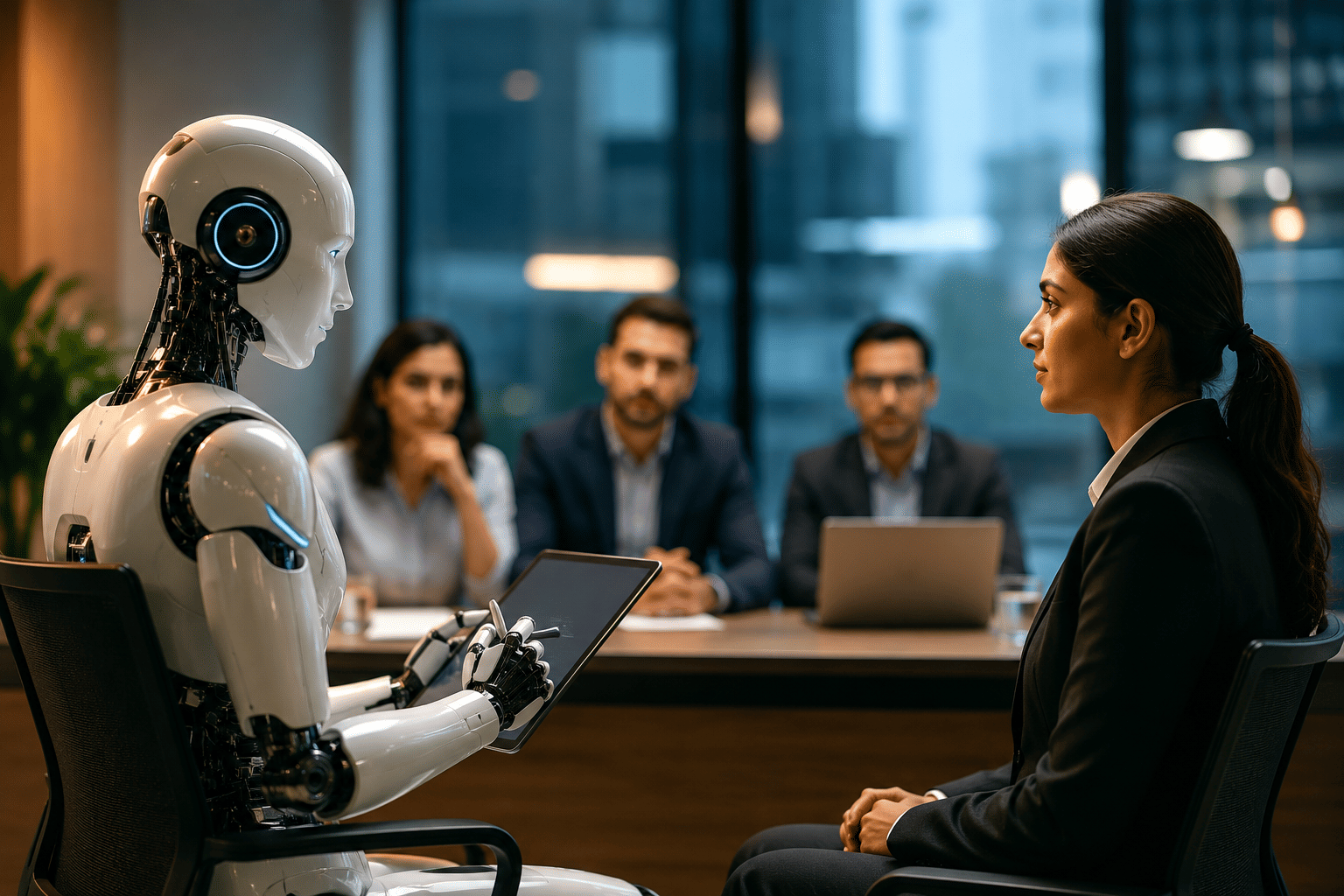
Artificial intelligence is moving deeper into the hiring process, with a new BambooHR study finding that 67% of HR professionals would trust AI to conduct a job interview independently.
The finding signals a notable shift in how human resources teams view the role of AI in talent acquisition. While AI has traditionally been used for tasks such as CV screening, assessments and training support, the latest research suggests employers are becoming increasingly comfortable allowing the technology to take on more direct candidate-facing responsibilities.
According to BambooHR, the study surveyed more than 500 HR professionals and found widespread adoption of AI tools across HR functions, reflecting a broader transformation in how organisations manage recruitment and workforce operations.
Confidence in AI adoption reaches new levels
The report found that HR professionals are embracing AI at a faster pace than the wider workforce.
Key findings include:
- 67% of HR professionals said they would trust AI to conduct an interview on its own.
- 76% described themselves as confident, everyday users of AI tools.
- Only 50% of employees reported a similar level of confidence in using AI.
- 92% of HR professionals said they are either actively piloting or planning to deploy AI agents across the employee lifecycle.
According to the BambooHR report, organisations are exploring AI applications across a wide range of activities, including candidate screening, policy enforcement, workforce analytics and employee retention monitoring.
The findings suggest HR leaders increasingly view AI not simply as an administrative tool, but as a strategic capability that can support decision-making and improve operational efficiency.
AI seen as a tool to enhance recruiter effectiveness
Nicole Csizar, Senior Director of HR Services at BambooHR, said AI can help recruiters focus more on meaningful interactions with candidates by automating routine tasks.
Speaking about the role of AI in recruitment, Csizar said the technology can assist with preparing interview questions, taking notes and organising information, allowing interviewers to remain focused on conversations with candidates.
Her comments reflect a growing industry view that AI can reduce administrative burdens and streamline recruitment workflows.
However, she also cautioned against removing human involvement from the hiring process altogether, stressing that AI should support interviewers rather than replace them.
Bias concerns remain a major challenge
Despite rising confidence in AI adoption, the research found significant concerns about fairness and bias within large language models and AI-driven recruitment systems.
According to the BambooHR survey:
- Eight in 10 HR professionals reported identifying bias or other issues in AI systems used in their work.
- AI model bias and demographic bias emerged as the most frequently observed concerns.
- 36% said they had observed AI favouring CVs and cover letters generated using the same AI model.
- 33% reported noticing patterns of demographic bias in AI-supported hiring processes.
These findings underline an ongoing challenge for employers seeking to balance efficiency gains with fair and equitable recruitment practices.
Industry research highlights governance risks
Concerns around AI bias are not new. The report referenced broader industry discussions about the potential for automated systems to disadvantage under-represented groups.
Separate research cited in reporting by Human Resources Director Australia found that HR leaders in Australia believe AI-driven discrimination has already affected some workplace groups.
Further evidence emerged from a study conducted by researchers at the University of Washington, which found that human decision-makers often mirrored biased AI recommendations instead of correcting them.
The findings have strengthened calls for stronger oversight, testing and governance frameworks around AI-powered recruitment technologies.
Transparency and oversight gain importance
The report also highlighted the need for regular reviews of AI-enabled HR systems to identify and mitigate potential risks.
According to the State of AI in Australian Human Resources report referenced in the coverage, organisations should assess AI tools both before deployment and after implementation to support diversity, equity and compliance objectives.
Industry experts have also stressed the importance of transparency. Kara Dennison, Head of Career Advising at Resume.org, previously noted that employers should clearly explain how AI is used during recruitment, the level of human oversight involved and what candidate data is collected.
Such measures are increasingly viewed as essential for maintaining trust among job seekers while ensuring ethical hiring practices.
Recruitment enters a new phase
The BambooHR findings suggest AI is rapidly evolving from a supporting technology into a more active participant in recruitment processes. HR professionals appear increasingly willing to rely on AI for complex hiring tasks, including candidate interviews.
At the same time, concerns around bias, accountability and transparency continue to shape the conversation. As organisations expand AI adoption across the HR lifecycle, maintaining human oversight and strengthening governance frameworks are likely to remain central priorities.