








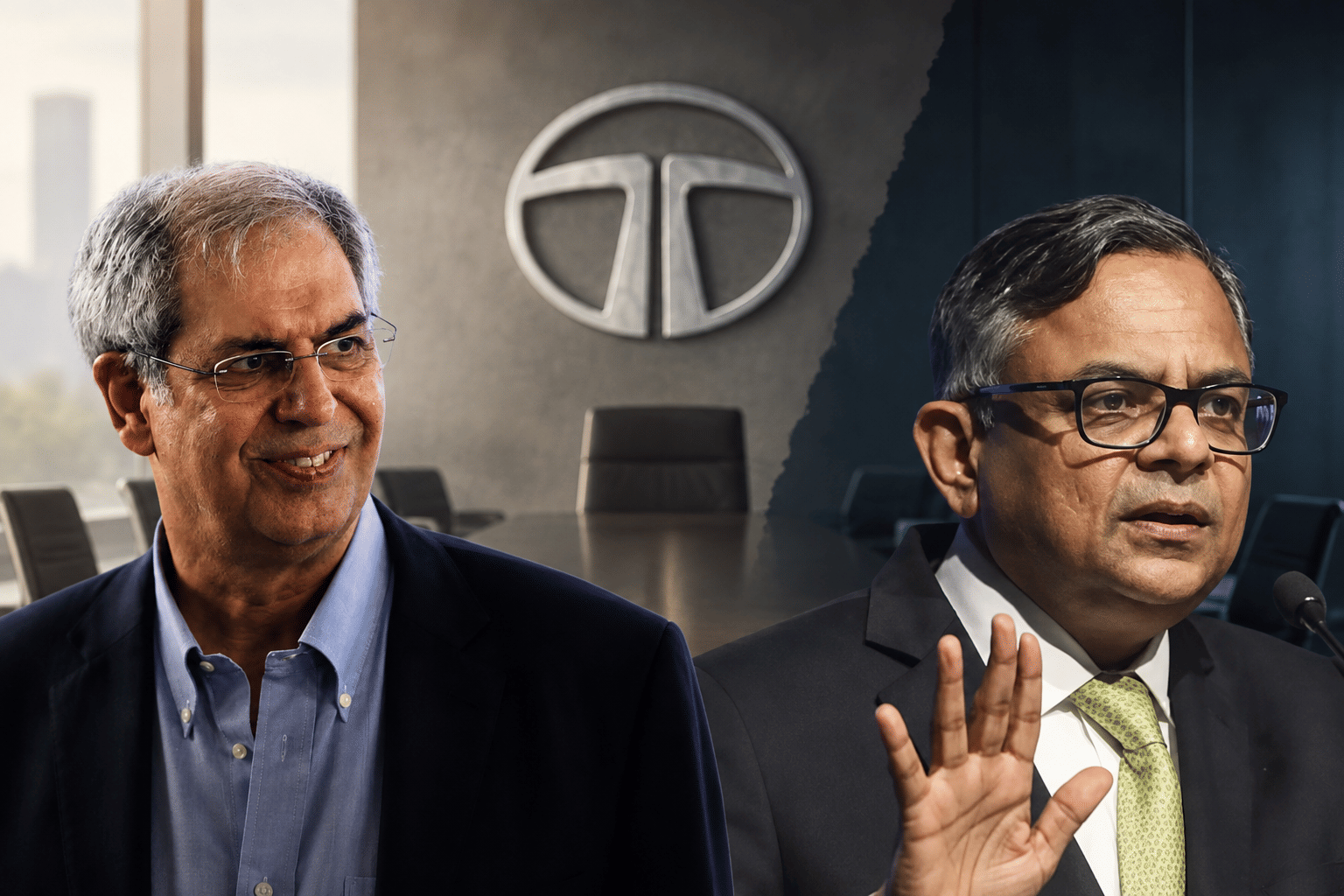
Noel Tata has publicly opposed Tata Sons' decision to reappoint N Chandrasekaran as chairman for another five-year term, setting up a significant governance dispute within India's largest business group.
The disagreement emerged after Tata Sons announced that its board had voted to reappoint Chandrasekaran, despite the veteran executive informing directors in August that he did not intend to seek another term when his current tenure ends on 20 February 2027.
According to statements reported by media outlets, Noel Tata maintained that Chandrasekaran's decision to step down was voluntary, had already been accepted by shareholders, and should not be reversed through a subsequent board resolution.
Noel Tata says the decision was Chandrasekaran's own
In a statement, Noel Tata said Chandrasekaran's decision not to seek reappointment was made independently and was not prompted by the board.
He said the decision had been "freely taken and clearly expressed" and was neither requested by directors nor linked to any formal review process.
According to Noel Tata, the announcement had already been made public and accepted by key stakeholders, including shareholders, employees, lenders and market participants.
Once a leadership transition has been publicly communicated and acknowledged by shareholders, reversing course can create governance complications and strategic uncertainty.
He further stated that Tata Trusts, which owns around 66% of Tata Sons, had accepted Chandrasekaran's communication and considered the matter settled.
Governance concerns move to the forefront
A central issue raised by Noel Tata relates to governance procedures surrounding the reappointment.
He said the board's latest decision effectively overturns:
- Chandrasekaran's previously communicated intention to step down
- Acceptance of that decision by Tata Trusts
- The succession process that shareholders had expected to follow
Noel Tata stated that "the page has turned" and that the company should move forward rather than revisit a decision already accepted by stakeholders.
Questions raised over legal validity
Noel Tata also questioned whether the reappointment process could face legal scrutiny.
According to his statement, the chairmanship is an office held by a director, and Chandrasekaran's continuing position as a director remains unresolved because the shareholder meeting required to determine that matter could not proceed due to a lack of quorum.
He said a resolution on the chairmanship should not be considered until that issue is settled.
Noel Tata warned that any decision taken before the director-related question is resolved could potentially be challenged by shareholders.
Dispute over Tata Trusts' voting rights
The disagreement extends beyond succession planning and into the interpretation of Tata Sons' governance framework.
According to Noel Tata's statement, Tata Trusts nominee directors possess specific approval rights regarding the appointment or reappointment of the Tata Sons chairman.
He said four directors voted in favour of Chandrasekaran's continuation, while he voted against the proposal.
Noel Tata contended that because one of the Tata Trusts nominee directors opposed the resolution, the proposal lacked the support required under the company's Articles of Association and was therefore legally invalid.
Board backs Chandrasekaran for another term
Despite the objections, Tata Sons announced that its board had requested Chandrasekaran to reconsider his earlier decision.
The company said he agreed to the request and would continue as chairman for a further five-year term after the expiry of his current tenure.
Chandrasekaran has led Tata Sons since February 2017 and has overseen several major strategic initiatives across the group, including Air India's transformation, expansion in manufacturing, and preparations linked to regulatory requirements affecting Tata Sons.
The development also comes amid broader discussions over the future structure of Tata Sons, including the Reserve Bank of India's recent stance on the company's regulatory status and potential listing-related considerations.
What happens next
The contrasting positions taken by Tata Sons' board and Tata Trusts have brought one of India's most influential corporate governance debates into the open. Whether the reappointment proceeds without challenge or faces further scrutiny could shape leadership succession and governance dynamics across the wider Tata Group in the months ahead.