








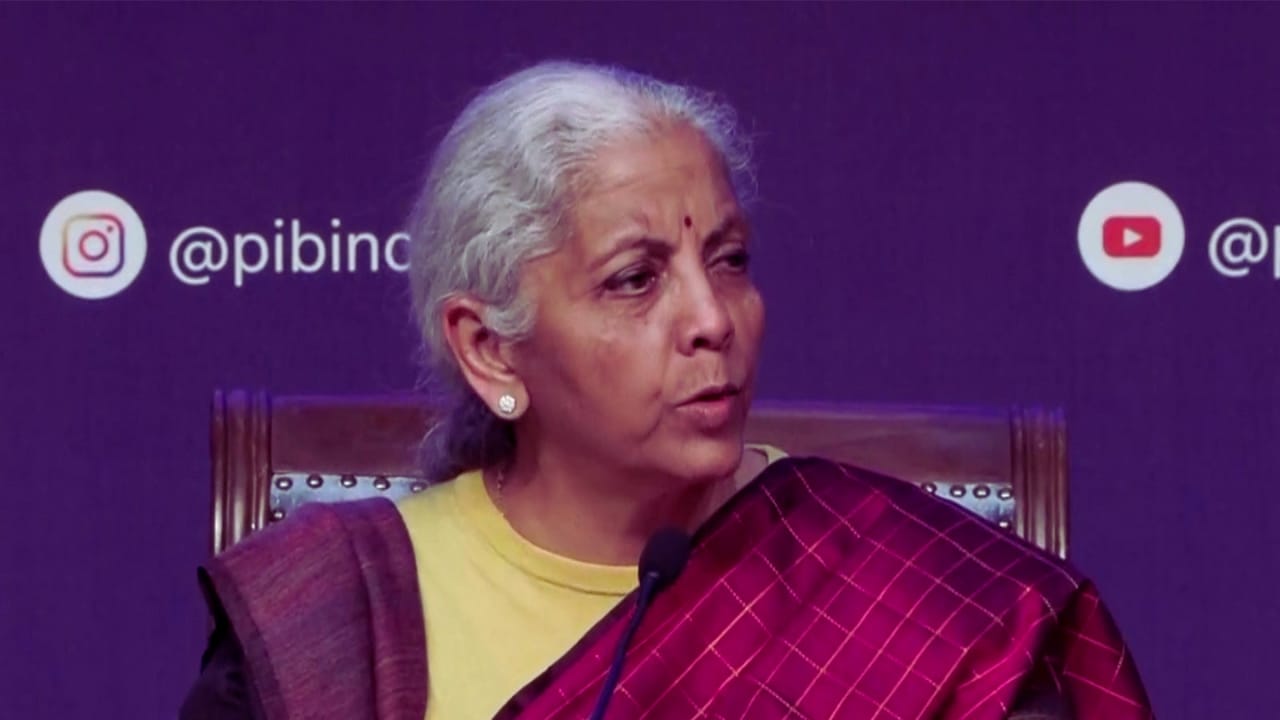
The ‘orange economy’ entered India’s economic vocabulary in the Union Budget after Finance Minister Nirmala Sitharaman highlighted it as a new growth lever, signalling a sharper policy focus on creative industries. The reference positions culture, creativity and intellectual property as contributors to jobs, exports and tourism, rather than peripheral sectors.
The term ‘orange economy’ describes economic activity driven by creativity and ideas that are converted into cultural goods and services protected by intellectual property. It spans animation, visual effects, gaming and comics (AVGC), design, music, live entertainment, crafts, fashion and culture-led tourism. The concept was first articulated by former Colombian president Iván Duque Márquez and economist Felipe Buitrago in their 2013 book The Orange Economy: An Infinite Opportunity, which framed creativity as a measurable economic engine.
In her Budget speech, Sitharaman said India’s AVGC sector is expanding rapidly and could require around two million professionals by 2030. To build a talent pipeline, the government will support the Indian Institute of Creative Technologies, Mumbai, to set up AVGC content creator labs in 15,000 secondary schools and 500 colleges nationwide.
Design education is another pillar. The finance minister announced plans to establish a new National Institute of Design in eastern India, to be selected through a challenge-based route, addressing shortages of trained designers even as demand grows.
The Budget also links the orange economy to heritage and tourism. Sitharaman said 15 archaeological sites—including Lothal, Dholavira, Rakhigarhi, Adichanallur, Sarnath, Hastinapur and Leh Palace—will be developed as “vibrant, experiential cultural destinations”. Excavated landscapes will be opened through curated walkways, supported by immersive storytelling technologies, conservation labs and interpretation centres.
These measures align with the Economic Survey 2025–26, which estimated gaming revenues at ₹232 billion in 2024, animation and VFX at ₹103 billion, and live entertainment at over ₹100 billion, with spillovers into tourism and urban services. The Indian Express reported that the Survey points to strong employment and export potential across creative segments.
Globally, the creative economy generates more than $2 trillion in annual revenue and nearly 50 million jobs, UN data show. In India, Union minister Hardeep Singh Puri said in 2024 that the creative sector was valued at about $30 billion, employed nearly 8% of the workforce, and saw 20% growth in exports in 2023–24, according to public remarks cited by national media.
However, practitioners caution that outcomes will depend on execution. Single-window clearances, faster permissions and consistent regulation will be critical to help creative enterprises scale and attract capital.
The Budget’s embrace of the orange economy marks a shift in policy intent—from viewing creativity as cultural capital to treating it as economic infrastructure. Whether that intent translates into sustained jobs and exports will hinge on how quickly institutions, skills and markets are built around it.