The United States has barred Microsoft, Infosys, Wipro, Tata Consultancy Services (TCS), HCLTech, Cognizant, Capgemini and Adobe from participating in a federal labour certification programme that forms a key step in securing employment-based green cards for foreign workers.
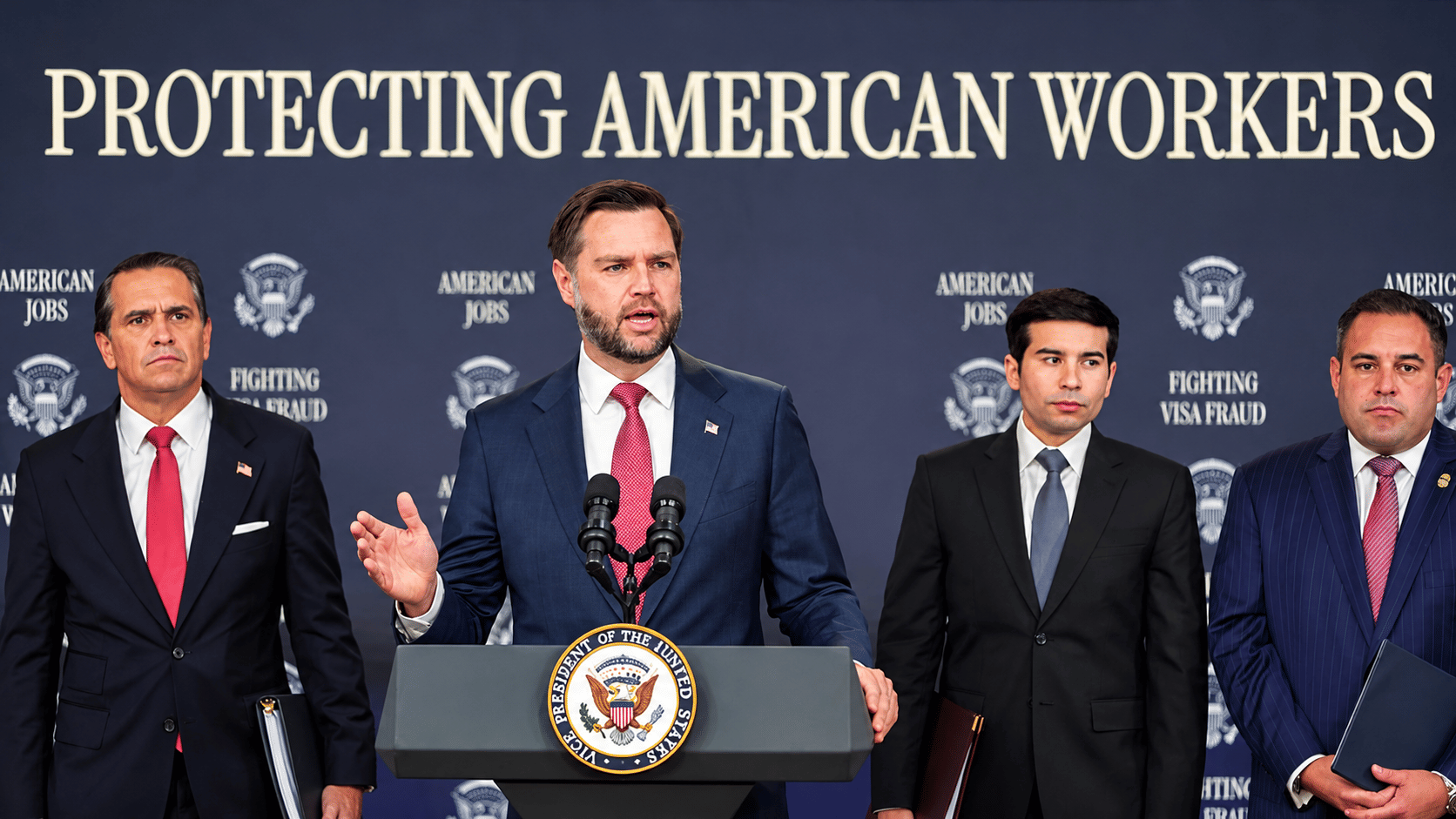
The move, announced by US Vice President JD Vance, Labour Secretary Keith Sonderling and Attorney General Todd Blanche under the US Anti-Fraud Task Force, marks one of the most significant immigration-related actions targeting the technology sector in recent years.
Under the decision, the US Department of Labour will neither accept new Permanent Labour Certification Programme applications nor process pending applications involving the eight companies. According to US officials, the action is part of a broader effort to investigate employment practices they claim disadvantage American workers.
For India's technology industry, the development carries particular significance. Indian nationals account for more than 70% of approved H-1B petitions annually, making employment-based immigration pathways a critical component of global talent mobility.
Labour certification programme comes under scrutiny
The Permanent Labour Certification Programme, commonly known as PERM, is a mandatory step for many employers seeking employment-based green cards for foreign workers.
According to Labour Secretary Keith Sonderling, the suspension covers six major IT services firms and two technology companies already facing federal scrutiny.
The companies named in the action are:
- Microsoft
- Infosys
- Wipro
- TCS
- HCLTech
- Cognizant
- Capgemini
- Adobe
Sonderling stated that Cognizant, Infosys, Tata, Wipro, HCL and Capgemini were being suspended from the programme, while Microsoft and Adobe were also barred due to multiple ongoing federal investigations.
The decision effectively freezes both new and pending labour certification applications involving the affected organisations.
Microsoft becomes a focal point of the administration's criticism
During the announcement, Vice President JD Vance directed some of his strongest criticism at Microsoft.
Vance accused the company of benefiting from immigration programmes while simultaneously reducing its domestic workforce.
According to figures cited by the administration, Microsoft laid off approximately 6,000 American employees in 2025, despite receiving approval for more than 6,000 H-1B visas and filing 3,682 PERM applications.
Vance claimed nearly 1,000 of those applications were linked to positions similar to roles affected by the layoffs.
The administration has alleged that such practices undermine employment opportunities for American workers, although the companies have not publicly responded to the latest allegations at the time of the announcement.
Officials cite scale of foreign worker recruitment
US officials also highlighted long-term immigration data to justify the crackdown.
According to figures presented by Sonderling:
- The eight companies have collectively requested nearly three million foreign workers since 2009.
- They have received more than 230,000 H-1B approvals.
- They have secured over 100,000 permanent labour certifications.
Administration officials argued that these numbers represent jobs and opportunities that could have gone to American workers.
The comments reflect a broader policy direction under the Trump administration, which has consistently advocated tighter oversight of employment-linked immigration programmes.
H-1B programme faces renewed political scrutiny
The announcement included some of the administration's strongest rhetoric yet on the H-1B visa programme.
Vance described foreign workers recruited through H-1B visas as "foreign indentured servants" and referred to companies heavily using the programme as "visa mills".
The remarks signal a more aggressive stance on skilled immigration and are likely to intensify concerns among multinational employers that rely on global talent mobility.
For Indian technology professionals, the development could create uncertainty around long-term immigration pathways, particularly for those pursuing permanent residency through employer-sponsored routes.
Universities also drawn into immigration investigations
The administration simultaneously announced a separate investigation into the use of J-1 exchange visitor visas at nine major US universities.
Institutions named include:
- Harvard University
- Yale University
- Stanford University
- California Institute of Technology (Caltech)
According to Vance, investigators will examine whether universities are relying excessively on foreign researchers through the J-1 programme instead of hiring American graduate students and academics.
The J-1 visa allows foreign nationals to enter the United States for research, teaching, education and specialised professional activities.
Administration officials contend that some institutions may be using the programme in ways that suppress wages or reduce opportunities for domestic talent.
Visa fraud strike team launched
Alongside the enforcement measures, the administration announced the formation of a dedicated visa fraud strike team comprising investigators from multiple federal agencies.
Department of Labour Inspector General Anthony D'Esposito said the initiative would strengthen enforcement efforts across both corporate and academic institutions.
Officials indicated that immigration compliance, labour certification practices and visa usage will face heightened scrutiny under the new framework.
What comes next
The suspension of eight global technology companies from the PERM programme marks a major escalation in Washington's efforts to tighten oversight of employment-based immigration.
While the immediate impact will be felt by the affected employers and their foreign workforce, the move could have wider implications for talent mobility, green card sponsorship and skilled immigration into the United States.
For Indian IT services firms, which have historically relied on global mobility programmes to support client operations, the decision adds another layer of uncertainty to an already evolving immigration landscape. How long the suspensions remain in place, and whether they lead to broader policy changes, will be closely watched by employers, workers and industry stakeholders alike.