In the rush to make employees AI-ready, organisations often begin with the technology: which tools to buy, which courses to mandate and how quickly adoption can be scaled.
Rather than starting with technology, MakeMyTrip is focusing on the work itself first.
The travel-tech company has asked employees to identify tasks that consume too much time, processes that lack clarity, operationally critical areas and moments where internal or external customer experience could improve. The technology is considered only after the problem has been made visible.
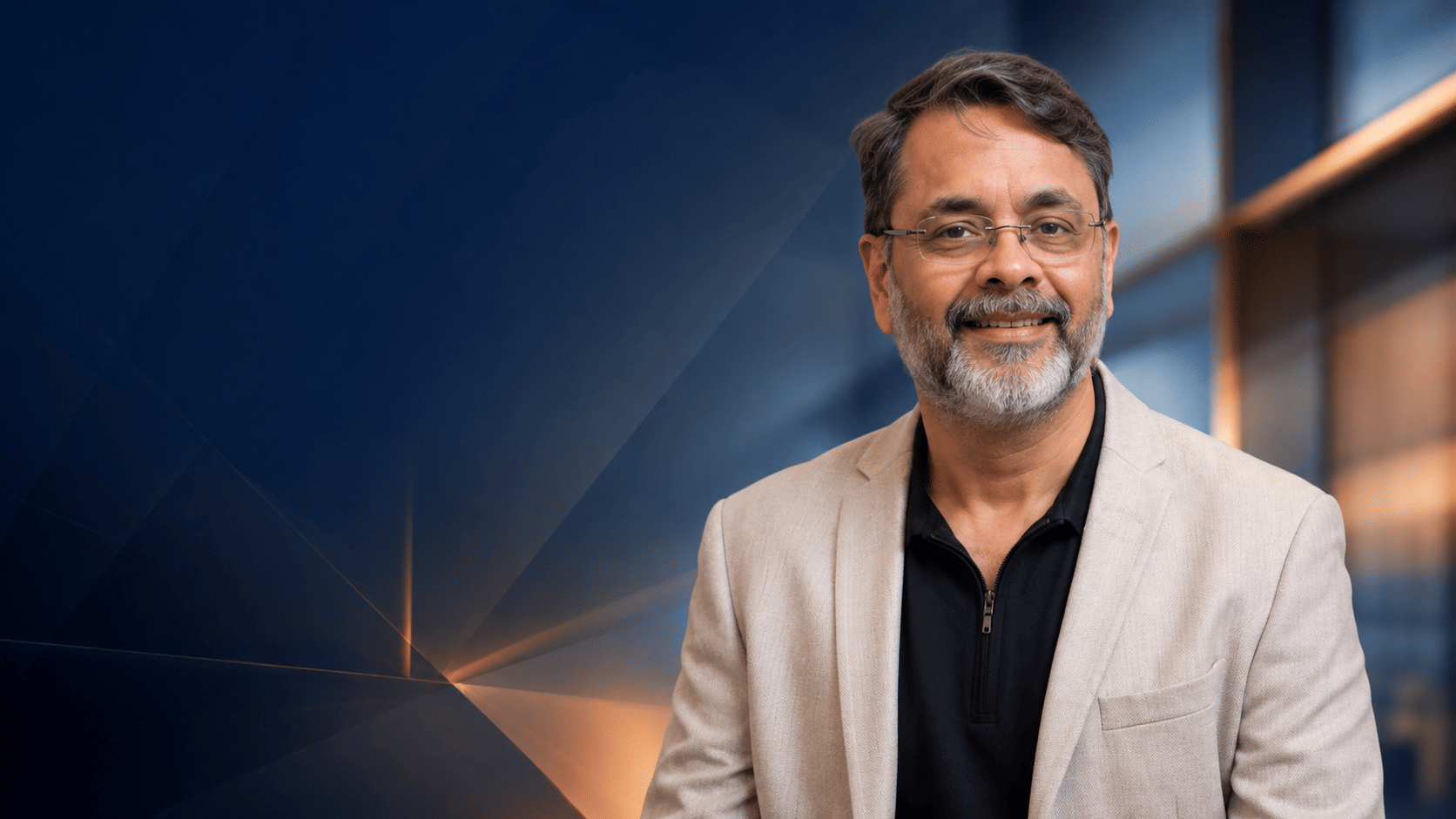
That sequence captures the central argument Yuvaraj Srivastava, group CHRO, MakeMyTrip, makes about workforce readiness. Employees need AI fluency, but fluency is not the same as knowing the greatest number of tools. It is the ability to recognise which problem deserves attention, choose a solution proportionate to it, and decide how success will be measured.
Ahead of his participation at People Matters TechHR India 2026, Srivastava spoke to People Matters about how MakeMyTrip is trying to build that judgement, and why human capability becomes more important as technology becomes easier to use.
Make employees solve with AI, not merely study it
MakeMyTrip has used AI in parts of hiring for the past few years, including video interviews, analysis of interview outputs and candidate shortlisting. With generative AI becoming more accessible, its focus has expanded to practical capability across functions.
Employees need enough foundational knowledge to understand the available models and where they may be useful, but Srivastava does not believe this should become a technical education exercise for the entire workforce.
“Do not train people to become scientists in these areas,” he said. “They should be able to use the technology well.”
The next step moves learning into real work. MakeMyTrip asked departments to surface their own use cases rather than wait for a central technology team to prescribe them.
That led to an internal “Agent-a-thon”—an AI-agent-focused version of a hackathon, in which teams proposed nearly 200 use cases drawn from the work they knew best.
Functional specialists were paired with engineers and given about six weeks to work on the ideas through focused sprints. The functional teams brought an understanding of the workflow, the friction, and the desired outcome. Engineers helped translate that context into possible solutions.
Srivastava said a significant number of use cases were solved, progressed, or brought into use. Employees were learning AI through problems whose consequences they already understood.
For HR leaders, this changes the measure of capability building: training completion shows exposure; the ability to identify a worthwhile use case and redesign a workflow shows application.
Skills intelligence begins with knowing what not to use
The abundance of AI tools is producing a less visible capability gap. Employees may understand what a model can do without knowing whether it is the right model for the job.
Srivastava used a simple analogy: a small problem does not need an artillery shell. The most sophisticated AI resource is not automatically the most effective choice, particularly when cost and complexity are considered.
“You cannot use everything for everything, because everything has a cost,” he said. “People need to understand what should be used for what.”
This is where AI fluency develops into skills intelligence: connecting the tool to the size and importance of the problem, assessing the resources required and establishing the outcome before work begins.
“First set your target, identify what your success metric will be and then start working on it,” Srivastava said.
Without an agreed measure of success, organisations can end up rewarding technical novelty rather than business value. A target might relate to time released, greater process clarity, operational reliability or customer experience, the same signals MakeMyTrip used to identify potential use cases.
Srivastava believes employees will increasingly need to act as ‘internal consultants’ to their own functions: diagnosing before prescribing, prioritising competing problems and selecting the least complex resource capable of producing the required result.
The skill that matters, therefore, is not merely learning the next tool. It is knowing when to use it, when a simpler intervention will work and which metric will reveal the difference, he explained.
The human edge sits in what customers do not say
In travel, the boundary between technological efficiency and human judgement is particularly visible.
A trip is not a standard purchase that can simply be returned after use. Customers commit money, time, planning and emotion to an experience that cannot be recreated once it has gone wrong. Technology can increase reach, generate insights and make service more efficient, but the customer’s real need may not be fully expressed in a search query or support request.
“A lot of things are unsaid,” Srivastava said. “Emotions express the requirements of a customer. Human empathy, compassion, experience and wisdom help people understand those nuances, guide customers and solve problems.”
For MakeMyTrip, the human edge supplies context technology may not capture: interpreting an incomplete request, recognising the emotion behind it and exercising judgement when the consequence is difficult to reverse.
The wider test is clear: use technology where the problem is explicit, repeatable and measurable; preserve human judgement where the need is ambiguous, emotionally charged or consequential.
AI can optimize a transaction. Understanding the experience still requires people.
AI fluency cannot follow the hierarchy
An AI-enabled workplace also changes who is considered the expert.
Senior employees may bring experience, business context and a stronger instinct for prioritisation. Younger or digitally native colleagues may have earlier exposure to emerging tools. If knowledge is expected to travel only down the hierarchy, the organisation loses access to one side of that exchange.
“From senior people, you gain wisdom and the right way of prioritising how to use your skills,” Srivastava said. “But certain skills may have come earlier and more easily to younger people or digital natives. There is no harm in learning those skills from them.”
Managers therefore need to be comfortable acknowledging what they do not know. Their value will lie less in mastering every technology before their teams and more in helping the right expertise reach the right problem.
Srivastava suggested that organisations create an internal marketplace of practitioners, making people with particular expertise visible across functions and levels. Employees could then identify whom to learn from based on the capability they need rather than depending on a fixed group of trainers.
This makes learning more democratic and allows capability to move laterally through a growing organisation. To retain agility at scale, knowledge must travel faster than hierarchy.
Career speed needs clarity, not just faster promotions
The same visibility is shaping MakeMyTrip’s approach to career growth.
The company uses career-lattice technology to help employees explore possible moves and understand the capabilities required to reach another role. HR business partners and frontline leaders are trained to guide these conversations and help employees convert a longer-term ambition into more immediate development priorities.
The range of roles within a travel-tech business—from ticketing and management information systems to brand, technology and data science—creates possibilities that a traditional career ladder may conceal. Capabilities such as customer insight or data fluency can be relevant across functions even when the job titles appear unrelated.
But Srivastava cautioned against placing the entire responsibility for progression on the employer.
“The organisation can provide the platform and opportunity, but the individual also needs to be motivated and clear about what they want,” he said.
For young employees seeking speed, purpose and visible impact, that clarity is critical. Career velocity cannot be manufactured by accelerating promotions alone. It comes from making possible routes visible, clarifying what each move demands and giving employees the agency to build towards them.
The CHRO’s task is calibration, not constant reinvention
Srivastava does not subscribe to the idea that HR leaders must discard everything they previously knew to remain relevant.
The more urgent requirement is calibration: adjusting people's decisions to business realities, technological change and workforce sentiment without resorting to short-term reactions.
When uncertainty and anxiety about AI affect employees, transparent communication, mental well-being and motivation become business concerns. The CHRO must work with senior leaders to ensure the culture and intent set at the top travel through the middle and frontline.
“The CHRO needs to have an eye on the future and take calls that are sustainable,” Srivastava said. “Your actions today should not become problems for tomorrow.”
Becoming a growth orchestrator may therefore require less dramatic reinvention and more openness to feedback, younger employees and the removal of barriers that prevent skills, ideas and decisions from moving.
MakeMyTrip’s approach ultimately connects three forms of readiness: employees who can apply AI to real work, managers who can learn beyond hierarchy and a business that knows where human judgement must remain in control.
The advantage will not come from deploying the most technology. It will come from making better choices about where technology creates value.
Hear more from Yuvaraj Srivastava at TechHR India 2026
Yuvaraj Srivastava will join more than 175 global experts, CEOs, CHROs and HR innovators at People Matters TechHR India 2026, Asia’s largest HR and Work Tech conference, on 6-7 August at Yashobhoomi Convention Centre, Delhi.
Join the conversations exploring how leaders can move AI from experimentation to impact, build capability at speed and orchestrate growth without losing the human edge.
Register now to hear directly from Yuvaraj and other leaders shaping what comes next for people and work.