The latest round of layoffs at Meta, Amazon and other major US technology firms is placing renewed pressure on Indian professionals working in America on H-1B visas, many of whom now face a narrow window to secure fresh employment or leave the country.
The cuts come as Silicon Valley companies continue to restructure operations around artificial intelligence investments, automation and cost control. While layoffs have affected workers across nationalities, immigration experts and industry observers say Indian employees remain among the most vulnerable because of their heavy dependence on employer-sponsored visas.
According to data tracked by Layoffs.fyi, more than 110,000 technology workers have lost jobs globally so far this year. A substantial portion of those affected are believed to be foreign workers employed in the United States, particularly Indians, who account for the largest share of H-1B visa holders.
Meta recently cut around 8,000 jobs as part of its broader AI-led restructuring efforts. Amazon has also continued workforce reductions across multiple divisions after several rounds of layoffs over the past two years. LinkedIn and other technology firms have similarly reduced headcount as companies redirect spending towards artificial intelligence infrastructure and products.
For Indian employees working on H-1B visas, the impact stretches far beyond employment.
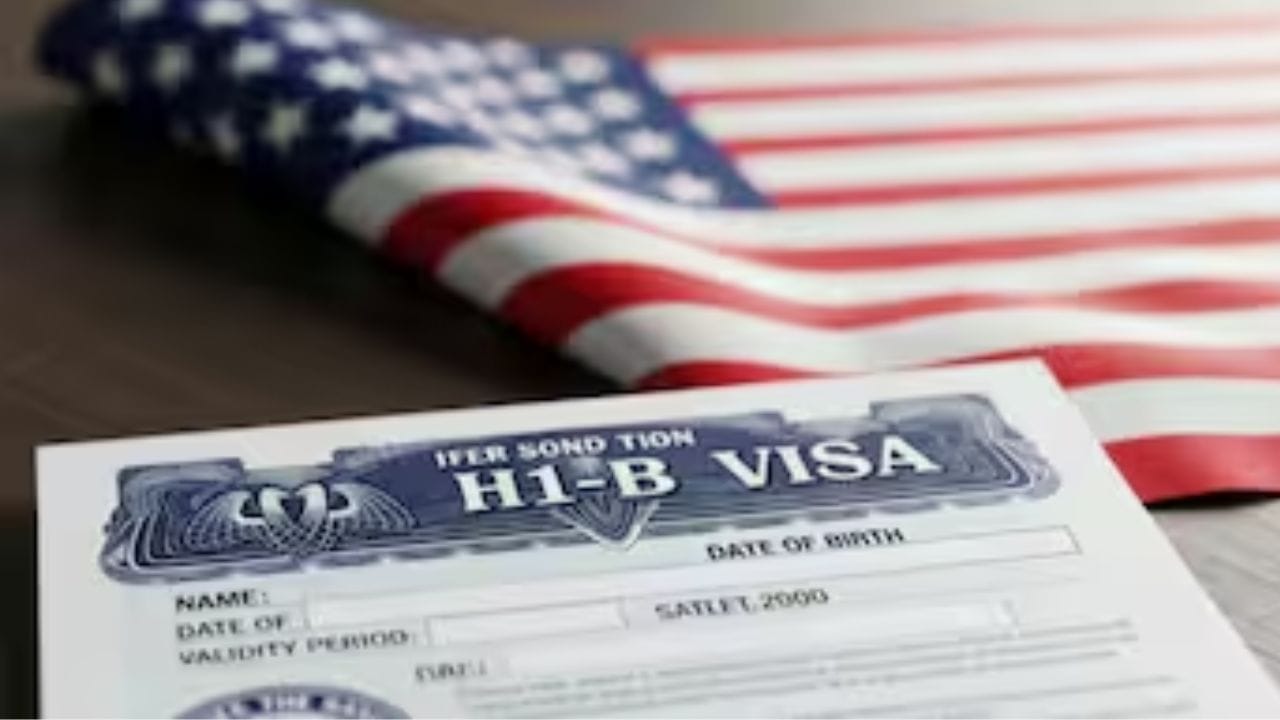
Under rules set by the US Citizenship and Immigration Services (USCIS), workers who lose jobs on H-1B visas generally receive a 60-day grace period, or until their I-94 validity expires, to either find another sponsoring employer, switch visa categories or leave the United States.
For many Indian professionals, that deadline creates immediate uncertainty around immigration status, housing, healthcare and family stability.
Why Indian workers are especially exposed
India remains the single largest beneficiary of the US H-1B visa programme. US government data for FY25 showed Indian nationals accounted for the overwhelming majority of approved H-1B petitions.
That concentration has now become a key vulnerability during periods of large-scale layoffs.
Many Indian professionals spend years, and in some cases decades, waiting for employment-based green cards because of country-specific caps and processing backlogs. During that period, their legal status in the US remains tied to continued employment.
As a result, a layoff can quickly trigger wider consequences.
Key concerns facing affected workers include:
• The need to secure a new sponsoring employer within 60 days
• Potential disruption to children’s schooling and healthcare coverage
• Ongoing mortgage and rental obligations in expensive US cities
• Delays or complications in green card applications
• Restrictions on remaining unemployed for extended periods
Immigration lawyers have told several US media outlets that laid-off workers are increasingly exploring temporary alternatives to remain in the country legally while searching for jobs.
One commonly used route involves filing for a B-1 or B-2 visitor visa through Form I-539.
Previous USCIS guidance indicated that workers on visitor status could attend interviews and look for employment, provided they were not actively working.
However, immigration attorneys recently cited by US media reports said authorities are now scrutinising such applications more closely, with increased requests for documentation and additional questioning around change-of-status petitions.
That has added another layer of anxiety for affected employees.
AI spending reshapes hiring priorities
The layoffs are unfolding alongside an aggressive industry-wide shift towards artificial intelligence.
According to Bloomberg, Meta is expected to spend more than $100 billion this year on AI-related investments, including data centres, chips and infrastructure. The company has also reportedly reassigned employees internally towards AI-focused projects even as cuts continue in other divisions.
Across the sector, firms are flattening management structures, reducing non-core teams and prioritising AI engineering talent over broader hiring.
That shift is fuelling fears among workers that the slowdown may not be temporary.
Several professionals affected by recent layoffs have shared concerns on platforms such as Blind and Reddit that traditional software and support roles could face weaker hiring demand as companies automate more functions and focus spending on AI.
A recent poll on Blind, a social networking platform widely used by tech employees, suggested nearly half of Indian professionals in the US would consider returning to India if they lost their jobs.
Others are exploring opportunities in Canada, Europe and India’s expanding technology sector as alternatives to long-term dependence on the US immigration system.
Severance packages offer temporary relief
According to Business Insider, employees laid off by Meta are receiving severance packages that include 16 weeks of base pay, along with an additional two weeks for every year of service. The company is also providing healthcare coverage for employees and their families for up to 18 months.
While those benefits may soften the financial impact in the short term, immigration experts say they do not address the core challenge facing H-1B workers.
Importantly, the 60-day grace period typically begins from the employee’s last official working day rather than the final severance payment date.
That means workers often begin their visa countdown immediately after termination, even if compensation continues for several weeks.
A growing rethink of the American dream
For decades, the US technology industry represented one of the most attractive career pathways for Indian engineers and software developers. Higher salaries, global exposure and long-term settlement opportunities drew thousands of skilled professionals each year.
But repeated layoff cycles, tightening immigration scrutiny and rising dependence on employer-linked visas are now forcing many to reassess those assumptions.
The latest wave of cuts has once again highlighted the precarious position of skilled foreign workers in the US technology sector, particularly at a time when companies are reshaping themselves around AI.
For thousands of Indian professionals, the challenge is no longer only about finding another job. It is about finding one quickly enough to preserve an entire life built overseas.