







AI & Emerging Tech
'AI as mirror, not mask': Amagi CPO outlines blueprint for responsible AI at work





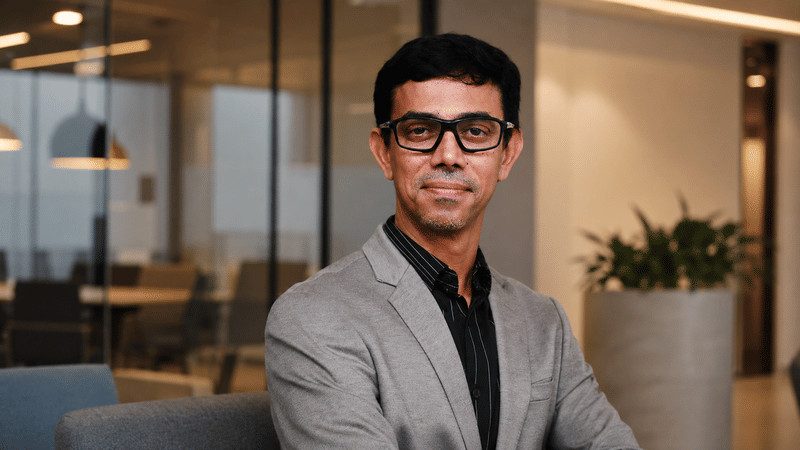
In an exclusive conversation with People Matters, Amagi Chief People Officer Prasad Menon explains why the future of AI at work depends less on smarter algorithms and more on better leadership.
Artificial intelligence is becoming part of almost every workplace decision. It writes, predicts, recommends and analyses. The bigger question is no longer whether organisations should use AI. It is whether leaders know where its role should end.
For Prasad Menon, Chief People Officer at Amagi, the answer is remarkably clear. AI should help leaders see more. It should never decide more.
In an exclusive conversation with People Matters, Menon offers a framework that goes beyond conversations about productivity, automation and efficiency. His central message is simple. Technology should amplify leadership, not replace it. If organisations get this balance wrong, they risk losing something algorithms cannot recreate: trust, empathy and the human character of work.
Leadership still owns the decision
Many discussions around AI begin with what technology can do. Menon begins somewhere else. He believes leaders should see AI as an extension of leadership intent rather than a substitute for leadership itself.
Every major technology has accelerated work in different ways. AI will do the same, only much faster. Yet speed alone is not the real opportunity.
Instead, Menon believes organisations have a chance to become more humane rather than less.
Technology, he says, can help leaders understand larger workforces more deeply and consistently, enabling what he describes as "augmented empathy."
At Amagi, this philosophy has been distilled into a simple operating principle. "AI as Mirror, Not Mask."
For Menon, AI should reveal organisational culture exactly as it exists. It should not reshape culture on behalf of leadership or become a convenient excuse for avoiding difficult conversations.
His view places responsibility firmly back where it belongs. Leaders must be willing to confront uncomfortable realities instead of expecting technology to solve them.
The danger isn't AI. It is what leaders choose to measure
One of Menon's strongest observations is that many conversations around workplace AI begin with fear.
He believes organisations often frame AI's impact through anxiety-driven metrics instead of asking what problem technology is actually trying to solve.
More importantly, he highlights risks extending beyond automation itself. According to Menon:
- Historical bias can easily be carried into automated systems
- Algorithm-driven policies can unintentionally reinforce inequity
- Overdependence on data can weaken an organisation's culture and values
- People decisions always carry broader human consequences beyond what dashboards reveal
Technology can generate insights. It cannot understand the emotional and cultural weight behind every workforce decision.
Trust is built before AI ever makes a recommendation
One recurring theme throughout the discussion is trust.
Menon describes one of leadership's biggest modern challenges as maintaining genuine human connection across increasingly digital and geographically dispersed organisations.
Technology, in his view, becomes valuable because leaders alone cannot continuously sense the experiences of thousands of employees.
Its purpose, however, extends beyond automation.
He describes AI's promise as the "democratisation of attention, care, and belonging." This philosophy shaped Amber, Amagi's AI-powered Chief Listening Officer.
Rather than replacing conversations, Amber was designed to strengthen them. According to Menon, the system rests on three principles:
- Psychological safety
- Confidentiality
- Zero fear of retribution
These principles encourage employees to speak honestly while allowing leaders to make employee voice-driven decisions without compromising trust.
Still, Menon makes another important distinction. Collecting employee feedback is only half the job. Employees also need evidence that organisations respond. Technology should never become extractive, where organisations collect information without visible action.
Trust, he says, remains the foundational decision behind every successful AI system.
Some decisions should never belong to algorithms
Perhaps the clearest boundary Menon draws concerns career decisions. He believes technology can identify trends, detect patterns and surface risks. It should not decide career-defining moments.
According to him, career progression, recognition and growth conversations require meaningful human oversight regardless of technological advancement. He points to an example inside Amagi.
Amber identified employees considered at risk. The solution did not come from AI. Instead, leaders intervened across compensation, career development and organisational design.
Technology identified the signal.
People interpreted the context. People made the decision. Menon applies the same thinking to inclusion. Belonging, trust and authentic relationships depend on empathy and judgement, qualities algorithms cannot replicate. Technology may inform these conversations. Leadership remains responsible for them.
AI should make conversations better, not fewer
Efficiency often dominates discussions about workplace AI. Menon believes organisations risk missing the bigger opportunity. Instead of replacing conversations, technology should improve them. AI can scale feedback across global teams and identify precisely where leaders need to focus attention. It cannot replace the conversations themselves.
He describes organisational evolution through three distinct phases. From:
- Systems of record
- Systems of relationship
- Systems of understanding
The next stage, he suggests, may become systems of care, where technology helps organisations understand people more effectively while leaders continue responding with empathy and intent. Rather than reducing the human role, each stage demands greater interpretation.
Ethics begins long before regulation
Menon also expands the conversation beyond organisational boundaries.
He believes business and people leaders carry responsibility for ensuring AI adoption remains inclusive, equitable and transparent.
Ethical AI, in his view, requires deliberate effort rather than assuming fairness will naturally emerge.
He also raises broader workforce questions many organisations have yet to answer.
Can businesses prepare people early enough for AI-driven workplaces instead of reacting only after jobs become obsolete?
Can organisations help individuals build future skills even when they may eventually leave?
Menon sees these questions as leadership responsibilities rather than public policy discussions alone.
The future belongs to leaders who understand both technology and people
Despite rapid advances in AI, Menon does not foresee leadership becoming less important.
If anything, he believes its role becomes more critical. Technology can process information faster.
It can reduce uncertainty. It can improve decision quality. It cannot replace purpose, judgement or values.
His vision is one where AI becomes a trusted adviser rather than the final decision-maker.
The outcome is not simply higher productivity.
It is the ability to ensure every employee, regardless of role, tenure or geography, feels heard.
Menon captures the relationship between humans and AI in three simple ideas that define his broader philosophy.
AI scales intelligence. Leadership scales humanity. Empathy is the algorithm of the future.
For organisations navigating the next phase of AI adoption, the distinction may prove more valuable than any new model or tool. The competitive advantage may come not from replacing people with algorithms, but from using technology to help leaders become more human at scale.
Topics
Author
Loading...