







AI & Emerging Tech
AI is shortening the shelf life of skills and degrees: Aptech CHRO





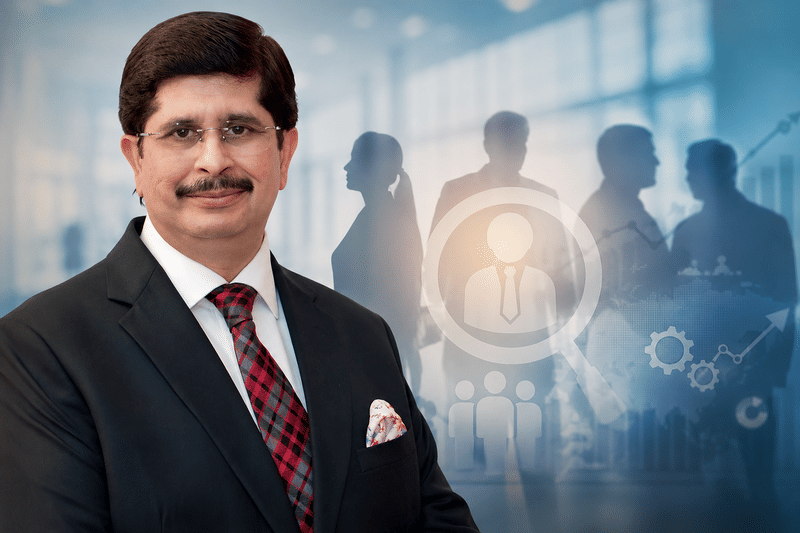
Degrees still matter, but they are no longer enough. As AI reshapes jobs, industries and career paths, employability is increasingly being measured through skills, adaptability and continuous learning, according to Aptech CHRO Shourya K. Chakravarty.
For decades, the formula for career success appeared straightforward. Earn a degree, secure a job and build expertise over time.
That formula is now under pressure.
The rise of artificial intelligence, automation and rapid technological change is forcing employers, educators and professionals to rethink what makes someone employable. The challenge is no longer simply about obtaining qualifications. It is about staying relevant in a labour market where skills can become outdated far faster than before.
In an interview with People Matters, Shourya K. Chakravarty, Chief Human Resources Officer at Aptech Limited, outlined how organisations are increasingly looking beyond formal qualifications and placing greater emphasis on adaptability, practical capability and continuous learning.
His assessment points to a broader shift underway across industries: the distance between education and employability is growing, while the shelf life of knowledge is shrinking.
The degree-to-job pipeline is under strain
One of the clearest concerns emerging across organisations is the widening gap between academic achievement and workplace readiness.
Graduates continue to enter the labour market with degrees and theoretical knowledge. Yet many employers report that candidates often lack practical exposure to solving problems, collaborating with teams, communicating effectively and operating in fast-moving business environments.
According to Chakravarty, the issue stems partly from the speed at which industries are evolving.
While organisations increasingly require professionals who are digitally aware, agile and capable of working across technology-driven environments, educational systems often remain heavily focused on theory and examinations.
The disconnect is particularly visible in rapidly changing fields where tools, technologies and workflows evolve continuously.
Areas where the gap is most visible
- Artificial intelligence
- Digital fluency
- Animation and VFX
- Emerging technology-driven sectors
- Interdisciplinary work environments
The result is a growing emphasis on capability rather than credentials alone.
Portfolios, internships, practical projects and industry exposure are becoming increasingly important indicators of workplace readiness.
Employers are hiring for adaptability, not just qualifications
The shift in hiring priorities reflects a larger transformation taking place inside organisations.
Businesses today operate in environments shaped by AI, automation, changing consumer behaviour and continuous technological disruption. Job roles themselves are evolving, sometimes faster than job descriptions can be rewritten.
That reality is changing what employers value.
Rather than relying solely on academic qualifications, organisations increasingly seek professionals who can:
- Learn quickly
- Adapt to change
- Solve business problems
- Contribute effectively from the outset
- Demonstrate practical execution capability
Degrees continue to hold value, but employers are increasingly assessing whether candidates can apply knowledge rather than simply possess it.
This is particularly evident across sectors such as AI, gaming, immersive media and digital businesses, where project work, internships, creator-driven work and practical portfolios are becoming critical differentiators.
The hiring conversation is gradually moving from "What qualification do you have?" to "What can you actually do?"
AI is changing the lifespan of expertise
Perhaps the most striking observation from Chakravarty's perspective concerns the changing longevity of skills themselves.
Historically, specialised knowledge or technical degrees often remained relevant for long periods. Innovation cycles moved more slowly, allowing professionals to rely on expertise acquired years earlier.
That is no longer the case.
As AI spreads across industries, the pace of change has accelerated dramatically. Skills that once remained relevant for years can now become outdated within a much shorter timeframe.
This transformation is reshaping how careers develop.
As routine and transactional work becomes increasingly automated, organisations are placing greater emphasis on capabilities that remain distinctly human.
Skills becoming more valuable in an AI-driven economy
- Creativity
- Storytelling
- Innovation
- Strategic thinking
- Complex problem-solving
- Adaptability
Career paths are becoming less linear and more interdisciplinary.
Professionals are increasingly expected to evolve alongside technology rather than rely on a fixed body of knowledge acquired at the beginning of their careers.
The implication is significant: employability is shifting from qualification-based validation to continuous capability development.
The employability challenge is also an education challenge
The discussion around employability often focuses on job seekers. Chakravarty suggests the challenge also reflects a broader structural issue involving educational institutions.
According to him, many higher education systems have not evolved at the same pace as the modern labour market.
The issue extends beyond skills gaps and into alignment gaps.
Employers and educational institutions frequently operate on different timelines. Industry requirements change rapidly, while curriculum reforms often take much longer to implement.
This creates a situation where graduates can complete formal education without gaining sufficient exposure to the realities of contemporary workplaces.
Chakravarty points to several areas where stronger collaboration could help narrow the gap:
- Live industry projects
- Internships
- Mentorship programmes
- Curriculum co-creation
- Experiential learning models
Without deeper integration between academia and industry, the mismatch between educational outcomes and employer expectations is likely to persist.
Why Gen Z is approaching careers differently
The workforce itself is changing alongside technology.
Younger professionals are increasingly rejecting traditional assumptions about careers, learning and professional development.
Unlike earlier generations that often prioritised stability within a single profession, many Gen Z professionals are embracing a more flexible and opportunity-driven approach.
They are comfortable using:
- AI tools
- Online learning platforms
- Creator ecosystems
- Certifications
- Self-directed learning models
There is also growing interest in freelancing, digital entrepreneurship, creator-led businesses, gaming and independent content creation.
This shift is contributing to the rise of portfolio-driven careers, where individuals build diverse experiences and capabilities rather than defining themselves through a single designation or employer.
For organisations, this means traditional approaches to hiring, engagement and career development may require rethinking.
The growing importance of vocational learning
If the future of employability is becoming increasingly skills-driven, vocational education and industry-aligned skilling could play a more central role.
Chakravarty notes that vocational learning has long provided an alternative pathway for learners whose needs are not fully addressed through conventional educational systems.
Its appeal is straightforward: it enables individuals to learn practical skills and enter the workforce more quickly.
In a labour market undergoing constant transformation, that agility may become increasingly valuable.
Unlike traditional education models, vocational and experiential learning frameworks can adapt more rapidly to evolving industry requirements.
They expose learners to:
- Live projects
- Industry-standard tools
- Collaborative environments
- Practical business scenarios
As AI continues to reshape jobs across sectors, continuous reskilling is also becoming a necessity rather than an option.
The era of lifelong employability
A common thread runs through each of the challenges highlighted by Chakravarty.
The future of employability will likely depend less on what someone studied years ago and more on how effectively they continue learning throughout their careers.
The labour market is becoming increasingly dynamic. Technology is changing faster. Career paths are becoming less predictable. Skills are evolving more rapidly.
In that environment, the competitive advantage may no longer belong to those with the most impressive qualifications on paper.
It may belong to those who can learn, adapt and reinvent themselves repeatedly.
For employers, educators and professionals alike, that shift could prove to be one of the defining workforce trends of the AI era.
Topics
Author
Loading...