







AI & Emerging Tech
Can AI stop good candidates from getting lost in the hiring pile?
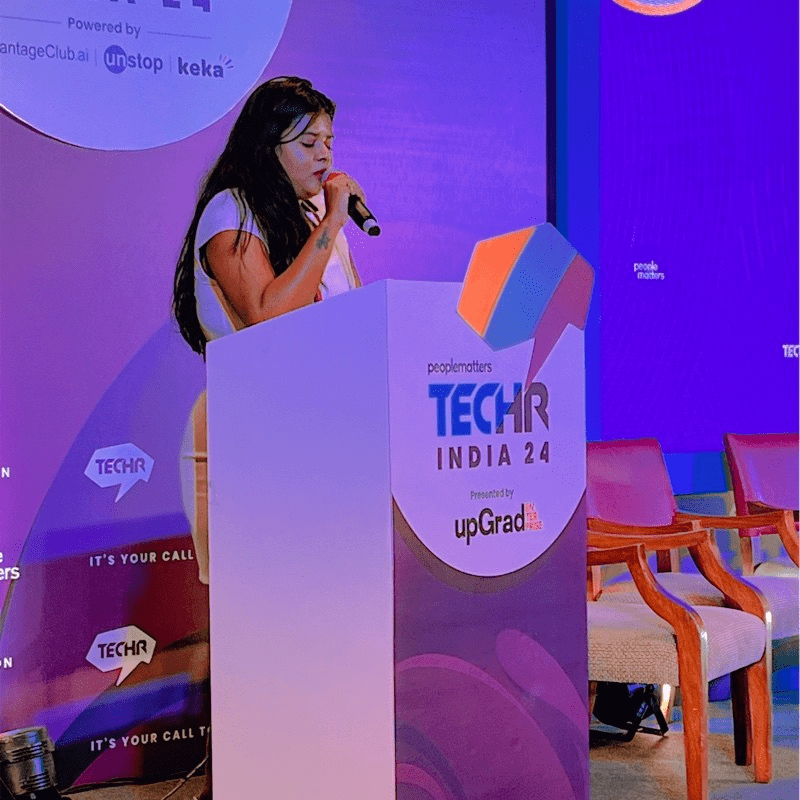



Fireflies.ai CEO Krish Ramineni explains how AI voice agents can speed up candidate screening, reduce recruitment bottlenecks and give recruiters more time for human judgement.
As applications increase, recruiters face a challenge: identifying strong candidates without allowing hiring volumes to overwhelm the screening process. Krish Ramineni, co-founder and CEO of Fireflies.ai, says AI voice agents could help address the problem by conducting first-round interviews and structuring candidate information for hiring teams.
In an interview with People Matters, Ramineni described how AI is moving beyond interview summaries and job description writing towards conducting interviews, asking follow-up questions and generating candidate scorecards. He believes the technology can help organisations assess larger candidate pools while keeping final hiring decisions with people.
“The big shift is that AI is moving from assisting with work to actually doing the work,” Ramineni said.
From interview assistance to candidate screening
AI has traditionally supported individual recruitment tasks, but Ramineni sees agents taking on a larger role in the initial stages of hiring. They can conduct first-round interviews, respond to questions about a role and capture candidate responses in structured reports.
“A few years ago, AI could summarise an interview or help write a job description. Today, an agent can run the first interview itself, ask relevant follow-ups, answer questions about the company and the role, and then produce a detailed report and a candidate scorecard,” he said.
Ramineni described this shift as a move from AI being a tool to becoming a teammate. In recruitment, this means automating repeatable screening activities while giving hiring teams information they can use in subsequent assessments.
Faster interviews could widen access to opportunities
Ramineni said Fireflies.ai already uses its Voice Agents to conduct first-round interviews for its own vacancies. He added that a number of current employees came through the process.
According to Ramineni, the company’s Voice Agents have interviewed thousands of candidates across 2,100 organisations in 97 countries. He also said the agents can conduct interviews at times convenient for candidates, reducing the wait for an initial conversation.
“A candidate shouldn't have to wait two weeks just to get a first-round interview,” he said.
Ramineni said there are days when he wakes up to find the AI has already interviewed 100 candidates. He sees this capacity as a way to manage screening volumes without requiring recruiters to conduct every initial interview themselves.
The potential benefit, he said, is not simply faster recruitment. It is ensuring qualified applicants are not overlooked because hiring teams lack the time to speak with everyone.
“The point isn't to make recruiting cheaper. It's to make sure great candidates aren't overlooked because of volume,” Ramineni said.
Where AI screening fits, and where people remain essential
Ramineni sees the strongest use case for AI in repeatable tasks, including asking consistent questions, collecting information, answering basic role-related queries and ensuring candidates have an opportunity to respond.
He said about half of all calls handled by Fireflies.ai’s Voice Agents are screening interviews, indicating how the technology is being used within its operations.
After an interview, the agents can analyse conversations, assess candidates against consistent criteria and prepare reports and scorecards for hiring teams. Ramineni said this gives recruiters structured information before they enter more detailed discussions with shortlisted applicants.
However, he drew a distinction between supporting assessment and making the final hiring decision.
“Understanding someone's motivations, evaluating how they think, selling them on the company and deciding whether you want to work with that person are still very human decisions,” he said.
“AI should help you make better decisions. It shouldn't make the final decision for you.”
His position places human judgement at the centre of recruitment, even as AI takes on more of the early-stage workflow.
Transparency and safeguards will shape candidate experience
The use of AI in recruitment also raises questions about how candidates experience their first interaction with a prospective employer. Ramineni said organisations risk making hiring feel transactional if they introduce AI without explaining its role.
“The main risk is making the experience feel transactional. Companies shouldn't pretend an AI agent is a human,” he said.
He said candidates should understand who or what they are speaking with, why the agent is being used and how the information they share will be handled.
Ramineni also emphasised the need for accurate information about the company and vacancy, alongside a clear route for candidates to speak with a person.
“Done badly, this makes recruiting feel impersonal. Done well, nobody waits around and nobody gets ignored,” he said.
These safeguards are important to the candidate experience because faster screening alone does not guarantee that applicants will feel informed or fairly treated.
Recruiters could spend more time building relationships
As AI takes on administrative work, Ramineni expects recruiters to devote less time to scheduling interviews, repeating screening calls and manually reviewing notes. He believes they will instead focus more on candidate relationships, understanding motivations and helping hiring managers make decisions.
“The agent can handle the first round at volume. The recruiter can spend their time having much deeper conversations with the people who should move forward,” he said.
Ramineni added that Fireflies.ai has used its own Voice Agents for recruitment for around 18 months. During this period, he said, the agents have interviewed thousands of candidates and helped the company hire many people.
He said the process allows recruiters to begin with recorded conversations and structured candidate information rather than relying solely on large volumes of CVs. The agents also generate scorecards and reports, while interviews can take place around the clock.
For Ramineni, the value lies in expanding the candidate pool recruiters can consider without losing structure in the screening process.
“I don't think AI removes the recruiter. It removes a lot of the repetitive work around recruiting,” he said.
AI teammates could reshape talent acquisition
Looking ahead, Ramineni expects recruitment workflows to involve multiple AI agents, each handling a different task. One could source candidates, another conduct initial interviews, while others organise assessments, prepare recruiters and manage follow-ups.
“Every recruiter will eventually have AI teammates,” he said, describing a future in which recruiters coordinate these systems rather than handle every step manually.
His advice to HR leaders is to begin with repetitive workflows where candidates and recruiters already lose time, rather than attempting to automate the entire recruitment process at once.
Whether AI can prevent strong candidates from being overlooked will depend not only on screening capacity, but also on how employers combine automation with transparent processes and human decision-making. Ramineni’s approach places AI in the early stages of recruitment, leaving deeper candidate engagement and final hiring decisions to people.
Topics
Author

Loading...