







AI & Emerging Tech
Compliance should be built into products, not bolted on later: Mudrex's Head of Compliance
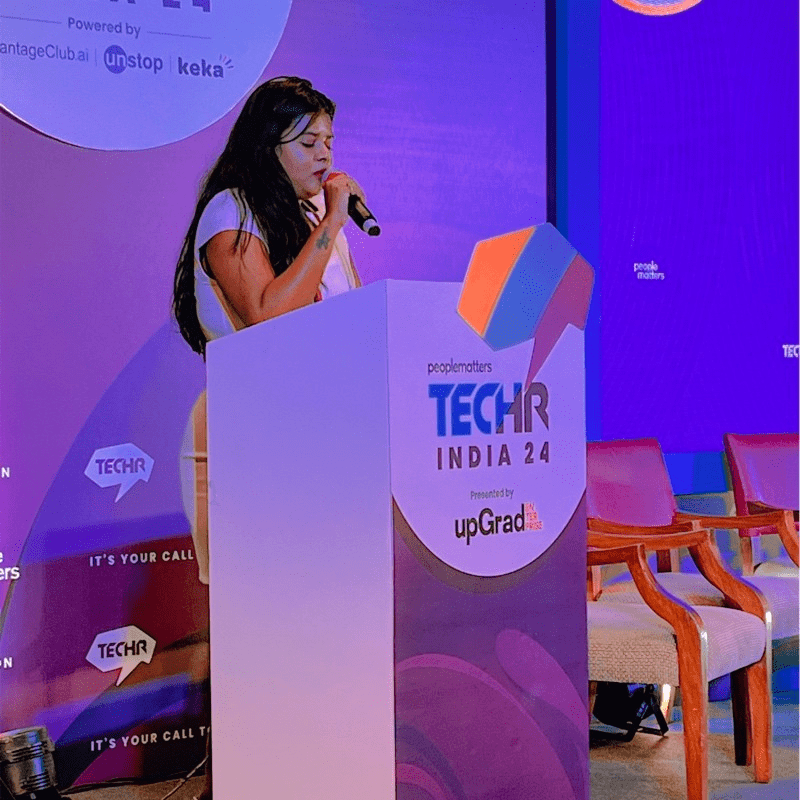






Mr Rakhesh Raghunath explains why the future belongs to leaders who understand both technology and regulation, and why compliance has moved from the sidelines to the product table.
Technology has always had a favourite excuse. We'll fix it later!
Build the product. Scale the business. Deal with regulation when regulation catches up.
For years, businesses got away with it. Compliance typically arrived towards the end of the product journey, reviewing what had already been built. Today, that sequence is falling apart.
Artificial intelligence is making credit decisions. Digital assets move across borders in seconds. Automation is quietly reshaping business functions, while regulators are still drafting many of the rules meant to govern these technologies.
For Mr Rakhesh Raghunath, Head of Compliance at Mudrex, this is no longer simply a technology story. It is a leadership story.
"Technology no longer waits for regulation to catch up," he tells People Matters. Technology leaders often see opportunity. Compliance leaders naturally see risk. According to him, neither perspective is enough on its own.
"The organisations that get this right are the ones where leadership can hold both perspectives simultaneously," he says. The conversation, he adds, has shifted from asking "Can we build this?" to "Should we, and under what conditions?"
"It is not a legal question or a technology question. It is a leadership question."
Compliance has quietly left the back office
For decades, compliance largely operated downstream. Products were built first and reviewed later. Mr Raghesh says that model belonged to a slower technology era, when regulatory expectations were narrower and digital products were less complex.
Today's platforms onboard thousands of users every day, monitor real-time transactions across multiple geographies and increasingly depend on algorithmic systems to make decisions.
Under those conditions, compliance cannot remain a checkpoint.
"Compliance must be embedded in the architecture from the start." He says compliance leaders are now participating in product design discussions alongside engineering and product teams. Decisions involving onboarding journeys, transaction limits and customer data handling are increasingly being shaped together rather than reviewed after launch.
His reasoning is straightforward. Retrofitting compliance into a live system costs significantly more, financially and reputationally, than building governance into the product from day one.
In other words, compliance is no longer where products go for approval. It is increasingly where responsible products begin.
The real risk is not moving fast. It is moving without foresight
Technology companies have long celebrated speed.
Mr Rakhesh believes the bigger conversation should be about responsible speed.
He challenges the popular framing of innovation and regulation as competing priorities, saying it often pushes organisations towards two extremes: moving recklessly or slowing innovation unnecessarily.
Instead, businesses should ask what responsible speed looks like.
For him, the answer includes embedding regulatory thinking into product development, building accountability structures before they become mandatory and maintaining transparency with regulators instead of waiting to be discovered.
He also believes organisations often underestimate the cost of weak governance. Regulatory action is only one consequence.
User trust can disappear when AI systems make significant decisions without explainability or when poor security exposes customer data. He also warns against what he describes as strategic drift, where businesses move rapidly into areas that later become legally difficult to sustain, spending more time and money unwinding decisions than they saved by moving quickly.
Organisations that earn the confidence of regulators, partners and users, he says, are the ones that give compliance and innovation equal importance.
Tomorrow's leaders will need hybrid fluency
Emerging technologies are also reshaping expectations from leadership.
Artificial intelligence introduces questions around explainability, bias and accountability. Digital assets require governance frameworks that can keep pace with cross-border transactions and evolving reporting obligations. Automation raises another question altogether: who remains accountable when systems make mistakes at scale?
"The expectation has shifted from knowing the rules to understanding the systems those rules are trying to govern," says Mr Rakhesh.
His view is clear. Governance leaders need technical credibility, not just procedural expertise. "You cannot govern what you do not understand."
He believes the biggest blind spots emerge when technology leaders overestimate their understanding of regulation or compliance leaders underestimate technology.
To navigate increasingly regulated technology environments, he points to four capabilities that will separate successful leaders:
- Intellectual honesty about what they do not know
- Systems thinking to understand how one technology decision creates compliance exposure elsewhere
- Cross-functional communication across engineering, legal and business teams
- Comfort with ambiguity, particularly when regulation has yet to catch up with innovation
Looking ahead, Mr Rakhesh expects leadership itself to become more interdisciplinary. Boards are already asking compliance leaders to discuss technology architecture while expecting technology executives to demonstrate stronger regulatory awareness.
The traditional model, where technology, compliance and strategy operate independently, is steadily losing relevance.
"The leaders who will matter most in the next decade," he says, "are the ones who can stand in a boardroom, a regulatory meeting and a product review and be credible in all three."
It is a striking prediction. More importantly, it reflects a broader shift already underway. As AI, digital assets and automation continue to blur organisational boundaries, the most valuable leaders may no longer be the deepest specialists. They will be the ones fluent enough to connect innovation, governance and business strategy before the rest of the organisation catches up.
Author
Loading...