







AI & Emerging Tech
‘Every role now works alongside AI’: Piramal Finance CHRO on hiring shift


 ||
||

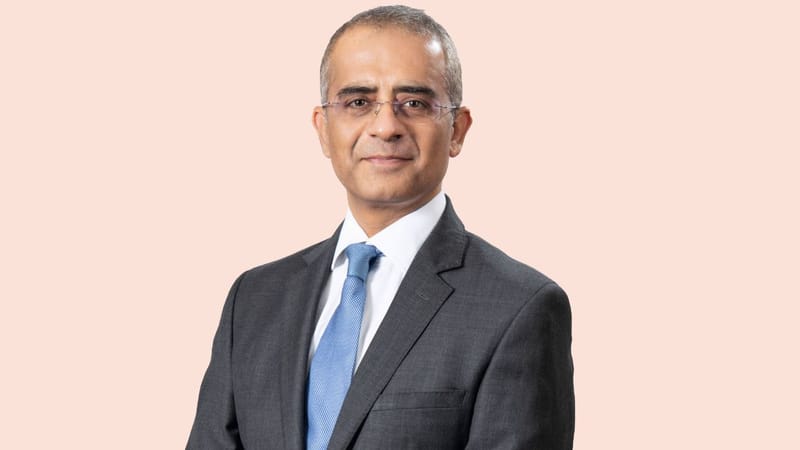
Piramal Finance CHRO Manjul Tilak says AI is reshaping workforce planning, compliance, hiring and operational structures across financial services, making technology fluency a core expectation across functions.
Artificial intelligence is rapidly moving beyond specialist technology teams and becoming embedded across everyday roles in financial services, according to Manjul Tilak, Chief Human Resources Officer at Piramal Finance.
In an interview with People Matters, Tilak said organisations across the sector are increasingly expecting employees in compliance, operations, risk, customer service and business functions to work alongside AI-driven tools and workflows.
“The talent agenda in financial services has never been more complex — or more consequential,” Tilak said.
“Every role today, whether in compliance, risk, operations, customer service, or business teams, is increasingly expected to work alongside AI in some form.”
According to Tilak, the shift is no longer confined to technology departments but has evolved into what he described as an “organisation-wide capability imperative”.
At Piramal Finance, AI adoption currently spans:
- Sales
- Underwriting
- Collections
- Audit and compliance
- Customer experience
- People management
Tilak said emerging agentic AI use cases were already helping automate and simplify workflows across teams.
Compliance and risk roles become more technology-driven
Tilak said traditional functions such as compliance and risk management are also undergoing structural change as AI and data analytics become central to decision-making processes.
While governance and regulatory understanding remain core requirements, he said professionals are now also expected to work effectively with predictive models, data tools and real-time analytics systems.
“AI-powered monitoring, predictive risk models, and real-time insights are reshaping how decisions are made,” Tilak said.
He added that organisations are increasingly seeking professionals capable of combining:
- Regulatory expertise
- Analytical thinking
- Technology fluency
- Human judgement
“The most effective professionals will be those who can combine strong judgement and governance with the ability to use technology and data meaningfully,” he said.
The comments reflect a wider trend across banking, insurance and non-banking financial services, where firms are embedding AI into fraud monitoring, underwriting, compliance checks and customer operations.
Talent competition intensifies beyond financial services
Tilak also highlighted rising competition for specialised talent in AI, analytics and data science.
According to him, financial services firms are now competing not just with banks and NBFCs, but also with fintech startups, technology firms and Global Capability Centres.
“The competition for talent in AI, data, and analytics is extremely intense today,” he said.
Instead of relying entirely on external hiring, Piramal Finance has focused on building internal capabilities through programmes designed to strengthen analytical and technology skills across functions.
Tilak pointed to initiatives including:
- BYOD or Build Your Own Dashboard
- BYOT or Build Your Own Technology
He said these programmes encourage employees to solve real business problems while developing analytical and technology capabilities internally.
Tilak also noted that compensation alone was no longer enough to attract or retain high-demand talent.
“People want to work on meaningful problems, continue learning, and be part of an organisation where innovation is balanced with purpose and responsibility,” he said.
AI increasingly integrated into recruitment systems
Piramal Finance has also started embedding AI directly into its hiring processes.
Tilak said more than 260 frontline candidates were interviewed through AI-led systems during the fourth quarter of FY26.
According to him, the process included:
- Resume screening
- Voice-based interviews
- Candidate evaluation
- Automated scheduling
The AI system also allowed candidates to complete interviews in their preferred language and schedule sessions outside standard working hours, including weekends.
Tilak said business growth at Piramal Finance over the past two years had significantly outpaced growth in operations headcount, reflecting the scalability benefits created through automation and AI integration.
The use of AI-led hiring tools mirrors a broader industry trend where companies are increasingly experimenting with automated recruitment systems to improve efficiency and reduce turnaround time.
Workforce models shift towards skills and adaptability
Looking ahead, Tilak said workforce planning in financial services would become increasingly skills-led, adaptive and technology-enabled over the next three to five years.
He said organisations were gradually moving away from the assumption that business growth must always result in proportional headcount expansion.
“AI and automation continue to improve productivity and scalability,” Tilak said.
He added that AI fluency would increasingly become a baseline expectation across finance, operations, compliance, risk and customer-facing roles.
At the same time, Tilak argued that human capabilities would remain critical even as automation expands.
“Human capabilities such as judgement, empathy, collaboration and leadership will become even more valuable,” he said.
According to Tilak, organisations that succeed in the next phase of AI adoption will be those capable of combining technology integration with continuous learning, inclusion and strong workplace culture.
As financial services firms continue integrating AI across operations and governance systems, workforce strategies are increasingly shifting from fixed-role structures towards broader capability-building models designed for long-term adaptability.
BFSI Talent and Tech Summit '26 | Where finance meets the future of work
To go deeper into how these shifts are redefining leadership, hiring, and capability building across financial services, join us at the BFSI Talent and Tech Summit 2026, scheduled for June 4th at Taj Santacruz, Mumbai.
Explore how leaders are rethinking talent, technology, and operating models to build future-ready financial organisations.
Limited time left — step into real time conversations shaping BFSI's future. Register now.
Author
Loading...