







AI & Emerging Tech
From task coordination to team outcomes: How AI is reshaping middle management
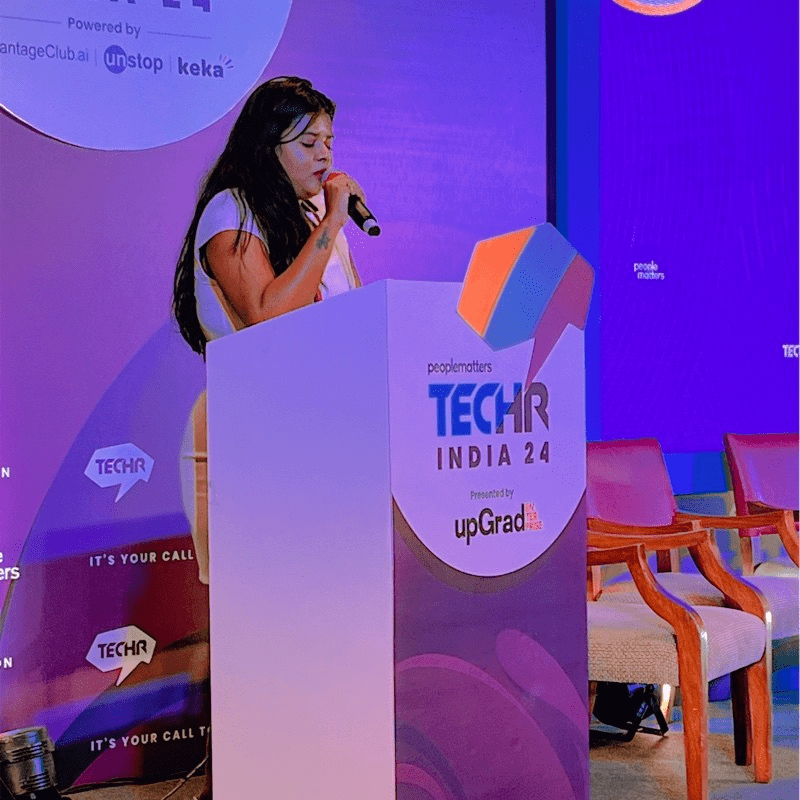


As AI automates routine coordination, middle managers will need to focus more on judgement, coaching and business outcomes, says Aurigo Software's Divya Kiran. She discusses how flatter structures, cross-functional teams and changing career paths are reshaping leadership expectations.
As artificial intelligence takes over routine coordination and administrative work, middle management is facing a shift in responsibilities. Managers will increasingly be expected to exercise judgement, develop talent and translate organisational priorities into measurable business outcomes.
For Divya Kiran, Vice President – HR at Aurigo Software, the transition is not simply about reducing managerial workloads. It requires organisations to rethink accountability, leadership development and the capabilities expected of managers in increasingly AI-enabled workplaces.
A significant part of middle management has traditionally involved coordinating work, sharing information and resolving competing priorities. As AI takes on more routine tasks, managers will have greater scope to focus on judgment, decision-making, team effectiveness and people development.
Kiran believes this transition will make human judgement and effective leadership more important as teams adapt to changing responsibilities. Managers will need to identify where human intervention remains essential and help employees work effectively alongside AI.
The changing value of managerial work
Several responsibilities traditionally handled by managers are already becoming increasingly automated. These include status reporting, scheduling, approval routing and progress tracking, freeing managers to focus on decisions and people.
India's adoption of AI is also changing the nature of entry-level work. A Cognizant–Pearson study, reported by The Economic Times, found that AI performs around 37% of entry-level tasks in India, compared with 33% globally.
At Aurigo, AI already accounts for more than 80% of code generation, according to Kiran. She sees this as an opportunity for employees to devote more time to complex problems and the decisions behind them.
The measure of a developer's contribution, she said, is not simply how much code they write, but whether they are solving the right problem.
As routine responsibilities take less time, Kiran believes managers must place greater emphasis on developing talent and building trust. AI can inform decisions, but managers remain accountable for interpreting information, treating people fairly and standing by outcomes.
"The strongest leaders will use the time saved through automation to develop talent, build stronger teams, and create an environment where people can take ownership and grow," she said.
Why cross-functional leadership matters
The changing nature of work is also bringing product, engineering, design and customer experience teams closer together. Managers increasingly need to look beyond individual functional targets and take responsibility for wider customer outcomes.
At Aurigo, teams operate through a pod structure involving product managers, developers, designers and automation engineers. These cross-functional groups own products end to end, enabling members to understand the purpose behind their work and make decisions collectively.
The company's internal AI hackathon reflected a similar approach. Thirty-four teams worked on 25 business problems using Agent Builder, requiring participants to consider perspectives beyond their individual roles.
For Kiran, such collaboration places new expectations on managers. They must encourage teams to challenge assumptions, align priorities and share accountability rather than operate within functional boundaries.
She also emphasises listening to employees and designing practices that make execution simpler. Managers, she said, are responsible for translating these practices into everyday behaviour.
Leadership development beyond formal titles
Flatter organisational structures are changing when and how employees are expected to demonstrate leadership. People may need to exercise judgement, influence decisions and collaborate across teams much earlier in their careers.
Kiran believes leadership development must therefore extend beyond formal management training. Employees need opportunities to make decisions, take ownership and learn from consequences, supported by appropriate guidance.
She cited an organisational transition following a buyout, during which nearly 97% of employees agreed to move to a new entity despite having no clear individual advantage.
The organisation began by engaging a small group of colleagues trusted by their peers. Their confidence in the process helped build wider acceptance, she said.
The experience reinforced her view that credibility and sound judgement are essential to leading people through uncertainty. In flatter organisations, trust must be built through everyday actions rather than announcements alone.
Accountability and career progression need a rethink
Fewer management layers can accelerate decisions, but they also create challenges around responsibility and employee development. Kiran believes organisations must establish clear role definitions, decision rights and performance frameworks.
At Aurigo, the HR function is being developed to align organisational design, leadership development and performance frameworks with how product, engineering and customer teams operate.
Employee development is another concern as managers take responsibility for larger teams. Regular feedback and opportunities to take on new challenges can receive less attention unless organisations deliberately protect them.
Career progression also needs to extend beyond management positions. Kiran believes employees should be able to grow through deeper expertise without necessarily taking responsibility for managing teams.
Aurigo's engineering framework reflects this approach by evaluating employees on their ability to orchestrate workflows and build autonomous systems, alongside their use of AI tools.
Four capabilities managers will need
Kiran identifies four capabilities that will distinguish effective managers in AI-enabled organisations:
AI fluency: Managers must understand what AI can handle, where human intervention remains necessary and how workflows can be redesigned around the technology.
Learning agility: As roles and tools evolve, managers must continue learning, experiment with new approaches and encourage their teams to do likewise.
Coaching: With routine work taking less time, managers need to provide regular feedback, assign meaningful challenges and encourage continuous upskilling.
Clear, human communication: Managers must explain why work is changing and what those changes mean for individual employees, in terms people can act upon.
Kiran sees these capabilities as central to helping teams adapt, particularly as technology changes the responsibilities associated with existing roles.
Fewer management layers, but continued need for leadership
AI could reduce the number of management layers in some organisations, Kiran said, but this would not necessarily reduce the need for leadership.
Technology can make activities such as tracking updates, coordinating meetings and sharing information more efficient. Managers would then have greater scope to develop people, resolve problems and support better decisions.
At Aurigo, the additional capacity has also influenced how engineering teams approach business growth. Kiran said the engineering team's output has quadrupled over the past year, with the additional bandwidth directed towards entering new markets.
For organisations, the priority will be preparing managers to lead teams through changing workflows and expectations. People development, sound decision-making and accountability will remain central as AI reshapes how work gets done.
Author
Loading...