







AI & Emerging Tech
Genpact targets 100% AI-ready workforce by 2027. Managers are central to the plan: CHRO






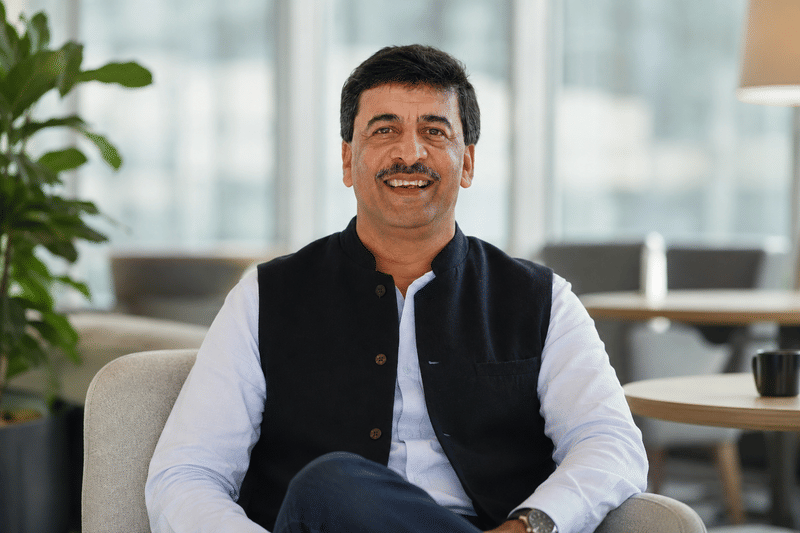
Piyush Mehta, Chief Human Resources Officer at Genpact, explains why the future of AI adoption depends less on technology and more on managers who can build confidence, capability and continuous learning.
As enterprises race to embed artificial intelligence into everyday work, Genpact is placing managers at the centre of its workforce transformation strategy. The company's ambition is clear. Every employee should operate as an AI Practitioner by 2027. Achieving that goal, however, will depend on how effectively managers translate AI from a technology initiative into daily workplace behaviour.
In an exclusive interaction with People Matters, Piyush Mehta, Chief Human Resources Officer, Genpact, shared how the role of managers is being reshaped by AI, why confidence has become a bigger barrier than capability, and why organisations need to rethink leadership development for an AI-enabled future.
Managers are becoming enterprise leaders
According to Piyush Mehta, the traditional responsibilities of managers remain intact. They are still expected to deliver business performance, support career growth and lead effective teams. What has changed is the environment in which those responsibilities now exist.
As organisations undergo continuous disruption driven by AI and digital technologies, managers are increasingly expected to help employees adapt while embracing change themselves.
"We can see an evolution through our own transformation into an agentic and advanced technology solutions company," Mehta said. "It is already calling for a different kind of leadership that is less about having all the answers and more about judgment, coaching, and helping teams stay relevant as the half-life of skills continues to shrink."
He believes managers are moving beyond operational supervision towards enterprise leadership, regardless of organisational level.
AI changes how managers lead, not just what they lead
For Genpact, AI is changing work at a structural level.
Mehta described the company's operating model through what it calls Agentic Operations, where AI agents increasingly perform repeatable tasks while employees focus on judgment, exception handling and improving business outcomes.
This evolution is creating new expectations for managers.
Rather than simply measuring performance, they are expected to help teams rethink workflows, adopt AI tools and adapt continuously.
Mehta pointed to recent HFS research, which suggests the biggest workforce challenge among Global 2000 companies is often confidence rather than capability.
"Managers matter most," he said, because they help employees move from understanding AI to applying it productively in everyday work.
Coaching is becoming a core management capability
The shift towards AI has also elevated coaching from a desirable leadership trait to an operational necessity.
Mehta acknowledged many managers understand coaching is important but struggle to practise it consistently while balancing growing responsibilities.
Genpact is addressing this through leadership development initiatives across different career stages, including ASPIRE, its programme for middle managers.
One lesson has stood out.
According to Mehta, graduates consistently highlight self-awareness as the starting point for effective leadership. Understanding personal strengths, blind spots and leadership mindset enables managers to move from individual success towards collective team impact.
He also identified two significant gaps organisations still need to address.
- Managers need greater confidence to coach instead of always providing answers.
- Organisations must redesign work so AI handles repetitive activities, allowing managers to focus on coaching, judgment and capability building.
Without structural support, he believes capability development risks becoming an occasional initiative instead of an everyday leadership responsibility.
Learning agility is now a leadership requirement
As disruption accelerates, Mehta believes three capabilities distinguish effective managers.
- Learning agility
- Technology fluency
- Enterprise thinking
He said managers who continue learning themselves are more likely to build resilient teams.
Genpact's internal data illustrates this focus. Employees logged more than 12.5 million learning hours during 2025, with around 40% dedicated to AI and technology through the company's Genome learning ecosystem.
Technology fluency, he explained, does not require managers to become technical experts. Instead, they need sufficient understanding to identify where AI can improve work and make informed decisions with credibility.
Enterprise thinking completes the picture by enabling managers to connect team priorities with wider business objectives and work beyond functional boundaries.
AI readiness is built through daily behaviour
While many organisations have invested heavily in AI awareness programmes, Mehta believes awareness alone is insufficient.
Genpact views AI readiness as a progression moving through three stages.
- Awareness
- Operating readiness
- Genuine adoption
"The difference is whether people know how to apply AI in the flow of their work," he said.
Managers play a decisive role in bridging this gap.
According to Mehta, employees are far more likely to integrate AI into daily work when managers themselves actively use tools such as Scout, Genpact's enterprise AI assistant, or Chat with Data during routine decision-making.
He also stressed the importance of psychological safety.
Managers who encourage experimentation without penalising imperfect first attempts create environments where employees are more willing to explore AI tools and learn through experience.
For Genpact, the ambition of creating a 100% AI Practitioner workforce by 2027 depends less on formal training programmes and more on managers embedding learning into everyday work while taking responsibility for developing their teams.
Manager development needs a fundamental redesign
Mehta believes organisations should move beyond traditional classroom-based leadership programmes.
Development, he said, must be continuous, closely linked to business priorities and embedded into daily work.
He also warned training alone cannot produce stronger managers if organisational structures and operating models continue rewarding outdated behaviours.
Instead, capability develops fastest through practical experience, including sprint-based learning, simulations, cross-functional assignments and stretch roles.
His view is simple. Managers learn to lead change by leading change.
The next generation of managers will lead people and AI together
Looking ahead, Mehta expects the manager's role to evolve alongside increasingly sophisticated human and AI collaboration.
Managers will spend more time deciding which work should remain human-led and which activities technology can perform more effectively.
Ironically, as AI automates more routine work, distinctly human capabilities will become even more valuable.
Trust, empathy, judgment and the ability to guide teams through uncertainty will become operational strengths rather than soft skills.
For organisations investing heavily in AI transformation, Mehta believes one message is becoming increasingly difficult to ignore.
Treating people management as simply the next promotion step will no longer be enough. Future-ready enterprises will need to recognise management as a specialised discipline requiring continuous investment, dedicated development and sustained organisational support.
New leaders, fresh capital, workforce shifts and unfiltered conversations — the story of work unfolds here.
Topics
Author
Loading...