







AI & Emerging Tech
Interview: Manish Verma on differentiated approach to progress





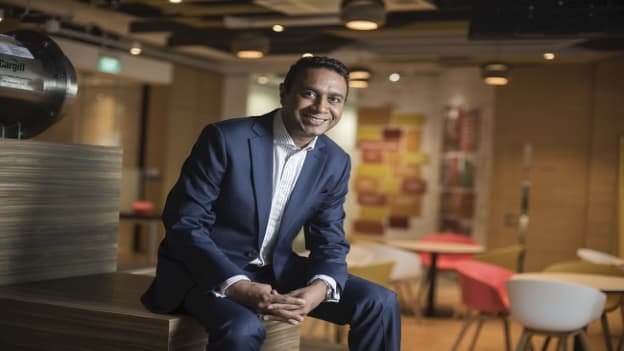
In an exclusive interview with People Matters, Manish Verma, Head-HR (Asia Pacific), Cargill, shares his insights on what it takes to adapt to the evolving business ecosystem and what it takes to manage change
Manish Verma is the Regional HR leader, Global HR Solutions for the Asia Pacific at Cargill. He leads HR Solutions team covering Asia-Pacific Markets and integrated regional Talent Performance and Talent Acquisition teams that provides solutions consulting and delivery of overall value-added human resource services across all functional areas for leaders, managers and employees in the region.
The global business ecosystem has seen some unprecedented transformation in the recent past. What do you think has changed in the APAC region specifically?
Five decades ago, Japan was pretty much the sole manufacturing power in Asia. Then came the Tiger Economies, and then China, and India. If you reflect on just how much has changed since the last three decades, you will find that the days of Asia's bigger economies are fading and new markets are emerging. After Japan, the rapid rise of Australia, Taiwan, Singapore, Hong Kong and South Korea in the last three to four decades have had a huge impact on the global economy; and at the same time, we have also seen these large established economies make way for a new generation of Asian economies.
Political, societal, and economic changes over the last decade have driven an increased degree of openness in Asia — most spectacular example is China, and recently Vietnam that were previously closed off from the world. After Vietnam's reforms, it is now hard to imagine that the country would become one of the most important players in the global economy. As Asian economies continue to open up, there is greater economic connectivity that has, in turn, created opportunities for collaboration and more comprehensive supply chains. However, this also means fierce competition among Asia's manufacturers.
Most certainly, the key beneficiaries are society and citizens of these countries. By 2030, Asia will have 64 percent of the global middle class, which will generate a huge demand for regionally produced products. This also creates a "buyer's market" for companies where they can shop around with different manufacturers in various markets, find suppliers that suit their needs, and have ready-to-go supply chains set up in the region. Ultimately, this has helped to make Asia, as a whole, an attractive destination for production, where the region itself has effectively become a marketplace of manufacturers.
Do you think that digital disruption has had a significant impact of how some of these trends have evolved?
Most certainly, Asia is the world’s fastest-growing consumer markets. With accelerating, technology adoption and flourishing digital innovation, Asia is starting to shape the future of marketing, distribution and consumer experience. As Asia’s population moves online, it is embracing digital commerce. Five years back, the value of e-commerce in China reached US$295 billion, overtaking the US to become the world’s biggest e-commerce market. One big example is the rise of the penetration of mobile phones in Asia that has driven widespread Internet connectivity, and transforming consumer behavior. By 2019, the region will have almost 4.3 billion mobile subscriptions or 117 for every 100 people.
As consumers become increasingly connected to the Internet via their mobile devices, they are joining social networks in ever greater numbers. Nearly one billion individuals across Asia are now active users of social media. As more and more consumers join social networks and messaging services, these platforms become important pieces of the online industry. They help find content, enable content, spread virally, contribute to reviews of products and services, and highlight consumer preferences, encourage consumers to provide rich data about themselves that companies can use to target their marketing activities more accurately.
How has Cargill adapted to the digital trends in the business ecosystem?
In today’s complex marketplace, farmers are looking for a digital edge. Cargill is deploying a variety of smart tools for producers that enable to work together more effectively and sustainably. There are many examples — the Cargill teams in Canada use Greenlight Grower Management, a cloud-based program developed by a third-party vendor to capture field and crop data for farmer customers. The tool analyzes this data to help customers plan a crop rotation, as well as fertilizer and crop protection applications. Farmer customers are empowered to make more informed choices about their operations that help drive profitability. In Côte d’Ivoire, Cargill and SourceTrace Systems developed a software solution that helps cocoa farmers increase the sustainability of their production. Equipped with a cloud-enabled mobile app, lead farmers who act as coaches collect and quickly analyze field-level data. With the resulting insights, farmers work with their coaches and cooperatives to make production decisions that increase yields and meet certification standards for sustainable cocoa. GPS maps generated through the process also advance understanding of how climate change may impact cocoa farming and help address deforestation. Aided by this on-farm coaching, cocoa farmers who fully adopted farm development plans saw yields rise by an average of 49 percent last year. Another tool, Dairy Enteligen™, a Cargill animal nutrition software platform helps dairy farmers make the most of their operations. The system connects disparate data on feed formulation, animal biometrics, farm management, and finances. It creates a comprehensive analysis that changes how Cargill consultants work with their dairy customers. Before even setting foot on the farm, they know how much milk a customer’s cows are producing and why, and have identified opportunities for improvement.
Tapping data gathered by satellites and other sensors, Cargill is developing informed analysis about everything, from crop yields to the movements of shipping vessels on the high seas. These insights help us better serve our customers and reveal ways to achieve greater sustainability. This year, we have partnered with World Resources Institute’s Global Forest Watch to map approximately 1,900 Cargill sourcing areas of cocoa, palm, soy and other commodities. Based on 2014 data, this work establishes a baseline that we will use to track our progress in eliminating deforestation in our supply chains.
How has this change in your business strategy impacted your talent strategy?
Culture and engagement are vital parts of the employee experience and overall talent strategy; and Cargill is broadening its focus to look at employee journey maps, studying the needs of our workforce, and using net promoter scores to understand the employee experience, change tracker surveys etc. Workplace redesign, well-being, and work productivity systems are all becoming part of the mandate for HR. The concept of a “career path” is of a past. Cargill is looking towards “always-on” learning experiences that allow employees to build skills quickly, easily, and on their own terms, for example through the use of self-paced learning etc.
As jobs and skills change faster than ever, acquiring and recruiting the right people has become more important than ever. Talent acquisition is now the most-important challenge companies face, which highlights the need for organizations to integrate their social networking, analytics, and cognitive tools to find people in new ways, attract them through an employer brand promise, and determine who will best fit the job and culture.
From a talent standpoint, our thought processes have changed completely. We are integrating both building and buying philosophies. We have developed a process-oriented approach for talent attraction while supporting hiring managers with all the resources they would need to make hiring decisions.
What is the biggest talent challenge that you feel organizations are facing today?
Trends such as digital disruption, demographic changes, modernization and urbanization are transforming the business world and Asia in particular. It’s clear that the implications for talent strategy and management are profound and fast changing. Skills shortages and creating a robust leadership pipeline in Asia keeps leaders and HR awake at night, and the way these trends are unfolding, they only likely to compound the problems. This is the time to have a fundamental review of industry’s talent strategy approach.
Given that skill shortage and creating leadership pipeline are the issues in today’s context, talent mobility related strategies will only become more important in the future as we foresee unequal supply of new workers. That said, immigration legislations and local vs. foreign talent debates often are the challenges. But there are positive sides to the story too, as we see changes are already underway, driven by megatrends — improvements in technology have made time and location-independent working a popular reality, allowing employers to access skills from anywhere. I think the biggest challenge that the industry is facing today is a value play. The only way you can get to value play is through talent and eventually through culture. You can acquire a product, factory, brand, and talent as well. But if you are unable to preserve your culture, you will never be able to retain talent or get to your customers faster.
I think there is an increased awareness of this competitive advantage and that is why companies are investing in building the right culture. If companies have a culture that is accommodating and inclusive, they will succeed across geographies. When this is done within a framework, organizations will be closer to talent and customers both.
How do you think organizations can enable seamless technology adoption by their employees?
In my view, an organization’s culture plays a very important role in technology adoption as it guides the way the employees behave and work. In most organization, people and culture are at the heart of organizational value systems and typically drive both success and failure. The way leaders and managers behave in a culture ultimately determine how and to what extent the employees leverage the digital workplace to connect, communicate and collaborate. It is very important to understand how the culture impacts and influences work. Change management plan is key to adopting digital workplace strategy that aligns with the organization’s working culture. In any organizational culture, collaboration is necessary to solve business problems and operate optimally. As information continues to grow at an unprecedented rate, tech tools enable people to create their own content, rather than simply consuming existing content. The digital workplace delivers on these goals by fostering a stronger sense of culture and community within the workplace.
Cargill has a change management framework – Change, Communication & Education (CCE). We use this framework for any kind of change that we bring in. From the strategy standpoint, we also have a differentiated approach when it comes to driving technology adoption.
Do you feel startups or smaller organizations have a benefit in terms of changing mindsets and managing change as compared to multinational corporations?
The answer is both a ‘Yes’ and a ‘No’. Large organizations have the advantage of having many resources to mobilize to impact the change. That means that in terms of human resources and monetary resources, you can deploy the change on a scale. The flip side is that large organizations take a longer time to adapt to changes as the decision-making process is longer and people might take longer to feel the impact. So, you have to be cautious about how you want to deploy the change.
On the other hand, the advantage that smaller setups have is that they are quick to adapt and require less change management. Here, the effort required is more but the time required for the change is lesser compared to a larger organization.
Topics
Author
Loading...