







AI & Emerging Tech
Managers will spend less time finding information and more time coaching people: Oracle





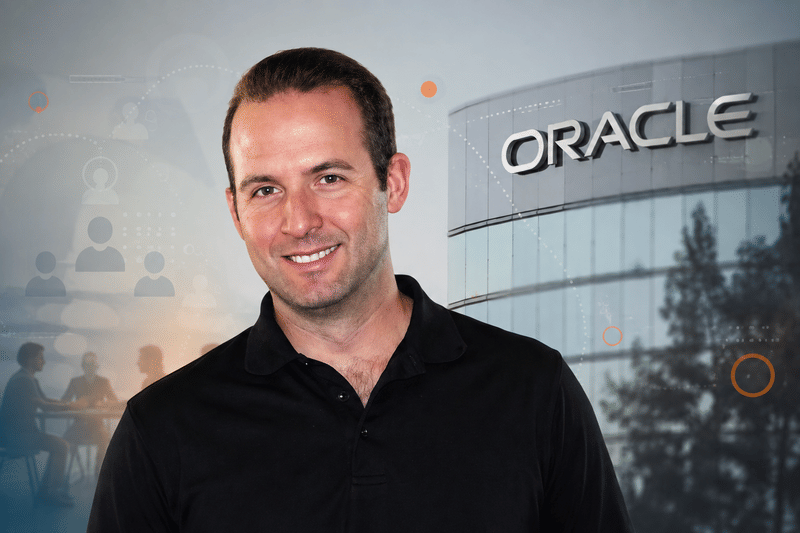
As organisations explore AI-powered management tools, Oracle’s Lewis Thompson says the focus is shifting from automation to leadership effectiveness, with AI increasingly helping managers prepare for better people decisions rather than making decisions on their behalf.
Organisations are becoming more comfortable with AI supporting managers, but not replacing them.
According to Lewis Thompson, Senior Vice President, Applications Development at Oracle, the conversation around workplace AI is evolving rapidly. Companies are moving beyond questions of adoption and are now focusing on where AI can create the greatest value for managers while preserving human judgement.
In an interview with People Matters, Thompson outlined how organisations are using AI to address leadership challenges, what concerns HR leaders raise before deployment, and why the most effective managers of the future may spend less time searching for information and more time coaching people.
Leadership consistency is becoming a business challenge
Managers today operate under growing pressure.
They are expected to coach employees, support career development, maintain engagement, navigate organisational change and deliver business outcomes. At the same time, administrative workloads continue to grow.
According to Thompson, one of the biggest challenges organisations face is helping managers lead consistently across teams and geographies.
“Managers are expected to coach employees, navigate change, support career growth, maintain engagement, and deliver business results, all while managing increasing administrative demands,” he said.
The challenge becomes more pronounced for first-time managers and those leading distributed teams.
As AI becomes embedded in everyday workflows, Thompson believes its role extends beyond efficiency. He said AI can help organisations scale effective leadership by providing managers with personalised and context-aware guidance based on workforce information already available within HR systems.
The AI debate is changing
Thompson said customer conversations have matured significantly over the past few years.
Earlier discussions focused on whether organisations should implement AI. Today, the focus is increasingly on how AI can support managers while keeping them in control of decisions.
“Organisations are becoming increasingly comfortable with AI supporting managers, provided it enhances human judgement rather than replaces it,” he said.
According to Thompson, organisations are particularly interested in AI's ability to:
- Help managers navigate conversations more effectively
- Identify patterns that may otherwise be missed
- Recommend possible next actions
- Surface relevant workforce context before employee interactions
- Support day-to-day leadership decisions
However, he stressed that companies continue to view managerial judgement as essential, particularly in areas involving employee wellbeing, career growth, performance and organisational change.
“Context and empathy matter most,” Thompson said.
Trust remains the first hurdle
While interest in AI-assisted management continues to grow, Thompson said the first concern raised by HR leaders is usually trust.
Organisations want assurance that recommendations are grounded in relevant organisational context, sensitive employee data remains protected, and responsibility for people decisions stays with managers.
“HR leaders don't want AI making people decisions; they want AI helping managers make better, more informed people decisions,” he said.
He noted that organisations also want AI systems to reinforce effective leadership behaviours rather than encourage standardised approaches to people management.
For many employers, governance, transparency and accountability remain central requirements as AI becomes more deeply integrated into management processes.
From efficiency tool to leadership tool
One of the most notable shifts Thompson is observing is how organisations define AI's value.
Initial investments often centred on automation and operational efficiency. Increasingly, companies are exploring how AI can improve management effectiveness.
According to Thompson, organisations are looking at ways AI can help managers:
- Improve one-to-one conversations
- Recognise employee achievements
- Identify development opportunities
- Prepare for difficult discussions
- Improve employee engagement outcomes
“The real opportunity is helping managers spend more time on the conversations and coaching that will have the greatest impact on employee performance and engagement,” he said.
This marks a broader shift in enterprise AI discussions, where leadership capability is emerging alongside productivity as a key area of focus.
Where AI should stop and managers should lead
Thompson drew a clear distinction between preparation and decision-making.
In his view, AI delivers the greatest value when it equips managers with information rather than making choices for them.
“AI delivers the greatest value when it helps managers prepare rather than decide,” he said.
He explained that AI can consolidate information from multiple sources, identify patterns, highlight recognition opportunities and bring together goals, feedback and development priorities before a manager meets with an employee.
This reduces the effort required to gather context and lowers the risk of important information being overlooked.
Human judgement, however, remains critical.
“Important decisions like performance discussions, career development, and employee wellbeing require emotional intelligence, experience, and sound judgement,” Thompson said.
While AI can strengthen conversations through context and guidance, he emphasised that managers must remain responsible for final decisions.
Fairness depends on keeping people accountable
As AI becomes more involved in performance and career discussions, concerns around bias and fairness continue to attract scrutiny.
Thompson said fairness begins with ensuring managers remain accountable for decisions affecting employees.
According to him, AI should provide recommendations and context rather than determine outcomes.
“Managers remain responsible for considering individual circumstances and making fair decisions,” he said.
He added that organisations must also retain control over workforce data and apply their own governance, security and compliance requirements.
The manager of the future
Looking ahead, Thompson expects AI to become an increasingly invisible part of management work.
Rather than spending significant time gathering information, future managers will have relevant insights surfaced automatically.
“Five years from now, I think the best m
anagers will spend far less time searching for information and far more time acting on it,” he said.
AI, he believes, will increasingly operate in the background, helping managers prepare for performance discussions, understand team dynamics, identify growth opportunities and recognise where additional support may be needed.
Yet the core qualities of leadership will remain unchanged.
“A manager's value won't come from having all the answers,” Thompson said. “It will come from asking better questions, building trust, exercising sound judgement, and creating an environment where people can do their best work.”
As organisations continue experimenting with AI-powered management tools, Thompson's message is clear: the future of management may be AI-assisted, but it will remain fundamentally human.
Topics
Author
Loading...