







AI & Emerging Tech
The rise of AI governance: Why organisations need a new generation of risk leaders
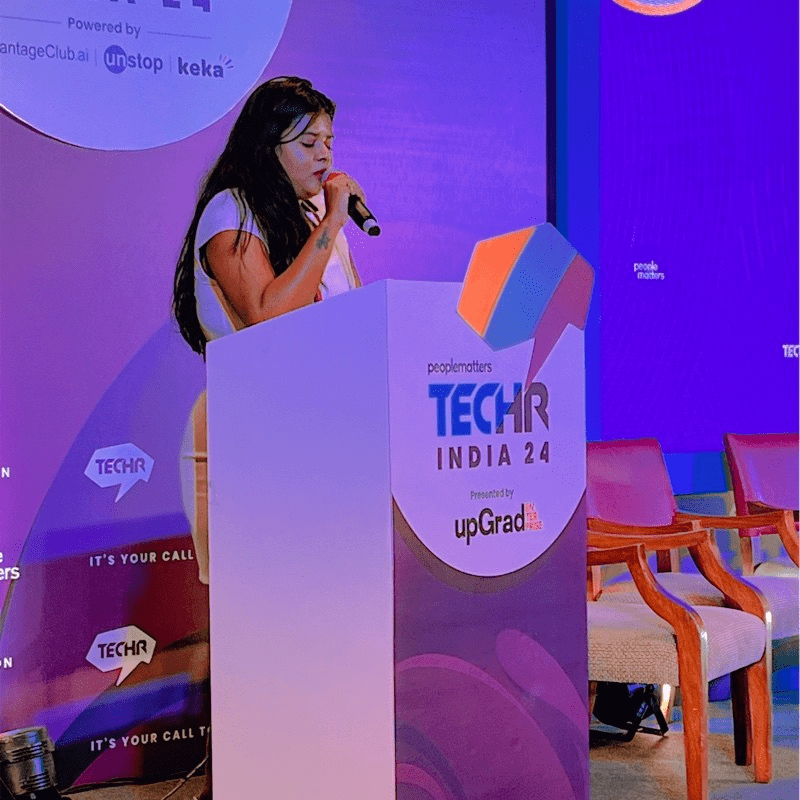


As AI becomes embedded in business decisions, GARP's Michael Sell says organisations must build risk, governance and human oversight capabilities alongside technical expertise.
As artificial intelligence moves into core business decisions, organisations face a growing need for professionals who can assess risks, challenge outputs and ensure accountability.
The challenge extends beyond developing AI systems or recruiting technical talent. Businesses must also build the expertise required to oversee how these systems are designed, deployed, monitored and used.
Michael Sell, SVP and Global Head of Institutional Outreach and Business Development at GARP, believes responsible AI is emerging as a governance and risk priority. He sees it as a natural extension of the risk management profession, bringing together technology, regulation, controls and human judgement.
With AI being integrated across finance, operations, customer service, hiring and compliance, Sell says organisations need people who can translate technical risks into sound business decisions.
AI governance moves beyond technology teams
As companies expand their use of AI, governance cannot remain the responsibility of technology departments alone. Sell believes it requires coordinated accountability across leadership, business, risk, technology and human resources.
“AI governance should be a shared responsibility, with clear accountability by the board, C-Suite, and senior business leaders. No single function can own it effectively on its own.”
He outlines distinct responsibilities for different parts of the organisation. Boards and senior leadership must establish risk appetite and expectations, while business and technology leaders define the objectives behind AI applications.
Risk and control teams, meanwhile, should provide independent oversight by challenging model assumptions and monitoring outputs. HR also has a role in building employee capabilities and fostering a culture that supports responsible AI use.
Sell emphasises that governance must extend across the entire AI lifecycle, rather than being treated as a one-time approval exercise.
“AI governance cannot sit only with one team or at one point in the process. It must cover how AI is designed, approved, deployed, monitored, challenged and escalated, with clear accountability across business, technology, risk and HR.”
The emerging demand for AI risk professionals
The expansion of AI is expected to create demand for capabilities beyond model development and engineering. Sell anticipates new roles focused on assessing, monitoring and managing risks associated with AI-enabled systems.
These could include:
AI risk managers and AI governance officers.
AI assurance professionals and responsible AI leads.
Model-risk specialists and AI audit specialists.
Third-party AI risk managers.
Existing roles across risk management, compliance, cybersecurity, legal, internal audit, technology risk, HR and business operations are also likely to evolve.
Professionals in these functions will increasingly need to combine AI literacy with business, risk or domain expertise. Sell believes the demand will extend to people who can test, validate, challenge, monitor and explain AI-enabled decision systems.
For India, the opportunity also involves developing a broader pool of AI-skilled professionals. Sell points to estimates of more than 2.3 million AI-related job openings by 2027, highlighting the potential to upskill both early-career professionals and experienced employees.
The skills required to oversee AI systems
Technical knowledge alone will not be sufficient for professionals responsible for AI governance. Sell identifies AI literacy, domain expertise and risk judgement as the three essential components of this emerging capability.
Professionals must understand how AI models work, where their limitations lie and how their outputs can affect business decisions. They must also be able to identify potential risks involving data quality, bias, security, model drift and opacity.
Sell outlines four knowledge areas that organisations should consider when developing AI risk capabilities:
Understanding AI models: Knowledge of different models, how they work and their applications across use cases.
Recognising model risks: Awareness of bias, data quality, security, model drift and opacity.
Applying responsible AI principles: Understanding fairness, transparency, explainability, accountability and ethics.
Building governance frameworks: Knowledge of data and model governance frameworks that support responsible AI implementation.
Communication is another important requirement. Risk professionals must be able to explain technical limitations to business leaders and translate governance requirements into practical decisions.
This ability to connect technical understanding with organisational judgement will become increasingly important as AI systems influence more business processes.
Building a culture where employees can challenge AI
Governance frameworks alone cannot ensure responsible AI use if employees routinely accept machine-generated recommendations without scrutiny. Sell says organisations must create an environment where people feel confident questioning outputs and escalating concerns.
“Responsible AI depends on employees who are prepared to ask questions, escalate concerns and resist the temptation to accept model output without scrutiny. It starts with education and a supportive risk-aware culture that empowers employees to challenge and escalate concerns.”
The need for wider AI capabilities is also reflected in India's evolving skills requirements. The NIIT India Skills Gap Report 2026, based on a survey of 3,500 students, professionals, recruiters, CXOs and academic leaders, identified AI, cybersecurity, digital and data skills as critical capabilities for the next three to five years.
Sell says employee training should combine practical AI literacy with clear escalation channels. Employees must understand when an AI-generated recommendation requires scrutiny, how concerns can be raised and who has the authority to intervene.
He also highlights the limitations of human oversight when employees lack the confidence or credibility to challenge an AI system.
“A human-in-the-loop model is weak if the human lacks credibility to challenge the AI system.”
Leadership capability remains part of the equation
The responsibility for AI governance also extends to senior leadership. Sell believes executives do not need to become technologists, but they must develop a stronger understanding of AI risks and governance.
This becomes particularly important as organisations adopt increasingly powerful applications developed internally or sourced from external vendors. Leaders need to understand how these systems affect business strategy, decision-making and organisational accountability.
For Sell, AI governance should be integrated into organisational decision-making and change management. Building these capabilities can support trust, resilience and accountability as businesses expand their use of the technology.
Why governance talent could become a critical business requirement
The shortage of professionals capable of governing AI could create significant challenges if adoption outpaces oversight. Organisations may find themselves deploying systems they cannot adequately understand, monitor or challenge.
Sell warns that the consequences could extend across operations, regulation and reputation.
“If AI governance talent lags too far behind technical adoption, organisations may deploy AI faster than they can understand, monitor or challenge it. That can create operational, regulatory, and reputational risk.”
He also points to customer trust as a concern, noting the difficulty of rebuilding it after an AI-related data breach or model failure.
As organisations move from AI experimentation towards wider deployment, the requirement will not be limited to hiring more developers and engineers. Building governance capabilities alongside technical implementation will be central to managing the risks associated with AI-enabled decisions.
Topics
Author

Loading...