







AI & Emerging Tech
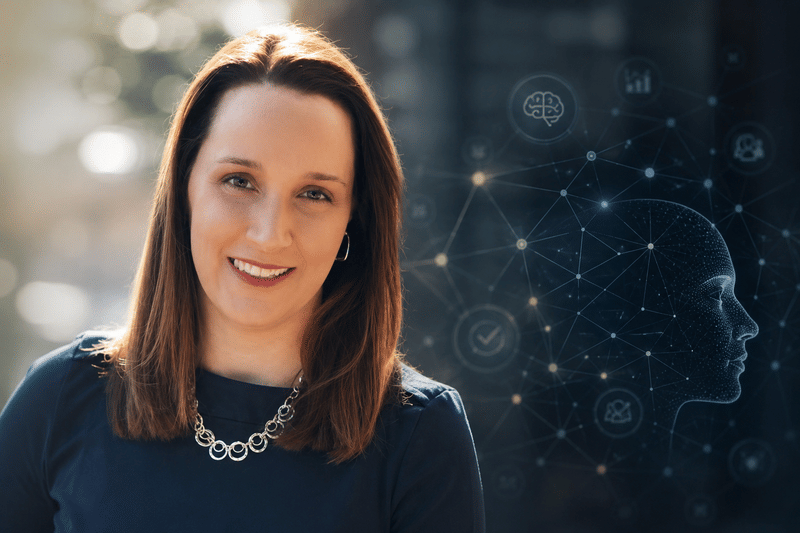
Tomorrow's top performers will question AI before they trust its answers: Sara Gutierrez





As AI capabilities accelerate and debates around the "singularity" intensify, organisations are discovering that competitive advantage may depend less on AI expertise and more on employees who can challenge, validate and improve AI outputs.
Artificial intelligence has entered another defining moment. OpenAI CEO Sam Altman recently said the industry is now "in the singularity", reviving a long-running debate over how rapidly AI is advancing and what it means for work. At the same time, policymakers, researchers and technology leaders continue to warn about AI governance, safety and human oversight.
For employers, however, the immediate challenge is more practical. As AI becomes embedded in everyday work, what separates an employee who simply uses AI from one who creates value with it?
According to Sara Gutierrez, Chief Science Officer at SHL, the answer has little to do with how many AI tools people know.
Instead, it comes down to how they think.
AI awareness is rising. AI readiness is something else
Generative AI has become part of everyday work across industries. Employees are experimenting with chatbots, coding assistants and content generation tools at unprecedented speed.
Gutierrez believes organisations should avoid confusing familiarity with capability. "AI familiarity and AI readiness are not the same thing."
In an interview with People Matters, she says many employees have already experimented with AI, but genuine readiness depends on whether people can integrate AI into their work, apply it responsibly and continue adapting as the technology evolves.
According to SHL's research, AI readiness is driven less by technical AI knowledge and more by human capabilities including:
- Learning agility
- Critical thinking
- Adaptability
- Ethical judgement
- A willingness to embrace new ways of working
Gutierrez says these capabilities enable employees not only to use AI but also to evaluate its outputs, keep learning and identify opportunities to create business value.
She warns organisations focusing only on AI tool proficiency risk overlooking the capabilities that will determine long-term success in AI-enabled workplaces.
The biggest AI risk may not be lack of skills
As conversations around AI increasingly focus on capability building, Gutierrez sees another challenge emerging.
Many organisations assume AI preparedness begins and ends with learning new tools.
She disagrees.
"Preparedness is as much about mindset, judgment, and trust as it is about technical capability."
According to SHL's research, trust remains one of the biggest barriers.
Some employees hesitate to use AI because they lack confidence in its outputs. Others place too much trust in AI without applying sufficient oversight or critical thinking.
Gutierrez also says many employers assume deploying AI tools will naturally improve productivity.
Successful adoption, she notes, requires employees who can assess AI outputs, use the technology responsibly and recognise when human judgement should take precedence.
The employees creating the most value are redesigning work
While many workers use AI to complete existing tasks faster, Gutierrez says high-performing AI users approach work differently.
"The biggest difference is that high-value AI users don't just apply AI to existing tasks, they rethink how work gets done."
Rather than automating individual activities, they examine entire workflows and identify opportunities to redesign processes around AI.
SHL's research identifies one capability that consistently differentiates these employees.
The ability to reimagine solutions.
Gutierrez says these individuals remain curious, challenge established approaches and identify opportunities where AI can fundamentally improve outcomes rather than simply automate a single step.
Combined with critical thinking and sound judgement, she says this mindset turns AI from a productivity tool into a business transformation tool.
Why hiring for potential may become more important
Traditional recruitment has largely relied on technical expertise, qualifications and previous experience.
Gutierrez believes AI changes the equation.
She says organisations still need to assess technical skills, but they also need to understand an individual's capacity to learn, adapt and work alongside AI as the technology continues evolving. This means evaluating capabilities including:
- Learning agility
- Critical thinking
- Adaptability
- Curiosity
- Responsible decision-making
According to Gutierrez, these human capabilities often predict who will successfully adopt AI over the longer term.
She says combining current skills with indicators of learning and reskilling potential helps organisations identify people who may not be AI experts today but could become highly effective contributors in AI-enabled environments.
Experience alone is no longer a predictor
SHL's research also challenges assumptions around seniority.
One of its findings showed graduate-level employees demonstrated higher levels of AI readiness than more senior professionals and leaders.
Gutierrez says this does not suggest leaders are less capable.
Instead, it shows AI readiness is not simply a function of experience.
Many early-career employees have grown up in more technology-enabled environments and may be quicker to experiment with new tools and ways of working.
Leaders, meanwhile, face broader responsibilities, including organisational transformation, risk management and driving adoption across teams.
SHL also observed regional differences, with Europe and the United Kingdom recording the highest AI readiness levels in its research.
Across all groups, one pattern remained consistent.
People who understood AI, applied it effectively and actively encouraged others to adopt it demonstrated the strongest levels of readiness.
Leadership's role extends beyond AI adoption
For many organisations, AI success is still measured through adoption metrics such as licences, access or usage.
Gutierrez believes those measures reveal very little about workforce capability.
"Those indicators tell us whether people have AI, but not whether they are creating meaningful value with it."
She says leaders need to help teams rethink how work gets done by encouraging experimentation, facilitating workshops and redesigning workflows around AI.
Some organisations are already using hackathon-style events to explore business use cases and discover new approaches.
Most importantly, Gutierrez says leaders should model curiosity themselves.
Supporting AI transformation requires more than giving employees access to technology. It involves removing barriers, encouraging experimentation and building a shared understanding of how AI can improve both individual and organisational performance.
The debate over AI's future is accelerating. Workforce capability remains today's challenge
Altman's recent comments about entering the "singularity" have renewed debate over AI's future trajectory. While he described the transition as a positive moment, other organisations continue urging caution.
Anthropic recently proposed giving leading AI companies the ability to pause development of advanced systems if necessary. Meanwhile, according to multiple media reports, lawmakers in the United States have introduced proposals aimed at giving humans stronger control over advanced AI models. Researchers and technology experts have also continued warning about the economic, security and governance implications of increasingly capable AI systems.
For HR leaders, these debates provide important context.
Yet Gutierrez's perspective points to a more immediate organisational question.
Competitive advantage is unlikely to come from having employees who simply know how to prompt AI.
It will come from building workforces capable of questioning AI, validating its outputs, learning continuously and deciding when human judgement should lead.
Topics
Author

Loading...