







AI & Emerging Tech
Why decision rights could become most important workplace debate of AI era: Newgen Software CHRO





As AI becomes embedded in enterprise decision-making, organisations face a new challenge: determining who decides, who intervenes and who remains accountable when intelligent systems increasingly influence outcomes.
For years, the workplace conversation around AI focused on automation. The emphasis was on efficiency, productivity and reducing manual effort. Today, a more consequential question is emerging.
What happens when AI stops merely executing tasks and starts influencing decisions?
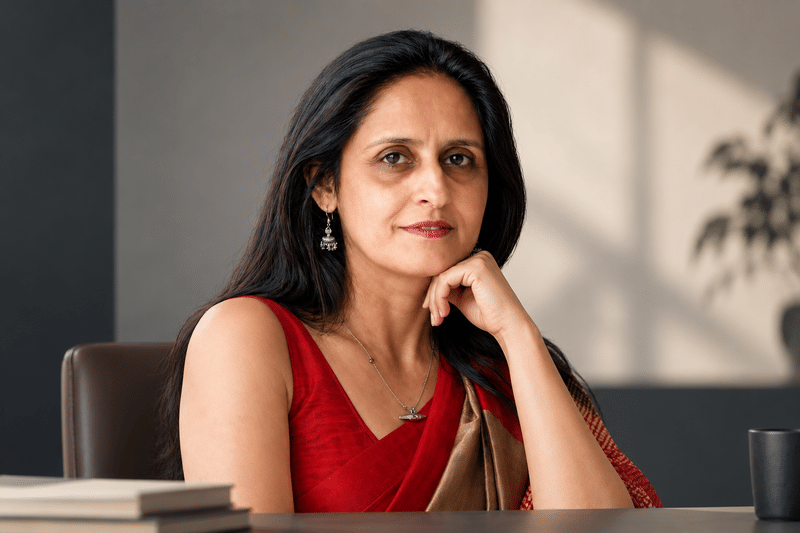
For Kashish Daya Kapoor, CHRO, Newgen Software, the answer is not primarily about technology. It is about governance, organisational design and a fundamental rethinking of how decisions are made and owned.
In a conversation with People Matters, Kapoor outlined why decision rights may become one of the defining organisational challenges of the AI era, reshaping accountability, leadership, collaboration and the very structure of work.
The next transformation is about decisions, not deployment
Many organisations have already moved beyond AI experimentation. Yet Kapoor believes the next phase of transformation will be determined less by adoption levels and more by organisational redesign.
"We are moving from an era in which organisations automated tasks to one in which they are increasingly orchestrating intelligence across people, processes, technology, and systems."
In her view, the critical shift over the coming years will centre on how organisations rethink work itself.
"Over the next five years, the biggest shift will not be about how much AI an organisation deploys, but about how fundamentally it redesigns how work gets done and decisions are made."
AI's growing role in analysis, pattern recognition and recommendations is already changing the nature of work.
"AI will increasingly take over analysis, pattern recognition, recommendations, and parts of execution."
As a result, organisations will increasingly focus on outcomes and judgment rather than activity tracking.
"The advantage will no longer come simply from having more people or more technology, but from having the right combination of human capability and machine intelligence."
Among the capabilities Kapoor believes organisations will need to strengthen are:
- Continuous learning
- Adaptability
- Critical thinking
- The ability to work effectively with AI
"The organizations that win will be those that build an AI-native operating model in which people, processes, and intelligent systems are designed to work together from the outset."
Why decision rights are moving to the centre of the conversation
If AI begins participating in decisions, organisations must answer a series of questions many have never had to address before.
Kapoor is unequivocal on one point.
"AI can make a decision, but it cannot own accountability for that decision. Humans do."
This distinction, she suggests, will become increasingly important as AI becomes embedded across workflows and business processes.
"As AI becomes embedded in decision-making, organisations will need much clearer decision rights."
The practical implications are significant.
"Who can rely on an AI recommendation? Where is human intervention mandatory? Who can override the system? Who ultimately owns the outcome?"
These questions extend far beyond technology teams.
According to Kapoor:
- Technology teams are responsible for integrity, security, explainability and responsible deployment.
- Business leaders remain accountable for outcomes and alignment with strategy, ethics and regulation.
- Employees must have the capability and confidence to challenge AI outputs when necessary.
"This makes governance much more than a compliance exercise."
"Trust will become a strategic business asset."
A mature AI environment, she argues, requires transparency around both decisions and accountability.
"People need to understand not only what decision AI has made, but, where relevant, why it made it, and know that there is still a human system of accountability around it."
Why many organisations may struggle to unlock AI's value
A recurring theme throughout the discussion is the gap between deploying AI and redesigning work.
"This is where I believe many organisations will struggle."
"Putting AI into an existing process is not a transformation."
"It may speed up the existing process, but it does not necessarily make the organisation better."
Instead, Kapoor believes leaders should revisit the assumptions underpinning existing workflows.
"The real opportunity is to ask: If we were designing this workflow today, knowing what AI can do, would we design it the same way?"
This requires a broader rethink of organisational structures and operating models.
Key areas she highlights include:
- Workflows
- Decision rights
- Roles
- Skills
- Collaboration models
- Organisational layers
"It means moving from task-based work to outcome-based work, and from functional silos to integrated teams built around business outcomes."
Another challenge lies in capability building.
"Organisations need to move from episodic training to continuous capability building." "Jobs will evolve continuously, so learning cannot be an annual intervention."
Human judgement becomes more valuable, not less
While AI can improve speed and scale, Kapoor does not see human judgment becoming less important.
"The objective should not be faster decisions at any cost. It should be better decisions at scale." She describes the complementary strengths of humans and intelligent systems.
"AI brings extraordinary speed, scale, and pattern recognition."
"Humans bring context, judgment, empathy, ethics, and the ability to understand consequences that may not be visible in the data."
For leaders, the challenge is deciding where automation ends and judgement begins.
"Leaders, therefore, need to become very deliberate about where AI should decide, where AI should recommend, and where humans must decide."
Certain decisions, she notes, require deeper human involvement.
"A customer escalation, a people decision, a regulatory matter, or a strategic decision with long-term consequences cannot simply be treated like an automated transaction."
As organisations mature their AI strategies, Kapoor believes the key question is evolving. "The question is not 'Can AI make this decision?'"
"The better question is 'What is the appropriate level of human judgment for this decision?'"
From functions to outcomes
Beyond decision-making, Kapoor sees AI reshaping organisational structures.
"AI has the potential to fundamentally challenge the traditional organisation chart."
Historically, information, expertise and authority were concentrated within functions. AI could weaken those boundaries.
"AI can change that equation by making information more accessible and workflows more connected."
This may lead to a different organisational model.
"We will increasingly see organisations become less hierarchical, more networked, and more outcome-oriented."
Perhaps the most striking observation concerns the nature of work itself.
"The unit of work may increasingly be the business problem or customer outcome, rather than the function."
This shift would require closer collaboration across product, technology, sales, operations and HR.
However, Kapoor cautions against assuming technology alone will eliminate organisational barriers.
"Technology alone will not remove silos."
"Leaders have to redesign incentives, metrics, decision rights, and accountability around shared outcomes."
Reinvention, not automation
Looking ahead, Kapoor sees a clear distinction between organisations using AI to optimise existing systems and those using it to rethink how value is created.
"I would describe the difference in one word: reinvention."
She believes future leaders will ask tougher questions about work allocation, augmentation, capability development and organisational design.
"The winners will not necessarily be the organisations deploying the most AI."
"They will be the organisations that create the best human-AI operating system."
Ultimately, Kapoor believes AI maturity should be measured by outcomes rather than implementation metrics.
"It will be whether AI is helping the organisation make better decisions, increase productivity, improve customer outcomes, and unlock human potential."
As enterprises move beyond AI adoption and into AI-enabled decision-making, the debate may no longer be about whether organisations use AI. The more pressing question may be who holds authority, responsibility and judgment once intelligent systems become part of every important decision.
Author
Loading...