







AI & Emerging Tech
Why one in six tech employees changes jobs every year—and what employers can do about it
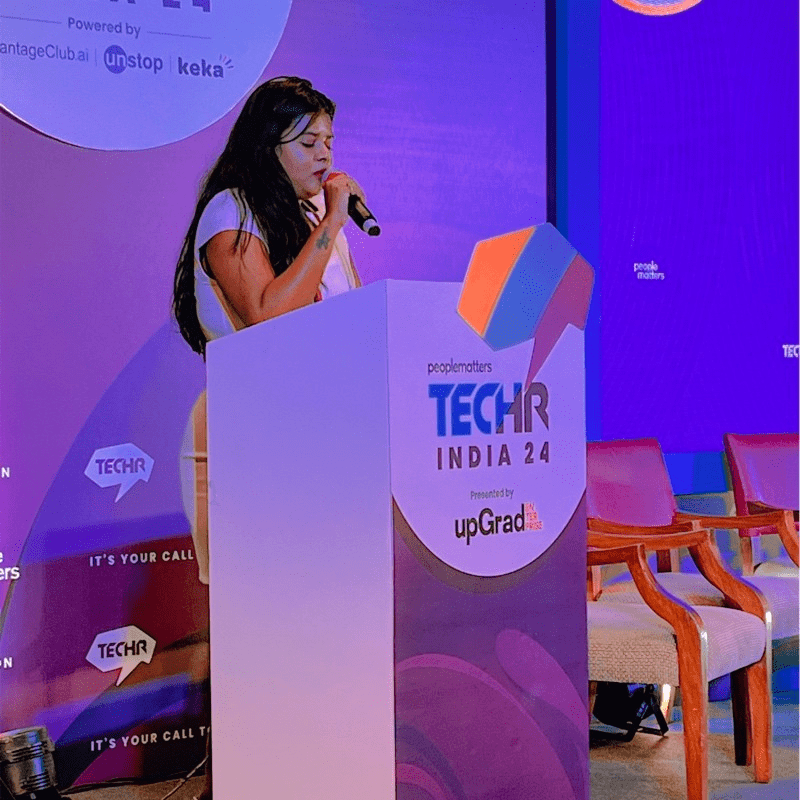






Servify Group CHRO Bharat Jain explains why shorter career cycles have become the norm in technology, why loyalty is evolving, and what organisations must do to build long-term commitment.
India's technology sector is witnessing a fundamental shift in how careers are built. Employees are changing jobs more frequently, professional identity is increasingly tied to skills rather than employers, and companies are rethinking how they retain talent.
In an interview with People Matters, Bharat Jain, Group Chief Human Resources Officer at Servify, says high employee movement should not be viewed as an inevitable feature of the industry. Instead, organisations need to respond through stronger cultures, better leadership, meaningful growth opportunities and employee development.
Shorter careers are becoming the new reality
Career cycles across technology are getting shorter, both in India and globally.
According to Bharat Jain, the Indian IT sector recorded an attrition rate of 15.1% in 2024, down from 19.3% in 2023, yet it still means roughly one in six technology employees changes jobs every year. Industry data from Deloitte India, NASSCOM-Deloitte and Aon points to the same trend.
Globally, he notes, the average tenure in technology is between two and three years, while software engineers and developers remain with employers for approximately two years.
He believes employers themselves are adapting to this new reality.
"The fact that Indian technology companies are now offering joining bonuses tied to two-year clawback periods to mitigate early attrition is itself a telling indicator of how normalised short-cycle careers have become. The industry has begun to design its incentive structures around the assumption that people will leave."
Several structural changes are driving this shift.
The startup ecosystem created opportunities for faster career progression, better compensation, broader responsibilities and equity. Remote and hybrid work reduced geography as a constraint, making job changes significantly easier than they were a decade ago.
Technology adoption has also become a differentiator.
"Workplaces that don't adopt new ways of working, for example AI adoption, often don't offer a challenging environment which in today's time is a big reason for job shifts."
Professional identity is changing
According to Jain, younger professionals increasingly define themselves by what they do rather than where they work.
Instead of building careers around a single employer, many are intentionally seeking wider exposure across industries, functions and business challenges.
"Professional identity is centred around their craft, whether that is product, engineering, AI, design or entrepreneurship, rather than a single employer."
He says this should not automatically be interpreted as lower commitment.
"Employees today want continuous learning, faster growth and a stronger sense of purpose in what they are building."
As a result, stability alone is no longer enough to retain talent.
Why retention has become more difficult
High-growth technology companies face unique workforce challenges.
Rapid expansion can dilute culture, while roles evolve quickly as businesses scale. Employees who joined for one responsibility may find themselves doing something entirely different within a few years.
Without support during these transitions, organisations risk losing experienced talent.
Jain also believes compensation alone no longer determines retention.
"Employees stay where they see long-term growth, trust in leadership and a genuine connection to the organisation's journey."
What encourages employees to stay
Drawing on Servify's workforce experience, Jain says long-term commitment is built deliberately rather than accidentally.
He identifies three factors that consistently influence retention:
- Ownership, where employees feel connected to the company's vision, business model and purpose.
- Growth, through learning, internal mobility and expanding responsibilities.
- Trust and psychological safety, where employees feel respected, heard and supported.
Servify's own workforce data reflects this approach, according to Jain.
- Around 60% of employees have been with the company for three years or more.
- Nearly one in three employees has completed five years or more.
- One in four employees has crossed six years.
- More than one in six employees has remained with the company for seven years or longer.
"In an industry where average work tenure rarely exceeds four years, that level of continuity is not accidental," he says.
Why institutional knowledge matters more as companies scale
Growth creates another challenge: preserving organisational knowledge.
Jain says institutional memory largely resides with employees who have experienced multiple stages of a company's evolution.
"They carry context around customer behaviour, operational decisions, past learnings and organisational judgment that cannot always be documented in processes alone."
For this reason, organisations need to invest in:
- Learning and development
- Knowledge transfer
- Mentorship
- Cross-functional exposure
- Leadership accessibility
- Culture continuity
He says companies that scale successfully recognise institutional knowledge as a strategic asset rather than simply an operational necessity.
Retention starts with leadership
According to Jain, organisations with strong retention make employee continuity a leadership priority. He highlights several differentiators:
- Consistent and visible leadership.
- Internal mobility across roles and functions.
- Recognition beyond compensation.
- Clear long-term career opportunities.
"Employees often leave organisations not because they want to leave the company, but because they no longer see new opportunities within it."
Why AI could strengthen long-term careers
While artificial intelligence is expected to automate more routine work, Jain believes it could increase the value of experienced employees rather than reduce it.
"As automation handles more routine and transactional work, human value will increasingly come from judgment, context, relationship management and deep institutional understanding."
He believes organisations that continue investing in culture, leadership accessibility, employee growth and long-term capability building will be better positioned for the future.
"I do not believe high attrition should simply be accepted as the industry norm," he says.
For Jain, the future of technology work is not about returning to lifelong employment. It is about creating organisations where employees continue to see opportunities to learn, grow and contribute over longer periods.
Topics
Author
Loading...