







Business
AI, leadership and global mandates: What will shape India's GCCs in 2027?
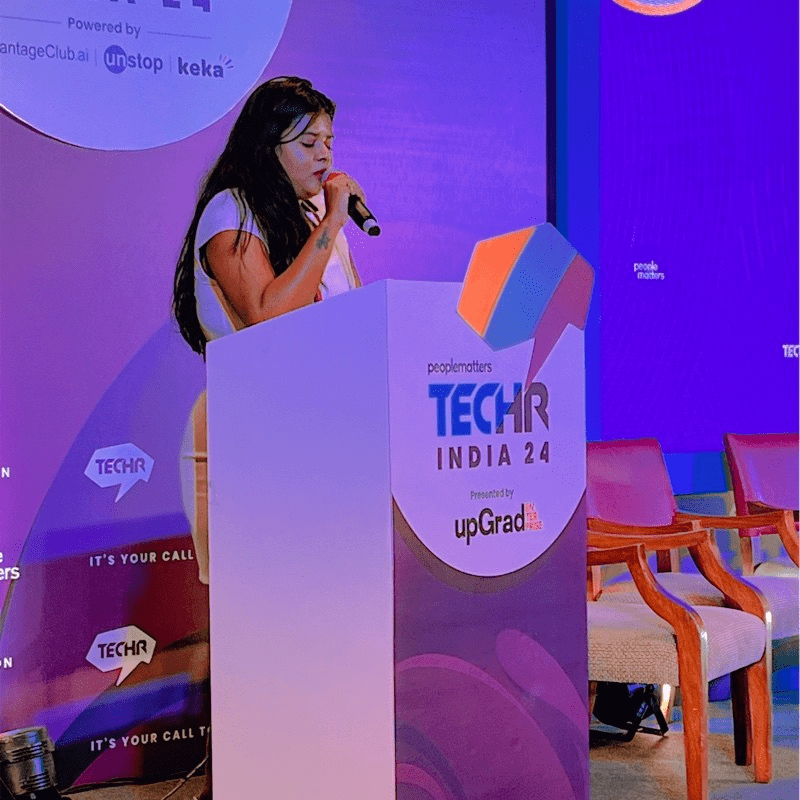






As global capability centres move towards greater ownership of business outcomes, AI adoption, specialised talent and leadership depth will shape their next phase of growth.
India's Global Capability Centres (GCCs) are entering a phase where their contribution to global businesses will increasingly be measured by the decisions they influence, capabilities they build and innovation they enable. As artificial intelligence (AI) becomes embedded in operations, the shift towards greater business ownership will also reshape talent requirements, leadership expectations and workforce strategies.
In an interview with People Matters, Jacob George, Vice President and HR Leader, TransUnion GCCs, outlines how India's GCC ecosystem could evolve in 2027, with greater responsibility for product development, platform modernisation, technology investment and global decision-making.
From execution to enterprise ownership
The next phase of GCC growth could see more global mandates being scaled from India, placing centres closer to strategic business decisions and product development.
George sees AI accelerating this transition, although technology alone will not determine how effectively GCCs assume greater responsibility.
“GCCs will increasingly be measured not by the volume of work they deliver, but by the capabilities they build, the innovation and productivity they enable and the business outcomes they shape.”
This shift will require closer integration with global business functions, multidisciplinary teams and stronger local leadership. As mandates become more complex, domain expertise and customer understanding will become equally important to technology proficiency.
The change also places a greater emphasis on the quality of outcomes rather than the scale of operations, potentially reshaping how organisations assess the contribution of their India-based centres.
AI is changing the talent equation
As AI becomes part of everyday work, GCC workforce strategies will need to evolve beyond conventional hiring and role-based skill requirements. The demand for expertise in AI, analytics, cloud, cybersecurity and data is expected to grow, but technical proficiency will not be sufficient on its own.
George highlights the need for professionals who can apply technology within a business context, work across disciplines and adapt as the nature of work changes.
This will place greater importance on:
Business-contextual AI skills, enabling employees to apply technology to organisational needs.
Continuous learning, allowing talent to keep pace with evolving technologies.
Internal mobility, helping employees move into roles as capabilities and business requirements change.
Cross-functional expertise, combining technical knowledge with an understanding of business priorities.
The focus, consequently, will move from hiring for static job descriptions to building capabilities that can evolve with technology and business demands.
The three capabilities behind a future-ready workforce
With GCCs taking on more complex responsibilities, workforce readiness will depend on a combination of business understanding, leadership capability and specialist expertise.
George identifies three capability areas that will become critical:
Business acumen: Understanding business needs, finding solutions and connecting work to organisational priorities.
Leadership: Managing complex programmes, navigating change and risk, and influencing stakeholders across functions and markets.
Specialist expertise: Building functional depth while developing the ability to operate in increasingly complex environments.
At TransUnion's GCCs, the focus is on developing this breadth alongside functional depth, enabling employees to take on greater responsibilities as the work and decisions they support become more complex.
Upskilling needs to move beyond the classroom
Building these capabilities will require learning programmes that connect skill development with practical application. At TransUnion, the Upskill-N-Reskill initiative combines structured learning with opportunities to apply new knowledge on the job.
The initiative includes:
Business hackathons and experiential learning.
Cross-skilling and reskilling opportunities.
Experiential cloud learning.
Internal gig opportunities.
Learning support from subject matter experts across global teams.
Specialised learning experiences through collaborations with AWS and Google Cloud.
The approach places emphasis on making learning relevant to business requirements and enabling employees to develop skills that can be applied as organisational needs change.
What will enable India-based talent to lead globally?
Greater ownership of global mandates does not automatically translate into global leadership representation. George identifies enterprise experience, exposure to global responsibilities and opportunities to make decisions with wider business impact as important enablers of leadership progression.
Technical and functional expertise remain the foundation, but leadership roles require professionals to navigate markets, functions and business priorities beyond their immediate teams.
At TransUnion's GCC India, leadership development is supported through coaching, mentoring and development programmes, alongside opportunities to take on real challenges and learn through experience.
The emphasis is on building capability while providing the exposure and opportunities required for employees to grow into global roles.
India's next GCC opportunity lies in differentiated value
As India's GCC ecosystem matures, its next growth phase could depend less on scale alone and more on the depth of capabilities and value it creates for global enterprises.
George identifies several areas where the ecosystem can strengthen its contribution:
Building specialised capabilities in areas where India can establish global leadership.
Using AI to accelerate innovation.
Leveraging academia, startups and technology partners more effectively.
Developing intellectual property, products and solutions from India for global deployment.
Strengthening productivity, resilience and business outcomes through deeper expertise.
The opportunity is to extend India's GCC contribution from supporting global operations to developing capabilities and solutions that can influence businesses across markets.
As global mandates expand and AI reshapes the nature of work, the GCC ecosystem's next phase will depend on how effectively it combines technology, talent and business understanding. The measure of progress in 2027 may increasingly be the global value created from India, rather than the size of the centres themselves.
Topics
Author
Loading...