







Business
CHROs and CTOs are becoming co-architects of organisational design: Sahil Mathur






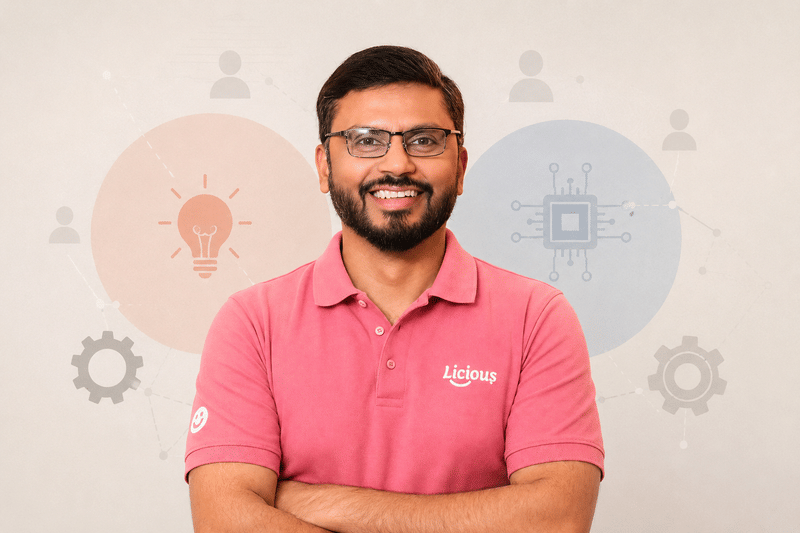
As AI, automation and analytics reshape work, workforce transformation is becoming a shared responsibility across business, technology and people functions.
Workforce transformation is increasingly becoming a question of organisational design rather than workforce management. As AI and automation alter how work gets done, decisions around talent, capability and productivity are moving beyond HR and into the centre of business strategy.
For Sahil Mathur, CHRO (People & Culture) at Licious, this shift is creating a new leadership dynamic. People leaders and technology leaders are no longer operating in parallel. They are becoming joint architects of how organisations evolve, build capability and prepare for future business demands.
The change is not being driven by technology alone. It is also being shaped by a growing recognition that sustainable transformation requires organisations to rethink the relationship between people, processes and technology.
Why workforce transformation can no longer sit within HR
Historically, workforce transformation was often viewed through a talent lens. Organisations expanded teams, introduced new learning programmes or restructured functions as business needs evolved.
Mathur believes that approach is no longer sufficient.
At Licious, rapid growth initially created a familiar response: hire more people. The organisation chose a different route.
"We called it ‘productivity planning’ that meant, first define the business outcome, then determine the best combination of people, processes, and technology to achieve it."
The shift changed how leadership viewed transformation itself.
"That shift taught us that transformation cannot live in one function. Business leaders define ambition, technology leaders create new possibilities, and the people team ensures employees evolve alongside the business. Today, it is integrated business architecture, not just an HR agenda."
The distinction is important. Workforce transformation is increasingly becoming an enterprise-wide challenge that requires leaders to make decisions across multiple dimensions simultaneously.
According to Mathur, success depends on aligning three critical elements:
- Business objectives
- Technology capabilities
- Workforce readiness
When any one of these operates in isolation, transformation efforts risk losing momentum or relevance.
The growing influence of technology leaders on talent decisions
As organisations become more data-driven, technology leaders are playing a far greater role in workforce decisions than they did even a few years ago.
Mathur says technology teams now contribute across the employee lifecycle, not just through infrastructure or systems management.
At Licious, a central analytics team supports decisions related to:
- Hiring
- Onboarding
- Performance
- Retention
The objective is not simply to collect workforce data but to identify signals early enough to influence outcomes.
"When our attrition prediction system flagged frustration within a specific cohort, managers intervened early with mentoring, clearer role definitions, and learning support, before anyone had decided to leave."
The example highlights how workforce management is becoming increasingly predictive rather than reactive.
For Mathur, technology's value lies in enabling organisations to respond sooner and with greater precision.
"That kind of proactive intervention is impossible without technology as a partner."
The same shift is visible in learning and development.
"Technology also enables continuous, personalised learning thus replacing one-off training events with adaptive tracks."
Yet despite growing investment in AI and analytics, Mathur is careful not to frame technology as the destination.
"Real transformation isn't about replacing people with automation. It's about using technology to elevate what people do best."
Capability building is becoming the new competitive advantage
One theme runs consistently through Mathur's perspective on workforce transformation: capability building.
He sees it as the point where people strategy and technology strategy intersect most directly.
"The greatest overlap is in capability building and the risk is treating technology as the solution rather than the enabler."
At Licious, this thinking has shaped a framework built around three components:
- Education
- Exposure
- Experience
The model combines learning content, hands-on opportunities and cross-functional experiences to help employees develop practical capability.
For Mathur, technology can identify learning needs and monitor progress. However, genuine capability emerges only when employees apply skills in real-world situations.
"Tools can surface learning needs and track progress, but real capability is only realised when skills are applied daily in real situations."
The same principle extends to organisational culture.
While AI can identify patterns across a workforce, Mathur believes interpretation and response remain fundamentally human responsibilities.
"AI can identify cultural patterns across a distributed workforce, but it takes human judgment to respond in a way that's culturally consistent."
This balance between insight and judgement is becoming increasingly important as organisations expand their use of analytics and AI-powered decision-making.
Data can identify problems, but people provide context
For all the promise of workforce analytics, Mathur warns against one recurring mistake: allowing data to become detached from frontline realities.
"The biggest risk is that data loses context and context is everything."
He points to an onboarding experience at Licious that reinforced this lesson.
Early dashboards suggested that faster onboarding produced positive financial outcomes. Conversations with frontline employees told a different story.
"Our meat technicians told a completely different story - they needed deep technical grounding that rushed onboarding couldn't provide."
The feedback prompted a redesign of the onboarding process into a 30 - 45 day learning journey.
"The insight didn't come from data alone, it actually came from listening."
The experience shaped a broader view of transformation. Analytics can highlight patterns and trends. Understanding why those patterns exist often requires conversations with employees, managers and operational leaders.
Without those feedback loops, organisations risk improving metrics while missing the realities behind them.
A new leadership partnership is taking shape
As workforce transformation becomes a continuous priority rather than a periodic initiative, Mathur expects closer collaboration between CHROs, CTOs and business leaders.
He points to Licious' city-based operating model, where leaders function as City CEOs responsible for business outcomes in their respective geographies. Such structures rely on people, technology and business strategies moving together.
The same applies to leadership development, future skills planning and organisational capability building.
"Leadership pipelines like our ‘Leap’ initiative, capability frameworks built for future roles, and a genuine culture of continuous learning all require sustained collaboration across functions."
For Mathur, the direction of travel is clear.
"CHROs and CTOs are no longer parallel tracks, they're increasingly co-architects of organisational design."
As organisations prepare for new technologies, evolving skills requirements and changing business models, leadership conversations are also changing.
Rather than focusing solely on existing capabilities, organisations are beginning to focus on future potential.
"The conversations are also becoming more forward-looking and less about what employees can do today, more about what the organisation needs them to become."
The message reflects a broader shift taking place across the workplace. Workforce transformation is no longer simply about adapting people to change. It is increasingly about designing organisations where business strategy, technology and human capability evolve together.
Author
Loading...