







Business
How Hexaware built a learning ecosystem where 90% of employees are AI-certified






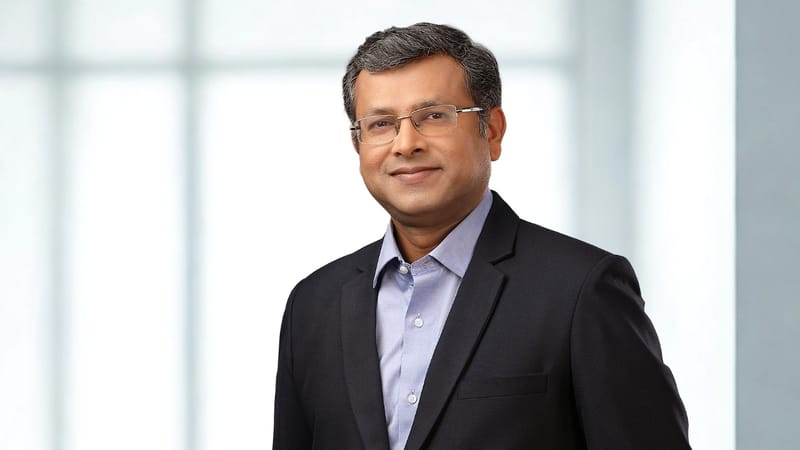
Hexaware’s talent leaders say a choice-driven learning model—not mandates—enabled the company to scale AI literacy across roles and rewire how work gets done.
Hexaware has spent the past three years building an L&D ecosystem that looks very different from the traditional corporate training model. Instead of mandating courses or pushing standardised tech tracks, the company let its employees choose what, when and how they wanted to learn. The result, according to its leadership, is that around 90% of its workforce is now certified in generative AI — a scale rarely seen in the industry.
In an interview with People Matters, Satyendu Mohanty, Executive Vice President and Global Head of Talent Management and L&D, said the company began preparing for this shift well before AI became a mainstream corporate priority. A firm-wide upskilling effort launched in 2022 eventually pushed AI literacy into every corner of the organisation, covering both technical roles and enabling functions. By mid-2023, the vast majority of employees had completed GenAI certification, prompting the company to formalise its efforts through the Hexaware AI Academy. More than 6,000 consultants have since completed advanced-level programmes through the academy.
Mohanty stressed that the company’s motivations were not purely reactive. “Client demand is rising, but our approach has been to embed AI into every role rather than treat it as a specialist capability,” he said. In practice, this meant treating AI as the baseline for how work should be organised, not as a discrete skill for a handful of technical teams.
That shift has had structural consequences. Hexaware now groups its workforce into three cohorts reflecting how employees use AI:
• Build.ai, comprising architects and developers who create AI agents;
• Collaborate.ai, made up of domain experts who use and refine these agents;
• Manage.ai, covering project leaders who run teams where humans and AI tools work side by side.
Mohanty said this system has changed not just how projects are delivered, but how capability gaps are managed across generations. Experienced consultants and Gen Z talent, who he described as “AI-native”, now collaborate through a common set of tools rather than separate skill tracks.
The appetite for experimentation appears strong. During a hackathon co-hosted with Replit, nearly 2,500 employees built more than 6,000 applications in 48 hours, generating over 43,000 prompts. For Mohanty, the exercise demonstrated that AI learning had moved from education to practice.
The L&D model also feeds into Hexaware’s employer brand. The company’s internal programmes — from its Skill Horizon matrix, which maps employees into legacy or next-generation skill quadrants, to incentive systems linked to external certifications — are described by Mohanty as mechanisms that encourage self-direction rather than compliance. Every campus hire arrives with at least one AI platform certification and one cloud credential, which he said reflects the organisation’s shift toward choice-driven learning.
Looking ahead, the company is already preparing for the next iteration of AI skills. The pace of advancement in areas such as agentic AI and new coding paradigms means L&D teams must move quickly. Hexaware works with service-line leaders, external education platforms and analysts to anticipate where demand will emerge. Its Agentic AI Academy, launched with Upgrad, is one example of how curriculum design and capability-building are being accelerated.
For CHROs in less digitally mature sectors, Mohanty offered a straightforward recommendation: “Give employees ownership of their learning journeys.” He argued that compliance-led programmes often miss the point. Instead, incentives, skill–based career pathways and gamified nudges create conditions where employees choose to upskill. “Autonomy, structure and motivation build sustainable learning culture,” he said.
As AI continues to redraw the boundaries of work, Hexaware’s approach suggests that building a future-ready workforce depends not on mandating skills but on creating systems where employees opt in — and keep opting in — because the learning makes their work more meaningful and their careers more resilient.
Author
Loading...