







Business
Payments, partnerships and market access: Gaurav Shisodia on what it takes to scale across borders





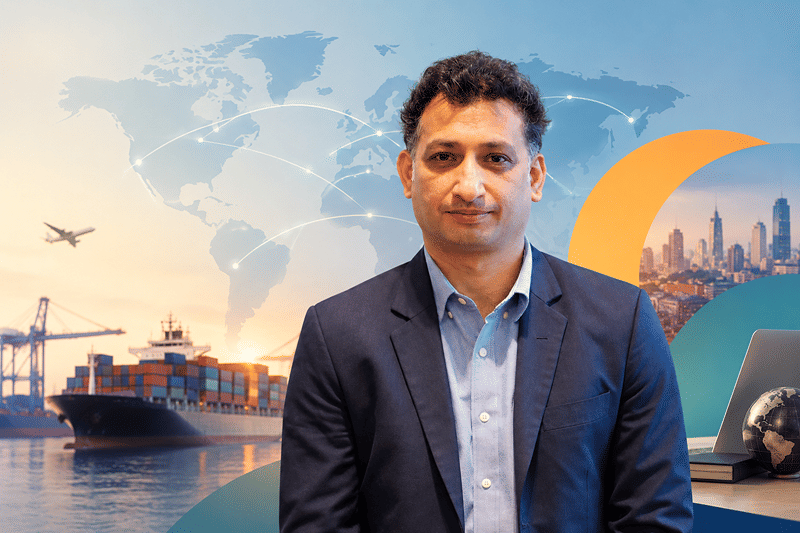
As emerging-market trade corridors gain momentum, Gaurav Shisodia, VP & Country Manager, Payoneer India, discusses why Indian SMBs are looking beyond traditional markets and what it takes to build sustainable cross-border businesses.
For decades, the United States and Europe dominated the international growth plans of Indian businesses. Those markets remain important, but the geography of global commerce is changing.
Trade between developing economies is expanding rapidly, creating new opportunities for Indian small and medium-sized businesses (SMBs). At the same time, technology, digital platforms and evolving financial infrastructure are reducing some of the traditional barriers associated with international expansion.
In a conversation with People Matters, Gaurav Shisodia, VP & Country Manager, Payoneer India, examines the rise of South-South trade, the opportunities emerging across Africa, Southeast Asia and Latin America, and the operational capabilities businesses need to scale internationally.
A broader map for global growth
Shisodia believes Indian SMBs are no longer dependent on a narrow set of international markets.
While the US and Europe continue to be significant destinations, emerging economies are becoming increasingly important sources of demand and business growth.
According to UNCTAD data cited by Shisodia:
- South-South merchandise trade reached US$7.2 trillion in 2025
- It accounted for 28% of global merchandise trade
- Its share has risen from 11% in 2000
He describes this as a meaningful shift in where global commerce is taking place.
Recent supply-chain disruptions have also encouraged businesses to diversify their customer base and reduce dependence on a single geography.
Technology is playing a central role in this transition. Digital platforms, online marketplaces and modern cross-border payment systems have lowered the barriers to entering international markets, often eliminating the need for significant upfront investment in overseas infrastructure.
The shift is already visible in India's trade relationships. As cited by Shisodia, India's trade reached US$128 billion with ASEAN in 2025-26 and US$93.69 billion with Africa during the same period.
"Indian SMBs are not trying to replace traditional markets but are trying to build a healthier and more diverse international footprint by engaging with emerging trade corridors," he says.
Why South-South trade is becoming more significant
For Shisodia, the rise of South-South trade reflects a deeper restructuring of the global economy rather than a temporary response to market disruptions.
He points to the growing economic weight of developing economies, which according to UNCTAD's Trade and Development Report 2025, now account for more than 40% of global output and merchandise trade.
As a result, businesses are increasingly:
- Producing for one another
- Sourcing from one another
- Selling directly into neighbouring and regional markets
Regional value chains are also becoming stronger, particularly across Asia, where high- and medium-technology manufacturing represents roughly half of South-South trade.
Digitisation has further expanded participation.
"A service business in India can work with a customer in Southeast Asia, Africa or Latin America without the infrastructure that international expansion once demanded," Shisodia notes.
He sees trade and financial systems gradually adapting to these new patterns, making South-South commerce an increasingly established component of global trade.
Why emerging-market corridors offer more than scale
Market size alone does not determine opportunity.
Shisodia suggests that Indian businesses often possess capabilities developed in one of the world's most competitive domestic environments. Experience across technology services, engineering, manufacturing, pharmaceuticals and digital commerce can translate effectively into other fast-growing economies where customers value quality, flexibility and cost effectiveness.
Emerging-market corridors can also provide greater scope to build long-term customer relationships.
In established markets, Indian SMBs frequently compete against incumbents with mature distribution networks and deep customer relationships. Newer trade corridors may offer more room for businesses that understand local requirements and adapt their approach accordingly.
Another advantage lies in the potential for two-way commercial relationships.
A company may discover customers in a particular market while also sourcing products, services or capabilities from the same region. This creates broader commercial ties than a conventional export model.
Shisodia highlights countries such as Brazil, Indonesia, Kenya and Vietnam, each with distinct regulatory, cultural and commercial characteristics.
Businesses that invest in understanding those differences are likely to be better positioned for sustainable growth.
The barriers that still challenge expansion
Despite growing opportunities, expansion remains complex.
"Finding demand is only the first step; the bigger challenge is building the operating capability to pursue that opportunity sustainably," Shisodia says.
One major challenge is market understanding.
Latin America, Africa and Southeast Asia cannot be viewed as single markets. Customer expectations, pricing structures, distribution models and business practices can differ significantly across countries.
Regulatory complexity presents another hurdle.
Many SMBs lack the specialist resources required to navigate:
- Local tax requirements
- Documentation standards
- Data regulations
- Commercial compliance obligations
International expansion can also create longer payment cycles and additional operating costs, increasing the importance of effective cash-flow management.
The human element remains equally important.
Building a sustainable presence often requires local expertise through employees, partners or trusted business relationships.
"This is why ecosystem partnerships matter so much," Shisodia explains.
He believes access to trusted financial, operational and local expertise can significantly influence whether a company converts an opportunity into a sustainable business.
Why financial infrastructure becomes a growth enabler
One of Shisodia's strongest themes centres on the role of payments and financial systems in supporting international expansion.
"They are often the difference between making an international sale and building a business that can operate internationally at scale," he says.
As businesses expand into multiple markets, payment complexity increases.
Companies must manage:
- Cross-border collections
- International supplier payments
- Currency movements
- Cash-flow visibility
At that point, payments cease to be merely an operational process.
"The way a business manages receivables and payables directly affects cash-flow efficiency, costs and its ability to expand confidently," Shisodia says.
For SMBs, which typically operate without the resources available to large multinational corporations, scalable financial systems become particularly important.
His view is straightforward:
"Financial infrastructure has to scale alongside commercial ambition, or growth itself can create friction."
The sectors positioned to benefit most
Shisodia identifies several sectors where India's capabilities align strongly with growing demand across emerging markets.
Technology-enabled services
India's strength in IT services, web and application development, consulting and digital marketing positions the sector well for continued growth.
According to government data cited by Shisodia, India's services exports reached US$421.3 billion in FY2025-26, with telecommunications, computer and information services accounting for nearly half of total exports.
Engineering and specialised manufacturing
India's engineering exports reached a record US$122.43 billion in FY2025-26, reflecting strong capabilities across machinery, industrial components and engineering goods.
As supply chains diversify, these sectors could benefit from stronger connections across developing economies.
Pharmaceuticals and healthcare
Healthcare and pharmaceutical businesses also stand to gain from expanding trade relationships.
Shisodia points to growing cooperation between India and Brazil in pharmaceuticals, chemicals, engineering goods and machinery as an example of future opportunity.
Digitally enabled consumer brands
Digital marketplaces and direct-to-consumer channels are enabling smaller brands to build international demand without extensive physical infrastructure.
Across all sectors, technology is widening participation in global commerce beyond large enterprises.
Building sustainable growth across borders
Looking ahead, Shisodia believes three priorities will determine whether Indian SMBs convert emerging trade opportunities into long-term success:
- Choosing the right markets
- Building repeatable business models
- Developing the capabilities needed to support growth
Businesses must understand where customer demand exists, where they hold a competitive advantage and whether market economics justify expansion.
Diversification can improve resilience, but successful expansion usually starts with building a model that works in one market before adapting it elsewhere.
As operations scale, payments, compliance, technology and local expertise become increasingly important.
Winning an international customer may open the door to a new market. Sustaining growth requires the ability to serve that market consistently and efficiently over time.
For Shisodia, the opportunity created by South-South trade extends beyond geographical expansion.
"The opportunity in South-South trade is not simply about being present in more markets. It is about building a repeatable and resilient way of operating across borders."
Topics
Author

Loading...