







Business
Why 2026 may mark a turning point for India’s SMB exporters






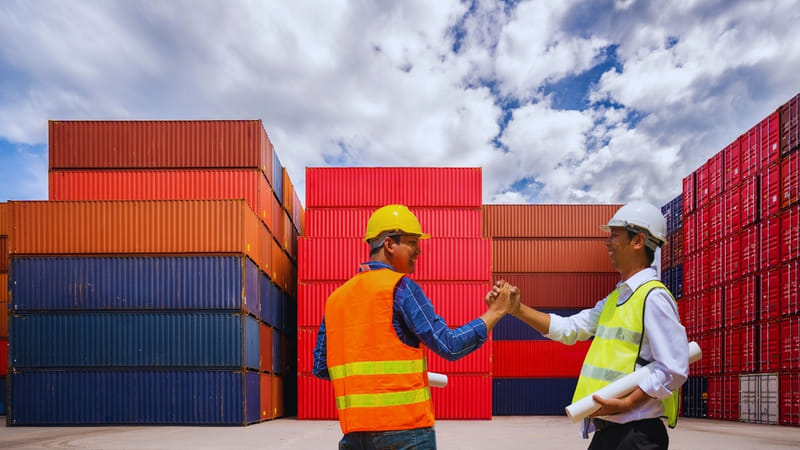
As volatility fades, India’s small exporters are shifting towards diversified markets, digital payments and repeatable global operating models.
After a bruising year of volatility, India’s small and mid-sized exporters are entering 2026 with a quieter ambition: predictability.
Rather than chasing short-term demand shifts, India’s SMB export sector is beginning to prioritise repeatable growth, diversified markets and operational discipline, says Gaurav Shisodia, vice president at Payoneer India. The change reflects lessons from 2025, when global uncertainty exposed how fragile manual, single-market export models can be.
Official signals support this recalibration. India’s Annual Report 2024–25 points to continued export momentum, with services emerging as a key driver, while SIDBI’s work on the MSME sector shows a rising share of exports coming from smaller firms. Together, they suggest that 2026 will be less about sudden spikes—and more about depth.
“All of this suggests 2026 will be about depth, not volatility,” Shisodia says.
Diversification becomes deliberate
The shift is most visible in market strategy. While the US remains central to Indian exports, particularly in IT services, professional services and e-commerce, SMBs are no longer treating it as a single point of dependence.
Policy direction is reinforcing a multi-corridor export model, expanding access across Europe, the Gulf and parts of Latin America. The result is not a retreat from the US, but a broader portfolio by design.
“Diversification beyond a single demand centre will continue,” Shisodia says, “but as a ‘both-and’ rather than ‘either-or’ shift.”
By 2026, multi-market strategies are becoming intentional, with secondary corridors used as risk-balancing levers rather than opportunistic bets.
Currency behaviour shifts at the edges
As exporters widen their reach, currency strategy is changing. Going into 2026, SMBs are showing stronger demand for buyer-currency pricing to reduce friction at the point of sale, while also pushing for predictability once funds return to India.
From a regulatory standpoint, exporters can invoice in permitted foreign currencies, and the RBI framework also enables invoicing and settlement in INR under specified arrangements, with proceeds required to be realised and repatriated through authorised dealer banks.
The bigger change is behavioural. Exporters are moving away from single-currency habits, managing FX exposure more actively, and demanding clearer visibility on fees, timelines and reconciliation.
What broke in 2025
These shifts are shaped by frustration. In 2025, many SMB exporters found cross-border payments unpredictable and excessively manual. Settlement timelines were unclear. FX costs lacked transparency. Teams spent disproportionate time chasing FIRCs, FIRAs, GST reconciliation and market-specific compliance.
The consequence was not just inefficiency, but fragility. Growth depended on effort rather than systems.
“Turning a chaotic one-off process into a repeatable workflow” has become a priority, Shisodia says, particularly as export volumes rise.
Payments move from tool to infrastructure
By 2026, digital cross-border payment platforms are becoming export infrastructure, not optional utilities.
Global cross-border e-commerce is projected to reach $2 trillion by 2030, and most MSMEs already accept digital payments. What exporters now expect are capabilities that reduce risk as they scale:
— local receiving accounts in multiple currencies
— FX transparency at the point of collection
— compliance-aligned, auditable workflows end to end
Without these, expansion risks multiplying operational chaos rather than revenue.
The ‘born-global’ exporter matures
New-age exporters—particularly in e-commerce, SaaS, professional services and creative industries—are leading this shift. These businesses optimise for recurring, multi-market revenue, combining marketplaces, D2C channels and subscription models.
But growth still collides with supply-chain disruptions and tariff uncertainty. As volumes scale, predictable cash flow and operational control become decisive.
“The consistent need is to make the back-end as scalable as the front-end,” Shisodia says.
What policy could unlock
Looking ahead, simplification may matter more than stimulus.
Clearer rules, fewer grey areas and digital-by-default trade and financial systems could materially lower the cost of going global for SMBs. The commerce ministry’s focus on outreach and market access can deliver faster results if paired with practical trade facilitation—especially for small-ticket exports and cross-border e-commerce—and with modernised payment rails offering transparent costs and faster access to funds.
When systems connect, exporters spend less time managing exceptions—and more time building businesses.
Who wins in 2026
The exporters that outperform in 2026 will look like modern global firms: formalised, digital-first and process-led.
As SIDBI’s 2025 MSME report indicates, technology adoption already creates a competitive edge. In practice, this shows up in exporters who diversify markets, standardise quoting and collections, and treat payments and compliance as core capabilities.
Those that do not—remaining manual, informal and reactive—will struggle on speed, predictability and scale in a global market that increasingly rewards discipline over improvisation.
Topics
Author
Loading...