







Organisational Culture
Design the life you love!





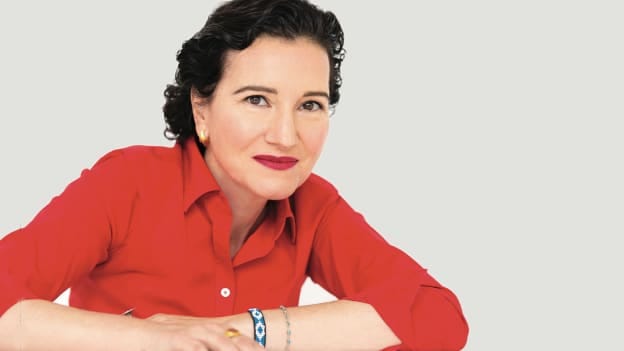
In a captivating interview with People Matters, Ayse Birsel designer, creative director, speaker and author of Design the Life You Love, tells us about her journey of becoming an industrial designer and how she extends her design principles to enable people & organizations to design a better future
Ayse Birsel is the co-founder and Creative Director of Birsel + Seck, an empathy-driven product design studio in New York City that partners with Fortune 500 clients to bring innovation to market. She has received numerous awards, including the IDEA Gold and ID Magazine Excellence Awards and her work features in the permanent collections of the Museum of Modern Art and the Cooper-Hewitt National Design Museum. Ayse has been a speaker at the Aspen Design Conference, Design Indaba, AIGA, and IDSA Conferences.
In this enticing conversation, Ayse shares the philosophy behind her design principles and how she uses her design process to create a meaningful life.
“Life, just like a design problem, is full of constraints — time, money, age, location, and circumstances. You can’t have everything, so you have to be creative to make what you want and what you need co-exist. This requires thinking differently, like a designer. – Ayse Birsel
You wanted to be a lawyer, then wanted to study architecture but you ended up doing product designing. Tell us something about how you came about choosing this as your career?
I come from a family of lawyers and that seemed to be a good path initially, but then I realized that I loved to draw and I thought that maybe I should become an architect. But all this changed when a family friend, while having tea, asked me about if I knew anything about industrial designing. I had never heard of industrial designing before, but he explained the concept to me using a tea cup —about how the tea cup has curved edges so that it rests on the lips better, and has a handle so that we can hold hot liquid in our hands without burning ourselves. That was probably the best explanation of industrial design that I could ever get! And this was the moment I fell in love with this human scale of industrial design, and I thought that it would be interesting to do products that people use every day that relate to the body and your work. So that was my switch to industrial design.
What does the term ‘design’ mean to you? It’s definitely what you do; but did this become the way you see and think?
To me ‘design’ is problem-solving but it is also about being an optimist. Optimism, passion and energy drive design. We designers are holistic thinkers, and we see things in emotional, physical, intellectual and spiritual contexts. Design is about working collaboratively, asking a lot of questions, having an open mind and empathy. These are the things that define how I think as a designer and also how I think in my own personal life.
My life is my work and my work is my life. Design is a way of thinking and is different from the other thinking frameworks.
You say that “Life is just like a design problem”. How do you use art and design to enable people to reconstruct their lives?
Our biggest project is our life and this has become my philosophy. This comes from the realization that life, like a design project, is full of challenges and constraints and you can’t have everything. It is also about people’s needs. A couple of years ago, I wanted to start an experiment on whether I could apply my own design principle of Deconstruction:Reconstruction to my life; and that is how I became my first student in a way. I applied the steps of my process and did my own exercises. Shirley Moulten, who started The Academi of Life asked me if I wanted to do a workshop around this, and that was the first time where I taught people about how to design their lives. From that workshop of 12 people, this process became a movement in a way.
Design is about working collaboratively, asking a lot of questions, having an open mind and empathy. These are the things that define how I think as a designer and also how I think in my own personal life
We use the four quadrants that help us to think holistically — spiritual, physical, emotional and intellectual. Emotions are how we feel and are linked to the heart. The physical relates to the body and anything that we can quantify as data. The intellect relates to our mind and the thinking process. And the spirit is the soul that is intangible. These are the universal truths. When you think in these terms, we make sure that we are thinking holistically. The idea of heart, mind, body and soul covers all the aspects of being a human. So this is like a checklist to ensure that one balances all these aspects. And that’s how you deconstruct your life using the four quadrants, using it as a framework which gives you insights about how you think about your life.
Your book Design the Life You Love is about creating a meaningful life using Deconstruction: Reconstruction™ concept. And you use this concept to help companies and decision-makers break stereotypes and imagine a better and different future. Tell us about how you do this.
It is actually a creative process and has four steps — the first step is Deconstruction and it is about breaking the ‘whole’ apart and seeing what it is made up of. The second step is Point of View that is about looking at the same parts from a different perspective (and to me that’s a creative shift when you start to see the same things from a new perspective). The third step is Reconstruction, which is about putting it all back together with the knowledge that you can’t have everything and make choices. The fourth step is Expression and this is about how you give form to your reconstructed part, once you have made your choices. This process is a creative framework that allows users to create meaningful lives. The process of deconstructing and reconstructing can be applied to anything. We have deconstructed and reconstructed products and also managements. It really depends what you put at the center of your process.
What I have learnt is that people don’t need to be designers to be incredibly creative. Ordinary people are extraordinarily creative but they need one thing, and that is ‘process’. You can’t ask someone to think creatively without giving them a framework — it’s like math, you need to teach equations. Similarly, in design, you need to show people a process. We often say “Trust the process” because no matter how complicated the situation or the problem is, the process provides the value — Deconstruction helps break preconceptions; Point of View helps in thinking about it creatively using creative tools; Reconstruction reminds that one cannot have everything, so one needs to think what really matters to you and give it a form; and Expression is the vision, a strategy about how to go forward.
My vision of HR is not about being number-centered or performance centered, but human-centered. And again back to that idea of human scale, about collaboration to align on that notion that we all have emotions, intellect and life
How do you use this concept when you are working with organizations?
When you work with corporations and teams, there are often constraints and challenges. But what differentiates our process from other processes is that in design, you approach things creatively. You do not ask direct questions; instead you deconstruct a challenge or a situation together. We don’t ask people or organizations to think about things differently; we ask them about things that matter to them and connect those to the values, and we help them visualize their work with creative tools. These are tools that allow people to collaborate together, think and discuss things. It is about creatively bringing people to an understanding — so it’s not confrontational but it’s about collaboration.
You mentioned the use of creative tools. What are these tools?
The creativity of design is that you have to imagine the future based on what you know and have today. So the tools that help you do that are things like inspiration, which is one of the key tools of design. There are other tools like ‘heroes’, which enables us to understand our values; then there is ‘cross-fertilization’ that allows us to see the solution in other contexts and cross fertilize that solution into our own contexts; modeling or using metaphors. In the context of an organization, the metaphor could be of a beehive — the metaphor of a beehive allows us to understand the discipline that is needed (like the bees), and the product that needs to be built (like honey). Such metaphors act as a new toolbox for leaders to see things with a different perspective.
You have had the chance to apply your design principles in various verticals. Which vertical or industry do you think is the most interesting one to be working for?
We usually work with Fortune 100 & 500 companies and out of these the companies that seem to be great matches are design-led companies or those which are in the process of becoming design-led companies. These companies are able to see that through design and design thinking, and design is a differentiator for them. Regardless of the industry we are working with, companies are increasingly investing in design as a strategic tool, not simply as product design.
Today, companies want happier workforce, work-life balance, better work cultures, and want to align their work with the strengths of their people. And this has become a part of our sense of purpose. So we help organizations make better work environments for their employees, enable them to connect to their purpose and use design principles to solve problems and make them more humanistic.
Using design thinking is a trend especially in HR. How can design thinking enable HR professionals to move from process developers to employee experience architects?
To me again, everything is framed with the ‘human’. In design, everything is human-centered and so my vision of HR is not about being number-centered or performance centered, but human-centered. And again back to that idea of human scale, about collaboration to align on that notion that we all have emotions, intellect and life. HR can use empathy to build organizations where people feel safe and valued and help each other. But most HR is based on giving feedback, but who wants feedback? Feedback is about the past. And Marshall Goldsmith always says that “think about the future” — and that’s really about changing and helping others change too. And this is the notion that ties in with my belief system. We are stronger when we are collaborating. And HR needs to do this.
Author
Loading...
Loading...