







Culture
Maria Valles on how Castrol embeds safety through values, not mandates
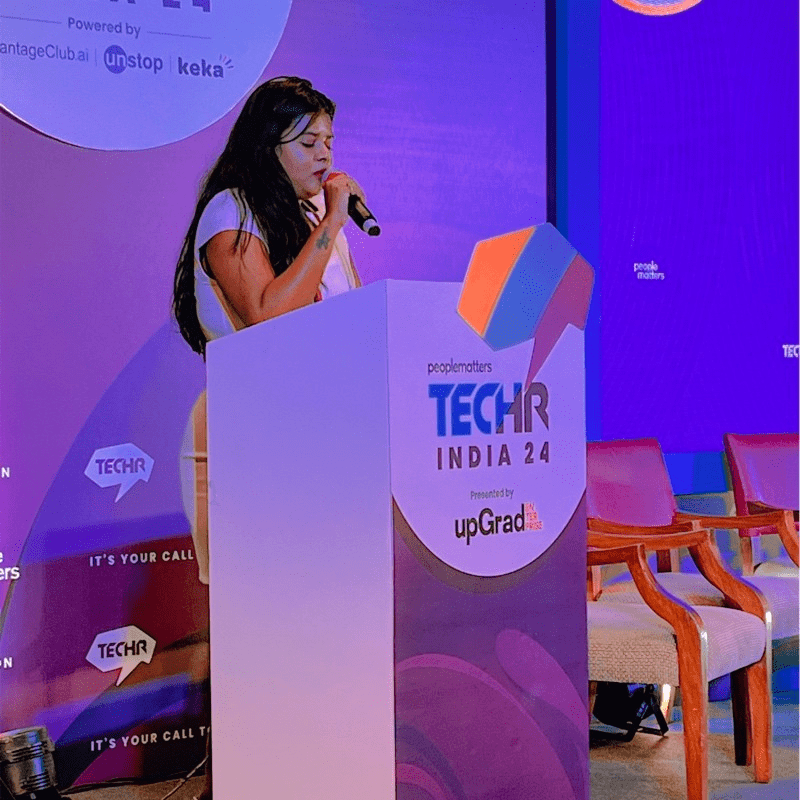





From behavioural safety and neuro-inclusive policies to rehumanising wellbeing at scale, Castrol India’s Maria Valles shares the future-forward blueprint.
In India’s fast-digitising industrial corridors, where automation often outpaces adaptation, a silent revolution in workforce culture is underway. At its heart is Castrol India—a company that has moved employee safety and wellbeing from the margins of compliance to the centre of cultural transformation.
Maria Valles, Vice President – People and Culture at Castrol India, doesn’t just oversee HR functions. She leads a deeply embedded movement that’s reorienting how the organisation thinks about human capital, risk, leadership, and empathy in a sector not historically known for soft power.
“In legacy industries, safety was often a checklist and wellbeing a benefit. At Castrol, we’ve made both a reflex,” says Valles. It’s not a metaphor. From decentralised decision-making to trauma-informed mental health design, Castrol’s modern playbook is reshaping industrial norms.
From Protocol to Principle: Making Safety a Cultural Reflex
At many organisations, safety is procedural—anchored in audits, compliance sheets, and the occasional training video. But Castrol’s approach flips the equation: culture drives behaviour, not just policy.
“At Castrol, safety is instinctive. It’s not something we do—it’s who we are,” says Valles. That cultural identity has been operationalised through the company’s Operating Management System (OMS)—a behavioural compass that informs how people act, lead, and make decisions across the board.
In a sector often slowed down by hierarchical escalations, Castrol introduced RAPID decision-making, which empowers employees—regardless of rank—to halt unsafe work in real-time. “You don’t need permission to protect lives. That’s our philosophy,” she explains.
Last fiscal year, the company invested over 4,700 hours into technical, safety, and leadership training. Initiatives like “Lakshya” and “Growth Week” blend learning with reflection, instilling safety not as a mandate but as a muscle memory.
The shift hasn’t just been operational—it’s emotional. “Our safety stories aren’t reports. They’re stories of courage and care. They travel across the organisation not as metrics, but as shared identity,” says Valles.
The Hidden Risks of Hyper-automation
The conversation around safety has taken on a new urgency as India’s industrial sectors rush toward AI, automation, and remote overrides. In this transition, Valles warns of a dangerous illusion: digitalisation often presents safety as guaranteed.
“Automation is only as safe as the assumptions it’s built on,” she says. Predictive algorithms, however sophisticated, can miss the human anomalies that define real-world unpredictability.
In hybrid operations, especially those involving control rooms and remote commands, Castrol has encountered the unique challenge of digital shortcuts bypassing physical safeguards. “That’s where our governance model steps in—ensuring that empathy and human oversight are not devalued in the name of speed.”
Rather than defaulting to static compliance modules, Castrol’s approach includes simulations, scenario planning, and peer coaching—methods that train instinct, not just intellect. “The future of safety will not be led by technology—it will be led by how we govern, lead and care,” Valles states, drawing a stark contrast with tech-first rhetoric.
The Challenge of Scaling Empathy
As organisations scale, wellbeing efforts often become fragmented—reduced to apps, dashboards, and passive content. For Castrol, the real innovation lies in its refusal to allow digitisation to erode intimacy.
“One of the hardest things we do is scale support without losing soul,” Valles acknowledges.
The company’s wellbeing architecture is built on modularity—not one-size-fits-all programmes, but locally contextualised interventions. From “Connect & Heal,” a health-tech platform, to personalised flexibility policies allowing employees to relocate based on family needs, support is tailored, not templated.
Equally important is Castrol’s investment in managerial empathy. Line managers are trained as first responders, not gatekeepers. Mental health education is embedded at all levels, including leadership, with the “Healthy Minds” programme focusing on spotting early signs of distress.
“We don’t just ask, ‘Are you okay?’ We teach our managers to ask, ‘What’s on your plate?’ That’s what psychological safety looks like,” says Valles.
The impact isn’t measured in usage statistics. It’s assessed by asking: Do employees feel seen? Do they feel safer? Do they trust the system to care?
From Headcount to Voice Equity: Reframing Inclusion
In a sector where diversity is often interpreted narrowly, Castrol has achieved 21% women representation in managerial roles—well above industry averages. But for Valles, numbers are just the beginning.
“Inclusion is not representation—it’s redistribution of power,” she asserts.
To get there, Castrol developed an internal barometer for inclusion that goes beyond demographic metrics. It maps psychological safety, access to influence, and career progression across cohorts. Who gets mentored? Who gets stretch roles? Who speaks and is heard?
The organisation’s Diversity & Inclusion Council, backed by senior leadership, works across geographies to ensure underrepresented groups are not only present but also influential. Programmes like “In Your Shoes” and the DE&I Lounge create safe spaces for empathetic dialogue. During Pride Month, advocacy and allyship take centre stage—not as tokenism, but as learning.
“True inclusion is when people feel safe to dissent, to be vulnerable, and still feel they belong,” says Valles.
Narratives That No Longer Serve Us
The real challenge for Indian industry, Valles believes, is to confront the cultural narratives it has inherited—those that reduce safety to compliance, wellbeing to perks, and inclusion to optics.
At Castrol, the team is actively reframing these myths:
These reframed narratives are now integral to Castrol’s people strategy. “They are our cultural reset,” Valles explains, “and they are essential for building workplaces that are truly humane.”
Why This Matters Now
The timing of Castrol’s transformation couldn’t be more critical. The post-pandemic workforce is rethinking its relationship with work. Burnout, purpose anxiety, and disengagement are not just trends—they’re structural failures.
And legacy sectors—often slower to adapt—now stand at a crossroads. They can either retrofit empathy onto old systems or design new ones that embed care as an operating principle.
Castrol has chosen the latter. With Valles at the helm, the company is building a culture where safety isn’t enforced but felt, where wellbeing isn’t broadcast but experienced, and where inclusion isn’t symbolic but systemic.
As we look ahead, the question for India Inc. is no longer how to digitise, optimise, or globalise. The question is how to humanise.
Maria Valles offers a blueprint—but not one that can be downloaded. It requires reflection, reimagination, and a redefinition of leadership itself.
“The future,” she says, “will belong to organisations that know how to care. Not because it’s trendy. But because it’s the only way we’ll survive, together.”
Topics
Author
Loading...