







Diversity Equity Inclusion
Disability Day: Why accessibility still fails at work — and how Accenture is trying to close the gap



 ||
||

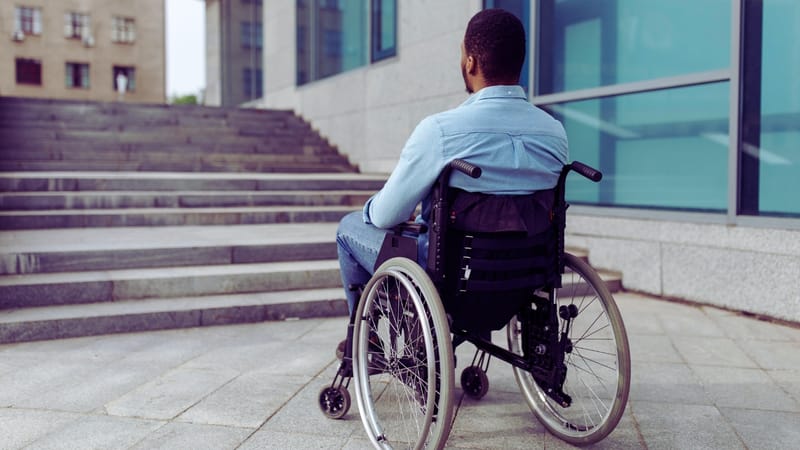
Beyond policies and ramps, accessibility lives in the daily moments that shape safety and dignity. Accenture shares how it aims to make that structural.
Most workplaces describe accessibility in neat categories: infrastructure, tools, policies. But accessibility rarely succeeds in neat categories. It succeeds — or fails — in the small, ordinary moments that determine whether someone can move through a workday without friction or fear.
Ahead of the International Day of Persons with Disabilities, Accenture India shared a detailed note with People Matters outlining how the organisation is dedicated to creating an accessible, inclusive workplace through accessible infrastructure, assistive technologies, supportive policies, and employee resource groups.
The firm says it aims to make the organisation “barrier-free,” guided by an internal Accessibility Council. Its list of physical features includes automated doors, ramps, wider corridors that accommodate mobility aids, accessible parking, braille signage, adjustable seating and optimal lighting. These details may seem procedural, but they illustrate a broader point: physical design often determines whether someone must ask for help before they can even begin their day.
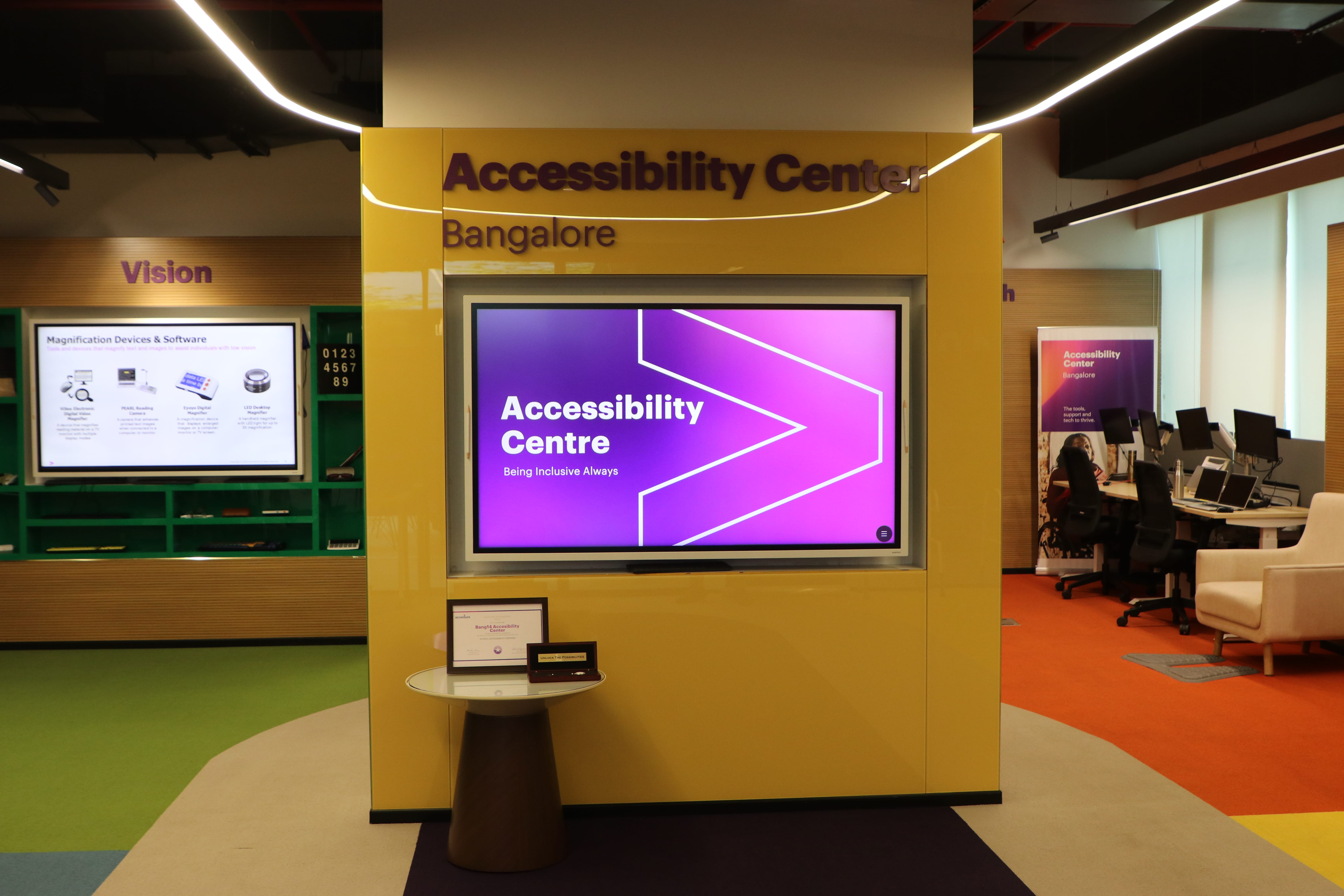
The company also operates 45 accessibility centres globally, including in India. These centres serve two parallel purposes: offering employees a space to try assistive devices and solutions suited to their needs, and acting as hubs for testing global accessibility standards such as the latest Web Content Accessibility Guidelines. They also host research, training and exchanges with clients and local communities.
In a landscape where companies still struggle to normalise disability inclusion, the existence of such centres signals an attempt to build capability, not optics.
Technology that does not exclude by default
Digital systems are now the primary doorway into modern work — which makes digital exclusion both invisible and severe. Accenture says its internal tools and collaboration platforms adhere to accessibility standards and that teams are trained on WCAG guidelines.
For individual requirements, the organisation offers a Workplace Accommodation Support Tool through which employees can request screen readers, dictation tools, sign-language interpreters, flexible work arrangements and other tailored support. In India, its medical insurance extends to personal assistive devices for employees with disabilities and their dependents — a non-trivial cost that often determines whether someone can work without hardship.
These provisions, while listed as benefits, function more like preconditions for equitable participation.
Identity, safety and disclosure
One of the more structurally important elements of Accenture’s approach is its voluntary self-identification programme. The company says over 15,000 employees globally have chosen to disclose disability or neurodiversity status. The number itself is less important than what it implies: a level of psychological safety high enough for people to identify themselves to their employer.
Self-ID allows the company to tailor support, adjust benefits and build internal networks more deliberately. But it also highlights a truth many organisations avoid — inclusion requires environments where people believe disclosure will help them, not harm them.
Accenture also describes a learning ecosystem that includes disability etiquette sessions, training on assistive technologies and VR-based modules that simulate aspects of neurodivergent experience.
The company’s Employee Resource Groups — including groups for people with locomotor disabilities, neurodiversity, visual impairment and hearing impairment — provide peer-led support. Around them sits a network of roughly 143,000 global “Allies in Action,” a programme designed to build everyday inclusive behaviours.
These mechanisms, while often less visible than ramps or software tools, form the emotional architecture of the workplace — the part that determines whether people feel they belong.
My thought?
Accenture’s Accessibility Council, according to the note, aims to drive barrier-free design across systems and facilities while fostering a culture of inclusion. That distinction matters: infrastructure can be installed in a month; culture takes years.
And the truth is that most organisations still treat accessibility as something to retrofit once people raise concerns. What Accenture describes is an attempt to design accessibility into the system from the start!
Topics
Author
Loading...