







Economy Policy
Ahead of Budget 2026, industry leaders spell out priorities on growth, jobs and credit






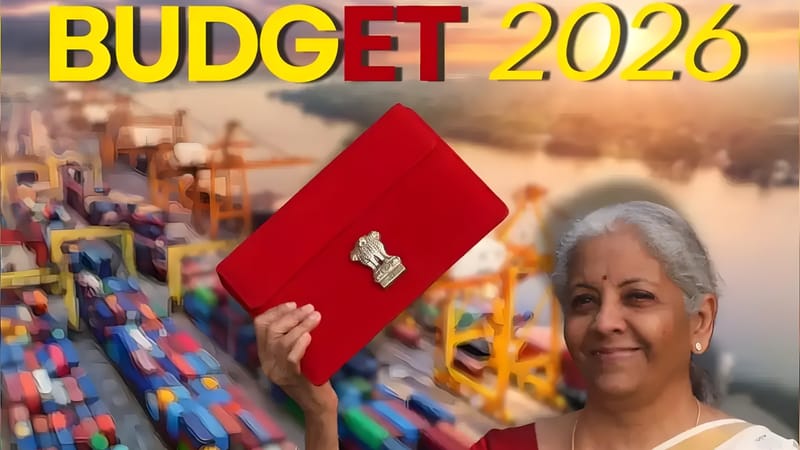
From infrastructure execution and MSME credit to labour reform, skilling and insurance depth, industry leaders outline what Budget 2026 must address.
As the Union Budget 2026 draws closer, industry leaders across finance, staffing, insurance and fintech are converging on a restrained but pointed set of expectations. The emphasis is less on new schemes or fiscal expansion and more on execution, regulatory clarity and targeted interventions that improve credit flow, employment outcomes and sectoral resilience.
With large public investments already committed, labour reforms legislated but unevenly implemented, and workforce skilling struggling to keep pace with industry demand, business leaders say the next Budget will be judged by its ability to reduce friction and improve delivery across systems.
Infrastructure execution and the MSME credit cycle
In the lending and NBFC ecosystem, infrastructure delivery remains central to growth expectations. Mr. Umesh Revankar, Executive Vice Chairman, Shriram Finance, said continued support for growth priorities must be accompanied by sharper implementation.
“The broad expectation from the upcoming Budget is continued support for India’s growth priorities with a strong focus on implementation. With large infrastructure projects already identified, timely execution, smoother coordination, and reduced approval friction will be key to ensuring that spending translates into durable assets that improve productivity, particularly in logistics and connectivity.”
From the perspective of non-banking financial companies, Revankar said the focus has been on operational enablers rather than headline announcements.
“From an NBFC ecosystem perspective, industry discussions have centered on incremental enabling measures rather than headline announcements—such as improving operational efficiency in funding flows, making refinancing channels more accessible, and providing a level playing field in the use of SARFAESI—while staying aligned with responsible lending and strong underwriting practices.”
He linked infrastructure momentum directly to MSME credit outcomes, particularly beyond large urban centres.
“MSME credit typically strengthens when infrastructure momentum and funding stability for lenders improve together, especially in semi-urban and rural clusters. Given the importance of exports for MSMEs to diversify and scale, targeted budgetary support can play a meaningful role in strengthening the sector while maintaining a prudent, customer-centric approach to lending.”
Labour codes, staffing and compliance certainty
Workforce reform is another major area of industry focus, especially the on-ground implementation of the new labour codes. In its Union Budget 2026–27 recommendations, Randstad India highlighted persistent gaps between legislation and execution.
Mr. Viswanath PS, Managing Director & CEO, Randstad India, said the Budget should prioritise uniformity across states.
“Budget 2026-27 should focus on ensuring uniform interpretation and implementation across states through investment in digital compliance systems, capacity building of enforcement authorities, and clear operational guidelines.”
Randstad said inconsistent interpretation and delayed rule notifications continue to create uncertainty for employers.
“While the four Labour Codes represent a major reform initiative, inconsistent interpretation across states, delayed rule notifications, and lack of operational clarity continue to create compliance uncertainty for employers.”
The firm’s recommendations span staffing-sector compliance, GST rationalisation, apprenticeship reform and workforce mobility. These include calls for a dedicated Shram Suvidha module for flexi-staffing, clearer legal distinctions between apprentices and employees, fiscal incentives for apprenticeship-to-employment transitions, and measures to strengthen inclusive hiring.
Insurance penetration and structural reform
In insurance, industry leaders have pointed to the gap between policy intent and actual penetration. Mr. Ashwani Dhanawat, Executive Director and Chief Investment Officer, Shriram General Insurance, said recent measures have helped but deeper reform is still required.
“Union Budget 2025 delivered positive measures for the non-life insurance sector, including the increase in FDI to 100%, but insurance penetration in India remains low at around 1% of GDP, underscoring the need for deeper structural reforms.”
He said the next phase should focus on affordability and coverage.
“The next phase must focus on improving affordability, penetration, efficiency, and resilience. In health insurance, enhancing Section 80D limits to ₹50,000/₹1 lakh and extending full tax benefits to senior citizens with standalone policies will help address rising healthcare costs.”
Dhanawat stressed that insurance reform cannot be isolated from healthcare delivery.
“Affordable insurance must be complemented by affordable and quality healthcare through closer integration of insurance with quality healthcare delivery. Standardised treatment protocols, regulated hospital pricing, and expanding OPD and preventive care—nearly 70% of healthcare spend—are critical to reducing out-of-pocket expenses.”
He also highlighted the need for reforms in agriculture and motor insurance.
“In agriculture, strengthening PMFBY through higher funding and technology-enabled faster claim settlements will protect farmer livelihoods.”
“In motor insurance, long-pending ‘pay and recover’ awards continue to burden insurers. An ARC-like institutional mechanism to resolve these claims can unlock capital, improve recovery efficiency, and strengthen sector stability without diluting claimant protection.”
Skilling, fintech and quality of employment
In the fintech and digital lending ecosystem, the focus is shifting from hiring volume to talent quality. Mr. Gaurav Sharma, Chief Human Resources Officer, True Balance, said employment policy needs to reflect this change.
“As we approach the Union Budget, the conversation around employment needs to evolve from hiring at scale to building meaningful, long-term capabilities.”
He said demand is growing for professionals who can combine technical and regulatory understanding.
“In the fintech and digital lending ecosystem, the demand is increasingly for professionals who can balance technology with regulatory understanding.”
Sharma called for sharper alignment between skilling initiatives and employer needs.
“Strengthening Skill India with a sharper focus on digital and compliance-orientated roles will help bridge this gap.”
“Equally important is encouraging deeper academic–industry collaboration by incentivising organisations, especially startups, that invest time and resources in shaping job-ready talent.”
What industry is watching for
Across sectors, industry leaders are not seeking radical policy shifts. Instead, they are calling for execution discipline, legal clarity and targeted measures that strengthen credit flow, formal employment and risk protection. As Budget 2026 is finalised, these priorities are expected to shape how businesses respond—and how effectively policy intent translates into outcomes across growth, jobs and credit.
Topics
Author
Loading...