







Employee Engagement
Are companies measuring employee engagement all wrong? EY GDS Global Vice Chair Ajay Anand explains
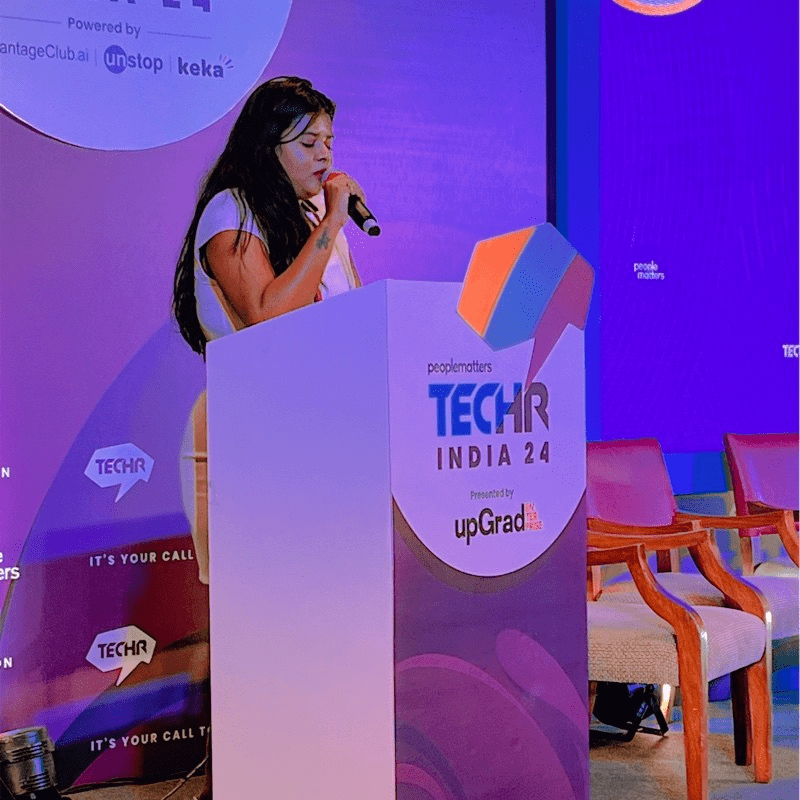



Ajay Anand says engagement scores alone cannot capture organisational culture, with employee growth, belonging and adaptability offering additional indicators of long-term business value.
Organisations often use employee engagement scores to assess workplace culture, but Ajay Anand, EY Global Vice Chair, EY Global Delivery Services (EY GDS), believes leaders need to look beyond survey results to understand whether employees are ready for change.
In an interview with People Matters, Anand said participation, learning, career mobility and employees’ confidence to speak up can offer a broader view of culture. He highlighted the importance of measuring not only how employees experience an organisation today, but also whether they can develop and adapt for the future.
Why engagement scores tell only part of the story
Anand said traditional engagement scores provide a snapshot of employees’ experiences, but do not necessarily reveal their preparedness for future workplace demands.
“One of the measures we pay attention to is participation,” he said, pointing to EY GDS’s latest People Pulse survey, which recorded an 85% response rate.
For Anand, participation matters because employees are willing to share feedback when they believe it can lead to action. He also cited the organisation’s Counselling Families initiative, which was introduced to encourage conversations between leaders and employees about workplace experiences.
The model has reached more than 93,000 people, according to Anand.
EY GDS’s survey recorded 86% engagement and 85% belonging. However, Anand said the real return on culture cannot be assessed through scores alone.
“The real return on culture isn't the score itself. It's whether people feel confident enough to contribute, challenge ideas, develop new skills and help the business navigate change,” he said.
Why growth is becoming central to retention
Anand believes employee development offers another way to assess whether workplace culture creates long-term business value. He pointed to AI learning and capability-building programmes as examples of how organisations can observe employees’ willingness to prepare for future roles.
Rather than focusing only on training completion, he said leaders should examine whether employees voluntarily pursue additional learning opportunities.
“What we've consistently observed is that people are hungry for new skills. They actively seek opportunities to learn, experiment and prepare themselves for what's next,” Anand said.
He added: “That's why I increasingly believe that growth is the new retention.”
For Anand, employees are more likely to stay when they can continue learning, reinvent themselves and see a future within the organisation. Engagement remains important, but growth, learning, mobility and career development also indicate whether employees see long-term opportunities at work.
Three signals leaders should track
Anand does not believe a single metric can adequately capture organisational culture, particularly in large and evolving organisations. Instead, he identified three areas leaders should examine:
Connection: Whether employees feel they belong and are part of something bigger than themselves.
Growth: Whether employees develop new skills and create opportunities for themselves.
Adaptability: Whether the organisation can respond effectively when conditions change.
He said enthusiasm for learning can reveal more than course completion figures. At EY GDS, he observed employees pursuing additional badges, certifications and learning opportunities beyond mandatory requirements.
Anand also emphasised whether employees feel confident speaking up, move into new opportunities and build skills for the future.
“The organisations that will be successful over the long term are not necessarily those that know the most. They are the ones that continue learning,” he said.
How employee voice connects culture with performance
Anand linked workplace culture to productivity and innovation, arguing that employees need to feel comfortable expressing ideas for organisations to benefit from them.
He cited a panchayat-style discussion at EY GDS, where leaders met employees who had joined the organisation within the previous couple of years. The conversations produced candid feedback, including questions that challenged leadership assumptions.
“I believe innovation rarely fails because people lack ideas. More often, it fails because people don't feel comfortable expressing them,” Anand said.
He added that trust encourages employees to contribute, supporting collaboration and performance. In his view, culture and performance should not be treated as separate leadership priorities.
Why global culture needs local expression
For global organisations, Anand said a consistent culture does not require every location to operate uniformly. Leaders must maintain a shared sense of purpose while allowing employees to express their identities and experiences.
He cited Flavors of EY GDS, an initiative in which employees from Buenos Aires, Budapest, Manila and Bengaluru shared food stories connected to their identities and heritage.
“What struck me wasn't the food. It was the pride. People genuinely felt they were representing their culture,” he said.
Anand added that employees want to feel part of a wider organisation while also being recognised for who they are. Leaders, he said, must create room for diverse perspectives and experiences within a shared organisational purpose.
AI adoption is also a cultural transformation
Anand described AI as both a technology and a cultural transformation, with opportunities to accelerate learning alongside questions around judgement, accountability and trust.
At EY GDS, he said AI tools have helped compress learning programmes that previously took six weeks into a fraction of the time. However, he stressed that faster learning must be accompanied by responsible use.
“Across EY GDS, AI learning is mandatory, and responsible AI is a critical part of that learning journey because ultimately these technologies should augment human capability, not replace human judgment,” he said.
Anand said organisations need to create environments where employees can use AI tools responsibly and confidently. For leaders, this makes AI adoption a question of workplace behaviour and accountability as well as technology implementation.
Making culture a business capability
Looking ahead, Anand expects organisations to assess adaptability, learning, belonging and workforce agility with the same seriousness as operational metrics.
He said many organisations continue to treat culture as a people initiative rather than a business capability, despite its role in shaping how companies respond to changing conditions.
“Because ultimately, culture determines how effectively an organization responds when the world around it changes,” Anand said.
His perspective suggests that measuring engagement remains useful, but it is not sufficient on its own. The broader test is whether employees feel connected, continue developing skills and can adapt as business and technology requirements evolve.
Topics
Author
Loading...