







Employee Engagement
Why employees stop sharing ideas, and what leaders can do about it: Penguin India's Aditi Kumar
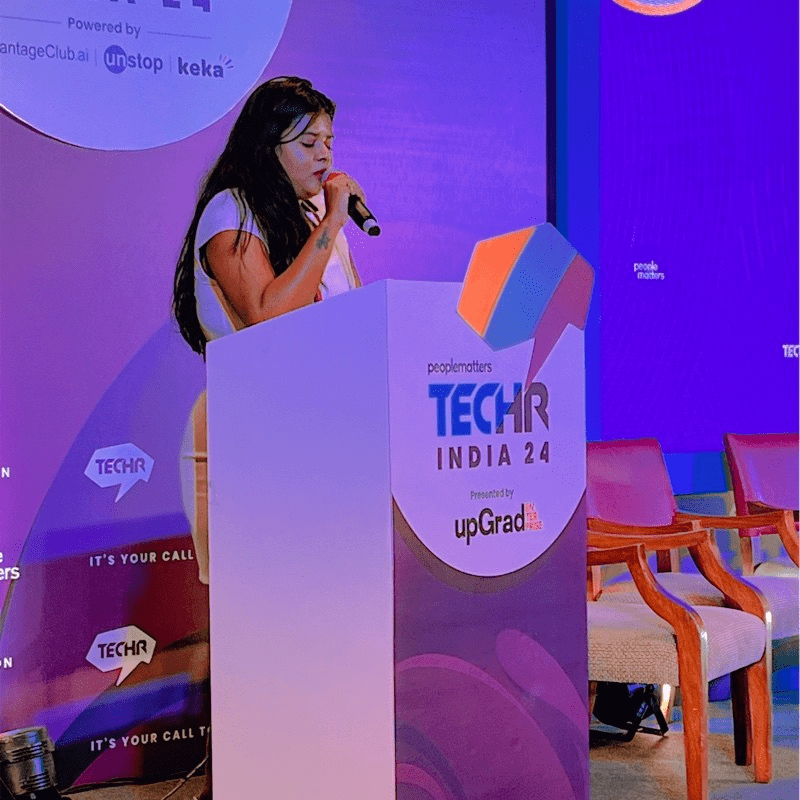






Why short-term targets, fear of failure and rigid workplace practices can silence ideas, and how leaders can make experimentation part of everyday work.
In workplaces driven by performance metrics, speed and execution, employees may find fewer reasons to speak up, experiment or challenge established practices. The cost is not always immediate, but organisations risk losing ideas before they have a chance to take shape.
For Aditi Kumar, EVP – People, Diversity and Corporate Responsibility at Penguin Random House India, imagination is not separate from performance. It is one of the ways organisations achieve it. The challenge, she says, is to create workplaces where ideas are given enough time, space and support to develop.
When execution becomes the easier thing to reward
Imagination can be difficult to measure, particularly when organisations assess success through numbers and immediate outcomes. This can leave original thinking recognised less consistently than execution.
Kumar believes the two need not compete. At Penguin India, rethinking processes, improving launches and creating better experiences for readers and employees are part of how work gets done. Ideas become valuable when they translate into tangible improvements.
She puts it simply: “imagination is one of the ways great performance is created.”
The distinction matters for organisations attempting to balance productivity with innovation. Creativity need not always produce a radical new product or breakthrough. It can emerge through employees questioning existing processes, finding better ways to deliver work or improving how teams operate.
The time pressure that leaves little room for ‘what if?’
Efficiency is not necessarily the problem. The pressure to move faster, work within tighter timelines and deliver more with less, however, can reduce the space employees have to think differently.
Kumar points to the value of unstructured time, when ideas emerge outside formal brainstorming sessions. A corridor conversation or a moment spent examining a problem differently could lead to an idea worth pursuing.
Automation, analytics and AI could help create this space by taking over repetitive work. But the opportunity depends on how organisations use the time freed up by technology.
If efficiency removes routine work but leaves employees with even less room to think, its potential remains incomplete.
Why employees learn to keep ideas to themselves
An excessive focus on short-term results can discourage experimentation. Ideas often need time, refinement and resources before their potential becomes clear. When organisations judge them too quickly, employees may become less willing to put forward something unfamiliar.
The response to failure also shapes whether people continue to take creative risks. If unsuccessful experiments carry a penalty, employees are more likely to choose familiar approaches over uncertain ones.
Kumar draws a distinction between accepting experimentation that does not work and tolerating poor execution or repeated errors. Organisations, she says, need an appetite for failure when employees are testing well-considered ideas.
Over time, the willingness to question established practices can become part of everyday work, rather than an activity reserved for innovation exercises.
Making it easier for employees to speak up
An open-door culture is one of the most important conditions for encouraging ideas, Kumar says. Employees should be able to question processes, approach leaders with half-formed thoughts or suggest alternatives without feeling their ideas will be dismissed.
The response from leaders is equally important. Immediate rejection through responses such as “That won't work” or “We've tried that before” can discourage employees from contributing again.
At Penguin India, informal openness is complemented by initiatives that give employees a platform to share and develop ideas.
Penguin Hatch: A whiteboard-based idea platform where the organisation presents a business challenge every month and invites employees to suggest solutions. Relevant teams take promising ideas forward by engaging with their originators and exploring their feasibility.
Penguin Reel Award: An initiative inviting employees to create videos and reels promoting the brand and its titles. The Digital team shortlists ideas, with selected content potentially featured on the company's platforms.
Both initiatives create opportunities for employees beyond their usual roles to contribute ideas and participate in creative work.
Creativity cannot be confined to job titles
Imagination is not the responsibility of designated creative teams alone. Kumar believes the ability to question, connect ideas, solve problems differently and recognise possibilities can be developed across functions.
Publishing itself involves several teams bringing different perspectives to a book's journey, from what gets published and how it is packaged to its positioning, pricing, sales and discovery.
While some roles require specialised creative expertise, the broader capability to think differently can apply to every employee, irrespective of their designation.
The same principle extends to organisations that generate fresh ideas consistently. Kumar identifies curiosity, experimentation and leadership openness as common characteristics.
Experimentation need not begin with a large transformation project. Teams can try something on a smaller scale, learn from the outcome and decide whether to refine, expand or discontinue it. Leaders who acknowledge uncertainty and invite employees to solve problems alongside them can make learning part of the workplace culture.
She also points to reverse mentoring, where younger or digitally fluent employees help senior leaders learn, as one example of how organisations can open themselves to different perspectives.
Protecting imagination as businesses optimise for results
As organisations continue to prioritise speed, targets and immediate delivery, protecting space for experimentation becomes a leadership responsibility.
Kumar believes not every idea needs an immediate return on investment or a large investment to be worth testing. Employees need opportunities to experiment, learn and build on what works, alongside recognition for those who challenge conventional thinking.
Leaders, too, need to create room for questions beyond targets and timelines: What could be done differently? What should stop? What would the organisation attempt if it were not constrained by existing ways of working?
For Kumar, execution and imagination are not competing priorities. The organisations that deliver today's business while remaining curious enough to reinvent for tomorrow may be better placed to sustain innovation and growth.
Topics
Author
Loading...