







Employee Skilling
Gen Z can go deep — if you give them purpose: ISGEC CHRO Radhika Arora
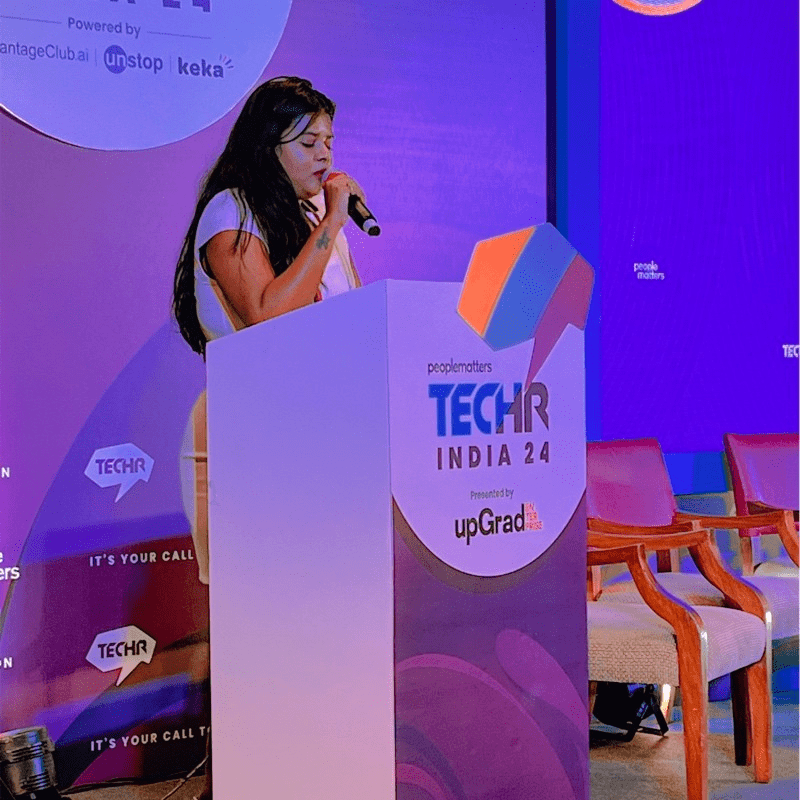






ISGEC’s CHRO Radhika Arora on dismantling myths about Gen Z learners, the limits of digital tools, and why L&D must shift from training to co-creation.
One of the most common misconceptions about Generation Z is that they cannot focus for long. For Radhika Arora, Chief Human Resources Officer at ISGEC Heavy Engineering Limited, this characterisation misses the point.
“Gen Z are highly capable of diving deep into complex subjects when the purpose is clear,” she told People Matters. “What disengages them is content that feels disconnected from real-world application. They value relevance and want to understand why they are learning something and how it applies to their work.”
In multi-generational workplaces, these nuances matter. The assumption that digital natives want only short, snackable lessons, Arora argues, also sells them short. “While digital bite-sized content has its place, Gen Z thrives when it is paired with mentoring, problem-solving, and hands-on experiences that connect directly to their career aspirations,” she said.
Her observation: they will invest attention when content is efficient, relevant and engaging. “I have seen them sit through a 60-minute webinar if it’s dynamic and offers value that they can relate to. But if you make them sit through a two-hour lecture full of jargon and no practical application, they will quickly tune out.”
Why learning gets sidelined
In industrial environments like heavy engineering, production schedules often crowd out learning. Arora points to three main reasons why employees — across age groups — deprioritise L&D: lack of time, lack of relevance and poor delivery.
“Time is often the biggest barrier,” she said. “Employees are genuinely swamped with their day-to-day responsibilities and cannot justify taking time off to attend a workshop.” But even when time is carved out, she noted, relevance and quality become decisive.
“If the L&D programme doesn’t directly connect to their current role or career aspirations or is perceived as irrelevant, employees will deprioritise it. Especially Gen Z — they are quite vocal about the personalisation gap.”
Poor delivery compounds the problem. “Monotonous, passive formats like endless PowerPoint presentations, delivered without engagement, are a recipe for disengagement. Employees want interactive, hands-on, and practical sessions that can hold their attention,” she said.
Arora is clear-eyed about the promise and limits of technology. Digital platforms, AI tutors and microlearning modules have become mainstream, but she warns they are not a cure-all.
“These tools are powerful enablers, not a silver bullet,” she said. “Their true value lies in personalisation and adaptive learning — curating content in line with a learner’s growth path, integrating real-time feedback, and embedding learning moments into daily workflows.”
Used well, microlearning has made complex topics digestible, enabling employees to upskill in the flow of work. For engineering firms with diverse technical needs, flexibility is critical. “These tools allow flexibility in learning and can be accessed at an employee’s individual pace and time,” she said.
Beyond convenience, immersive formats can extend reach. “Tools like augmented reality and virtual reality simulations offer safe, hands-on exposure to technical skills that a traditional classroom can’t replicate. Blending these with collaborative learning forums and real-time feedback ensures that learning is not just accessible but directly connected to practical application.”
A model for Gen Z and Gen Alpha
Looking ahead, Arora sees the next decade of learning defined by five pillars: personalisation, social connectedness, experiential learning, modularity, and integration with work.
“It would look less like a classroom and more like a learning ecosystem,” she said. “The aim is to balance autonomy with structure, giving younger generations ownership of their learning journey.”
She sketches a model where employees engage in micro-modules tied to their projects, participate in peer communities of practice, earn credentials and apply skills on live assignments. “It is an ecosystem approach, not a one-off programme,” she said.
For Gen Z and the upcoming Gen Alpha, this ecosystem would blend gamified paths with real-world challenges, mentoring platforms for peer-to-peer learning, libraries of on-demand content, and AI-powered personal development plans. The aim is to move from prescriptive to hybrid models, where learning becomes embedded in professional life.
For Arora, the way organisations assess learning also needs a reset. “Completion rates and ‘hours trained’ are activity metrics, not impact metrics,” she said.
She argues that true success lies in application and outcomes: “Our focus must be on impact and application which can be measured through skill application on the job, opportunities for internal mobility, mentorship access, and visible links to career growth.”
Employee retention and engagement scores tied to learning opportunities, she adds, provide far more meaningful evidence of value than spreadsheets of training hours.
Pitfalls to avoid
Asked about common mistakes HR leaders make, Arora listed several. “We must certainly avoid over-engineering programmes that feel mandatory, mistaking digital adoption for genuine engagement, or offering one-size-fits-all solutions,” she said.
The younger workforce, she noted, disengages quickly when programmes feel like box-ticking exercises. Outdated content and clumsy technology only add to frustration. “Failing to secure buy-in from managers is another pitfall. They often need to be the primary cheerleaders for L&D and ensure employees have the time to participate.”
Her single piece of advice to fellow CHROs is stark: stop pushing training, start building learning.
“Shift from a training-centric to a learning-centric mindset,” she said. “Stop thinking about what training you can push to your employees and start thinking about how you can empower them to gain the knowledge they need to be successful.”
For Arora, that means involving employees directly in shaping formats, topics and delivery. “When you design with them, not for them, adoption rises and employees take ownership of their growth. Learning must become part of the culture, not another task on the to-do list.”
Author
Loading...