







Employee Skilling
How to bridge the AI talent gap: Lessons from Masters’ Union’s Utsav Patodia





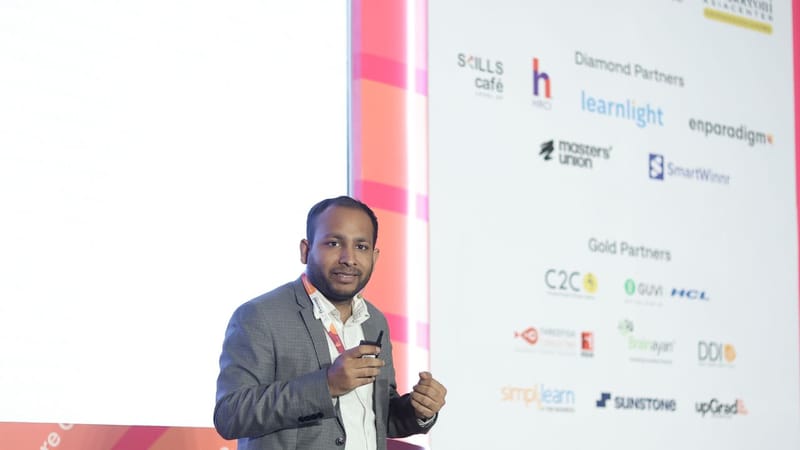
Masters’ Union’s Utsav Patodia on why the future of employability depends on turning learning into a living, evolving ecosystem.
“How do you hire for jobs that didn’t exist five years ago?” That provocative question set the tone for Utsav Patodia’s dynamic keynote at the People Matters Leadership, Learning and Culture Conference 2025. As Associate Director at Masters’ Union, Patodia didn’t just discuss the looming talent crisis, he deconstructed it with wit, realism, and actionable insight.
From the ‘jobpocalypse’ facing fresh graduates to the AI-driven transformation of skills and work, his session urged leaders to rethink everything they know about learning, hiring, and employability. The message was clear: it’s time to rebuild the talent supply chain for an AI-powered future, one skill, one mind at a time.
The silent crisis: When skills lag behind speed
Across sectors, the shift is unmistakable. Entry-level hiring is in decline, and foundational roles in consulting and finance are being redefined as AI tools like ChatGPT take over routine analytical work.
“Imagine asking ChatGPT to make a Discounted Cash Flow (DCF) model,” Patodia quipped. “What once took analysts days, AI now does in hours. The skills that got you hired yesterday won’t even get you an interview tomorrow.”
He shared a sobering example from his own network: a computer science graduate from IIT Delhi, unplaced despite stellar grades. “If that’s the story at India’s top institutions, it’s time to ask, are we teaching the right things?”
Masters’ Union: A case study in reimagining education
Patodia then offered a rare look inside Masters’ Union, the business school he’s helping build, and in many ways, reinvent. Instead of classrooms filled with academics, Masters’ Union invites industry leaders as faculty. Partners from consulting firms, CXOs from tech giants, and founders from high-growth startups lead courses that blend real-world challenges with live business cases.
“Who better to teach strategy than someone who sells it for a living?” he asked. “Our teachers don’t just teach; they hire, mentor, and evaluate relevance in real time.”
This practitioner-led model has transformed learning into a two-way street, where students learn from employers, and employers discover future talent. Patodia described it as education meeting employability at eye level. “When practitioners design the curriculum, they teach what they actually need. And when they hire, they hire who they’ve already seen in action.”
From classrooms to commerce: Learning that earns
At Masters’ Union, education doesn’t end with exams, it begins with enterprise. Every student is required to build, sell, and sustain a business during their program. Grades aren’t based on theory or attendance, but on revenue generated.
Students set up stalls in Gurgaon’s DLF Cyber Hub, pitch ideas to investors, and even take their ventures to Shark Tank India. “We don’t measure CGPA,” Patodia said. “We measure capability, the kind that the market pays for.”
The result is a generation of learners who graduate not just with degrees, but with proof of work. Some have gone on to launch funded startups, while others have joined organisations as intrapreneurs, entrepreneurial minds driving internal innovation.
“Education isn’t a content problem,” Patodia noted. “It’s a motivation problem. When students know the person teaching them could one day hire them, they learn with purpose."
The new rules of recruitment
If education is evolving, hiring can’t stay static. Patodia shared how leading organisations are already reinventing recruitment to close the AI skills gap:
Microsoft runs hackathons, giving winners direct interviews.
McKinsey uses gamified cognitive assessments to test for problem-solving agility.
Aditya Birla Group conducts simulation-based tasks that reveal how candidates think and collaborate.
Cars24 turns its hiring process into a live business pitch.
“Instead of testing memory, test mastery,” Patodia urged. “Replace resumes with portfolios, exams with simulations, and grades with impact.” The shift is clear: the best employers no longer hire potential, they hire performance.
Rethinking the talent supply chain
In his closing reflections, Patodia invited HR leaders to reimagine talent pipelines as living supply chains, dynamic, constantly replenished, and strategically designed to adapt.
At Masters’ Union, even the physical space embodies that philosophy. The Gurgaon campus, located inside DLF Cyber Park, shares walls with corporate giants like BCG and Samsung. “For our faculty, teaching is just an elevator ride away from their office,” Patodia said with a smile. “That proximity ensures our classrooms evolve as fast as the boardrooms next door.”
Bridging the gap, building the future
Patodia’s keynote wasn’t a cautionary tale, it was a call to action. As AI redefines the future of work, the challenge for HR leaders is to build talent ecosystems that can learn as fast as technology evolves. “The organisations that will thrive in the AI age,” he concluded, “are the ones that make learning a business strategy, not a benefit.”
Topics
Author
Loading...