







Employee Skilling
Learning agility matters more than technical skills in the AI era: Naval Gupta





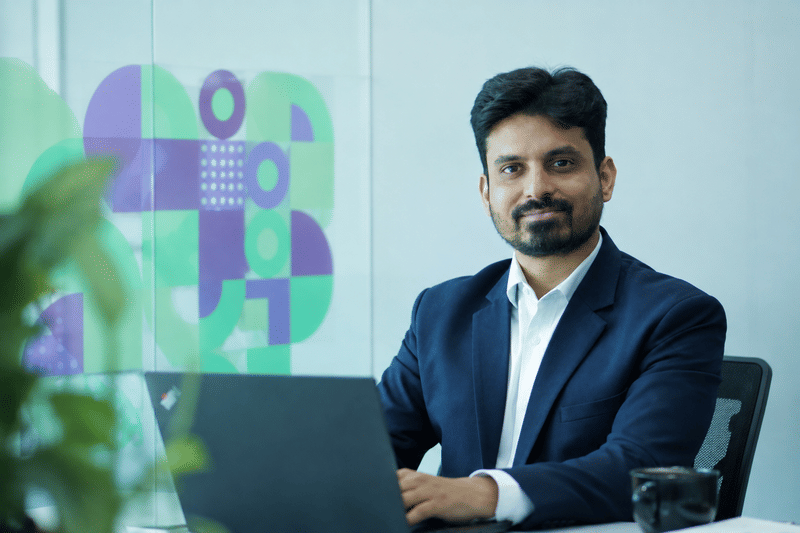
AI is shortening the shelf life of skills. Naval Gupta explains why the ability to learn may become every employee's biggest competitive advantage.
The race to become AI-ready has pushed organisations to invest heavily in technology, certifications and technical training. Yet many transformation programmes continue to stall. The problem, says Naval Gupta, Director, Global Learning & Development Excellence at TELUS Digital, is not access to learning. It is how people think about learning in the first place.
Employees who adapt best are rarely the ones with the longest list of technical skills. They are the ones willing to keep rebuilding them.
"They do not view change as an event that needs to be managed; they are the ones riding through it, and even initiate and drive it themselves rather than waiting for it."
For Gupta, continuous learning is no longer a development initiative. It has become a workplace behaviour. Employees who thrive stay curious, experiment with new ways of working and deliberately step beyond their areas of expertise. More importantly, they translate learning into business outcomes instead of collecting certificates.
"Resilience is increasingly linked to learning agility, and the employees who perform best are those who embrace continuous development as an integral part of their professional identity."
Learning has become part of the job
Organisations continue to expand learning platforms and training budgets, yet adoption often remains uneven.
Gupta believes many employees still see learning as something they do after work rather than during work.
"Investment in learning opportunities alone does not automatically translate into workforce transformation."
Resistance often comes from uncertainty, competing priorities or a lack of clarity on why new skills matter. Generic programmes make the problem worse. Employees engage when learning feels relevant to their work, personalised to their aspirations and easy to apply immediately.
His message is simple: stop treating learning as an event.
Technical expertise is no longer enough
The AI conversation often revolves around digital skills. Gupta sees a different shift unfolding.
As automation absorbs repetitive work, uniquely human capabilities become more valuable.
He points to critical thinking, adaptability, creativity, emotional intelligence, collaboration and problem-solving as the skills becoming harder to replace.
"The future of work will not be defined by what individuals know today but by how quickly they can acquire new knowledge and apply it in changing circumstances."
This is also why he believes organisations should move beyond narrow expertise and encourage broader, T-shaped capabilities combining technical depth with business understanding.
Why learning agility is becoming the new performance metric
Gupta makes one observation repeatedly throughout the conversation. Skills will continue to expire. Learning agility will not.
"Learning agility matters more than any single technical skill because technologies, tools, and business priorities will continue to evolve."
Building it requires more than courses. It demands environments where employees learn through stretch assignments, cross-functional projects, mentoring and real business problems.
At TELUS Digital, this philosophy extends to AI as well. Gupta says more than 3,000 employees recently completed learning on Agentic AI alongside practical labs, while partnerships with IIT Roorkee and IISc Bangalore support research-led capability building.
Leadership decides whether change succeeds
Technology may trigger transformation, but leaders shape how employees experience it.
Gupta believes managers create momentum when they communicate openly, encourage questions and demonstrate curiosity themselves.
"When employees see leaders actively developing new skills, embracing technology, and demonstrating curiosity, it reinforces the idea that learning is a shared responsibility at every level of the organisation."
Leadership, in his view, creates the psychological safety employees need to experiment, fail and keep learning.
Preparing people for careers, not jobs
AI is changing work faster than organisations can redesign roles.
Gupta believes workforce development must evolve just as quickly.
Periodic training programmes are giving way to continuous learning, broader AI literacy and just-in-time knowledge delivered inside everyday workflows. Human capabilities such as communication, judgement, ethical decision-making and creativity will become increasingly important alongside technical expertise.
He also points to Google's estimate that the half-life of skills has fallen from six years to around two and a half years, making continuous refresh essential.
The organisations most likely to succeed, Gupta says, will not be those preparing people for today's jobs. They will be the ones preparing employees for continuous career evolution.
As disruption becomes routine rather than exceptional, learning itself may become the most durable skill employees can build.
Topics
Author
Loading...