







Employee Skilling
Skilling: A recap of 2016 & what’s expected in 2017?





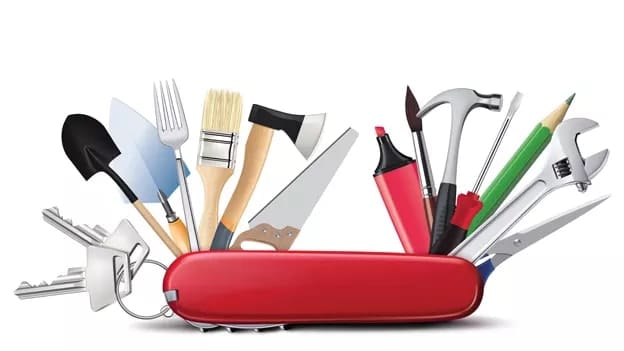
The year 2016 has been a witness to an ongoing mismatch between employers and job seekers. A look at how India fared on the skilling sector in 2016 and whats next.
India currently holds the distinction of being one of the youngest nations in the world with the largest youth demography. According to India Skills Report1 2016, although the employability index did not show a huge improvement from last year, the percentage did rise to 38.12 percent from 37.22 percent. With a population of 1.3 billion of which about 0.8 billion in the working age, India needs to churn maximum out of this young demography, which can only take place through focused skilling measures and initiatives. There are numerous initiatives which have been launched like Skill India, Career Centers, Make in India etc., however, the future depends on how successfully these initiatives can be implemented in order to have a skilled workforce for a strong, sustainable and developed nation.
In 2016, out of all the students entering the job market across the country, hardly 2 in 5 met the criteria of employment set by the employers.
The year 2016 has been a witness to an ongoing mismatch between employers and job seekers. In many professions, both high and low skill, employer demand was greater than the supply of candidates. The claim was supported by Fortune magazine which stated that the 2016 job market looked bright for workers and that the year will be a great time to be on the hunt for a new job. To find out what exactly employers are looking for, and what it takes to successfully land a job, LinkedIn looked at billions of data points and analyzed the hiring and recruiting activity to predict the top 10 skills to rule 2016 (Global & India specific).
Cloud computing was the top skill which was expected to drive employment in the IT sector in India. Cloud was expected to move to the next level in 2016, in terms of application containerization, and infrastructure automation for agile delivery and driving IoT. It was anticipated that cloud would become the default choice for mobility services, disaster recovery, archival and non-production workloads. User Interface Design was foreseen to be at the second place and web architecture and development framework at the third position.
Along with these, the demand for skills in Storage System and Management (fourth in the list) was predicted to remain high in India while demand for Statistical Analysis and Data mining professionals (fifth in the list) will surge in 2017. Algorithm design grabbed sixth place while networking and information security found seventh position in the top Ten Skills list. Apart from the above stated technical skills, it was also projected that the year would see a rise in PR and communication skills of professionals and was placed at eighth position meanwhile Economics remained at ninth place of the top Ten Skills of India according to LinkedIn. Lastly, professionals in Public policy and International relations were expected to see a rise in demand in the job markets for India.
2016 – The true picture
Year 2016 under the Modi Government saw many initiatives in the space of skilling, job creation and most importantly in terms of linking skilling to jobs. Although a lot of predictions had been made for the skill sets that would rule the year, there were a few skills which underwent changes in withholding their position in the hierarchy.
Marketers in less demand: According to LinkedIn, the global top skills predicted for 2016 witnessed some trends in the job market. While marketing skills like marketing campaign management, SEO/SEM, and channel marketing were in high demand in 2015, in 2016, SEO/SEM as a skill set dropped almost five points in the Global Top Skills of 2016, along with marketing campaign management completely dropping off the list.
Data and cloud-based computing skills still remained important: Cloud and distributed computing has remained at the no.1 spot for the past two years and is the top skill on almost every list including France, Germany, India, Ireland, Singapore, the US, and Spain. Following closely on its heels is statistical analysis and data mining, which came in no. 2 in 2015 and no.1 in 2014. These skills were in high demand because employers needed employees with cloud and distributed computing, statistical analysis, and data mining skills to stay competitive.
Growing importance of User-Interface design: UI design ranked no.14 in 2014, no. 10 in 2015, and ranks no.5 in 2016. Data has become central to many products and this has created a need for people with user interface design skills who can make those products easy for customers to use. E-commerce players have been the major anchors of this trend in India. A user interface design with a focus on personalizing technology augments interest in products and it is evident that the mobile first mentality and changing dynamics of communication are major reasons behind the development of user interface design trends of 2016.
Machine learning is the most wanted skill: Although not much talked about earlier, machine learning was found to be one of the most wanted skills in 2016. With businesses harvesting enormous amounts of data, the demand for machine-learning specialists who can build adaptive algorithms and extract the value of this new data is increasing.
The India Skill Report 2017 states that the year 2017 will see a rise in skills such as 3D printing, artificial intelligence and the Internet of Things in specific industries in the years leading up to 2020.
As per India Skills Report 2017, out of all the students entering the job market across the country, hardly 2 in 5 meet the criteria of employment set by the employers. By 2025, India’s demographic dividend is expected to contribute 25 percent of global workforce. Therefore, the magnitude of the challenge is enormous. The real issue we are faced with is not the lack of jobs but lack of employable, skilled talent that can keep pace with the fast expanding industry. According to NSDC, the growing skills gap in India is estimated to be more than 25 crores workers by 2022. With about 1.2 crore individuals joining the workforce every year, tackling the pressing issue of skills gap is imperative as it could derail India’s growth story. The factors that are contributing to the skill gaps are:
2017 - What’s next?
With technology adoption engulfing the whole world, disruptions such as robotics and machine learning, rather than completely replacing existing jobs are likely to replace some of the tasks, freeing workers to focus on new tasks and refine their core skill sets. The India Skill Report 2017 states that the year 2017 will see a rise in skills such as 3D printing, artificial intelligence and the Internet of Things in specific industries in the years leading up to 2020. With regard to the overall scale of demand for various skills in 2020, more than one third (36 percent) of all jobs across all industries are expected to require complex problem-solving as one of their core skills, compared to less than 1 in 20 jobs (4 percent). Overall, social skills such as persuasion, emotional intelligence and teaching others will be in higher demand across industries than narrow technical skills, such as programming or equipment operation and control. Content skills (which include ICT literacy and active learning), cognitive abilities (such as creativity and mathematical reasoning) and process skills (such as active listening and critical thinking) will be a growing part of the core skills requirements for many industries.
As per projections, over 109 million incremental people will be required in India alone, across 24 sectors by 2022, yet only 4.6 percent of people have undergone formal skill training.
India still follows the age-old tradition of learning on the job through informal networks and thus needs to gravitate towards a formal system for rapid improvements in productivity through the medium of technology. There is a need to link training and job creation gaps in order to accommodate the 18 million Indian youth entering the workforce for the first time during the next decade. This indeed calls for an urgent restructuring of the skill ecosystem. Also, there is an immediate need to leverage the better half. And if we really need to discover talent from this gender, special attention should be given in not only skilling of women but also on their re-skilling in order to make them employable.
The biggest wealth of a young nation like India is its workforce. In order to get constant returns from this wealth, we need to strategically invest into its growth plan. With only 40 percent of the people joining workforce being considering employable, India has a huge potential and an even bigger task of providing vocational training. Skilling the workforce and making them competitive at the global stage should be the best investment plan in order to bridge the skill gap. Alongside government and corporate sector, universities and training centers need to come up with many path-breaking initiatives to make India a skill hub.
References
https://wheebox.com/logo/ISR-2016-small.pdf
Topics
Author

Loading...