







HR Effectiveness
Did HR Deliver? From gender pay gaps to salary ranges, measuring pay transparency's impact



 ||
||


Five years ago, policymakers, researchers and HR leaders positioned pay transparency as a catalyst for fairer workplaces. Today, salary disclosures are rising worldwide, but the evidence shows a more complex picture of what transparency has and has not achieved.
Pay transparency has spent the past five years moving from a niche reward discussion to a boardroom priority.
HR leaders invested in pay equity reviews, job architecture redesign, compensation technology and communication strategies. Employers promised greater trust, stronger fairness and improved talent attraction through more open conversations about pay.
The question now is whether those efforts delivered meaningful change.
The answer is mixed. Evidence from research published between 2022 and 2026 shows that transparency has become more common, pay governance has improved, and organisations have invested heavily in readiness. Yet disclosure remains uneven, and in many cases employers appear to act only when regulations require them to do so.
For HR, pay transparency has evolved from an aspirational workplace principle into a compliance and business reality. The challenge is that progress has often been driven by law rather than culture.
Five years ago, transparency was positioned as the solution
Around 2021 and 2022, policymakers, researchers and HR experts increasingly framed pay transparency as a mechanism to reduce pay gaps and improve workplace fairness.
Reporting by POLITICO in 2022 highlighted growing momentum behind the European Union's pay transparency legislation. The publication noted that policymakers viewed transparency as a way to expose and address gender pay disparities, while supporters argued that employees could not challenge inequities they could not see.
At the same time, research reviewed by the OECD and cited by POLITICO suggested transparency measures were helping narrow pay gaps in several countries. However, researchers also warned that outcomes were more complex than early advocates suggested.
Evidence from Denmark, for example, showed that transparency contributed to a reduction in gender pay disparities. Yet the improvement largely came through slower wage growth for men rather than significant increases in women's pay.
Even at that stage, experts acknowledged a central tension. Transparency could improve fairness, but it could also create new organisational challenges around morale, pay compression and productivity.
Employers spent heavily preparing for a more transparent future
As regulatory pressure increased, organisations began building the foundations required for transparency.
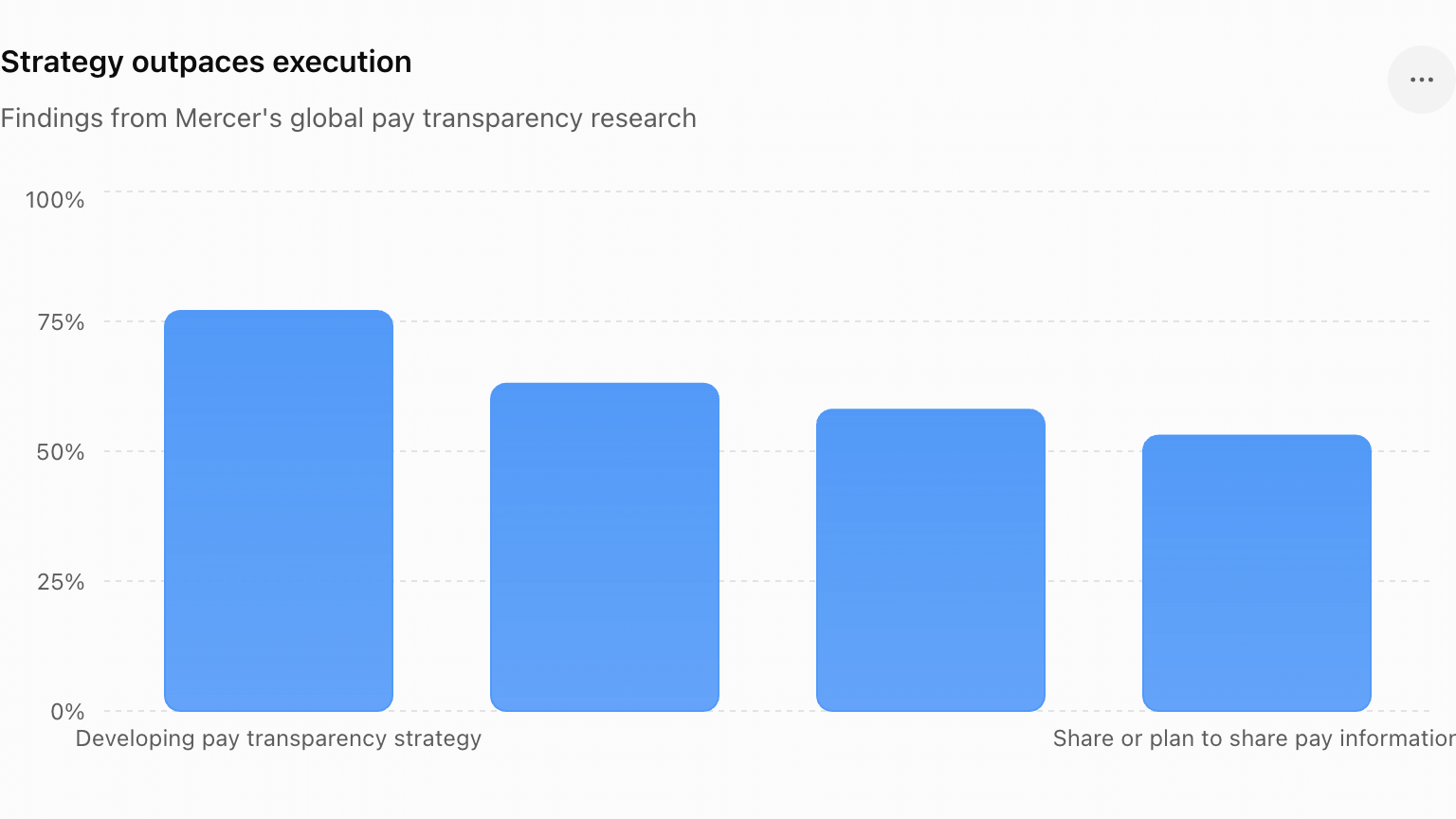
According to Mercer's Global Pay Transparency Report, published in 2024 and based on its global survey findings, 77% of organisations were developing a pay transparency strategy. The report showed that employers were increasingly treating transparency as a strategic workforce issue rather than a narrow compliance exercise.
Mercer's findings revealed several important shifts:
- 70% of organisations expected pay transparency to improve pay equity
- 63% viewed transparency as an expectation among candidates
- 58% considered it an expectation among employees
- 57% were enhancing job architecture for greater consistency
- 66% were testing pay gaps by job level or worker category
- 38% were making pay adjustments linked to equity, market alignment or pay compression concerns
The report also highlighted how organisations were investing in governance structures, leadership alignment and compensation data systems to support future transparency requirements.
Importantly, employers recognised that transparency extends beyond publishing salary ranges.
Employees increasingly wanted answers to three fundamental questions:
- How is pay determined?
- How does pay compare with peers?
- What are future earning opportunities?
Those expectations pushed HR teams to rethink compensation frameworks, communication strategies and reward philosophies.
Today's reality shows progress, but regulation remains the catalyst
If organisational investment was expected to create a culture of openness, recent evidence suggests legislation remains the stronger force.
A 2026 analysis by finddatasciencejobs.com, covering 2,347 live data science, machine learning and AI job postings across the United States and India, found a striking pattern.
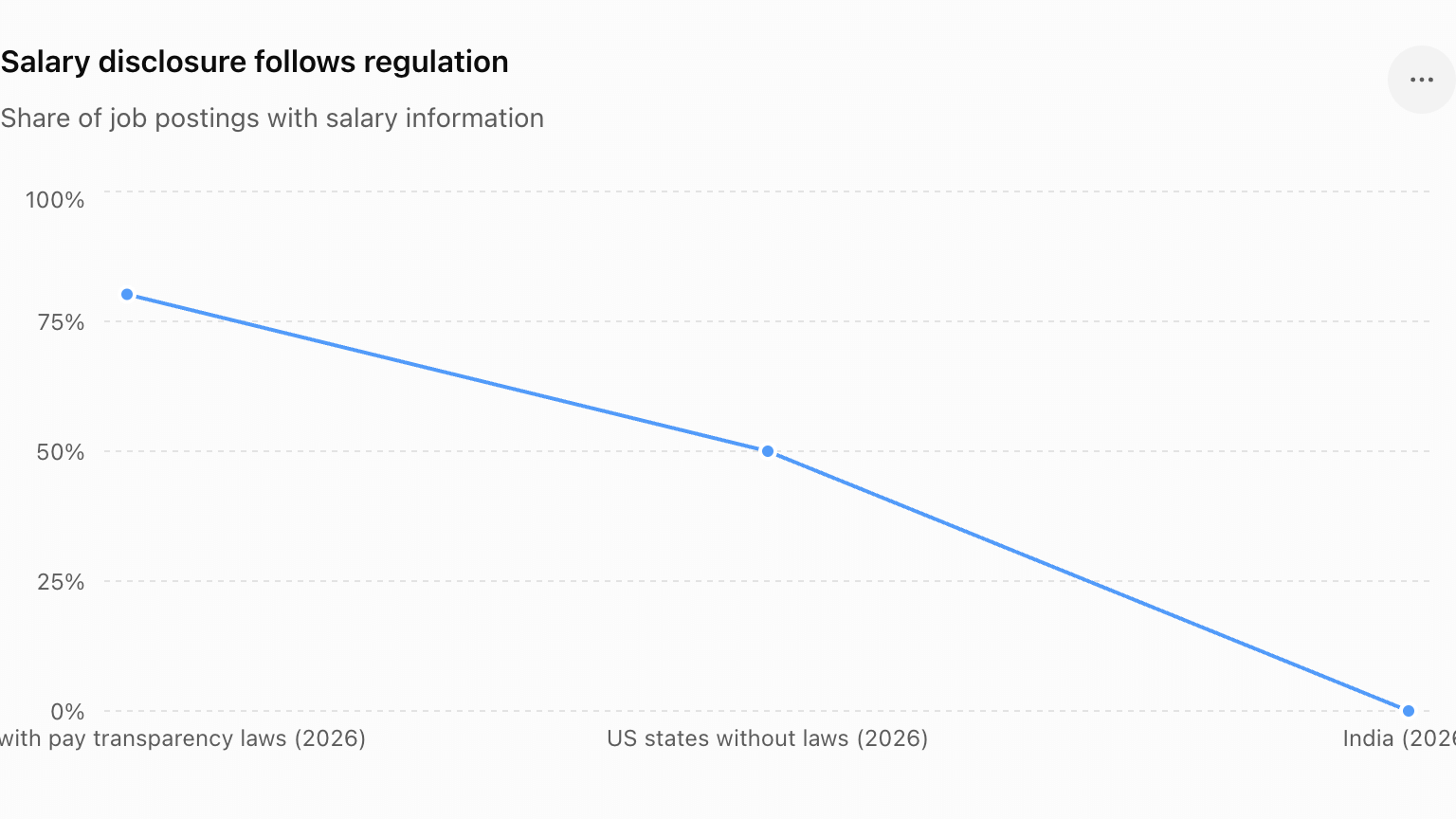
Salary ranges appeared in 80.2% of postings located in US jurisdictions with pay transparency laws, compared with 50% in states without disclosure requirements.
The most notable finding emerged from India.
Researchers analysed 263 India-based job listings across 77 multinational employers and found zero disclosed salary ranges. The dataset included global companies such as Mastercard, Barclays, Bosch, Gartner, Target, Adobe and eBay.
According to the study, some employers disclosed salaries consistently in the United States while providing no salary information for equivalent roles in India.
The findings suggest that organisational transparency often changes according to regulatory requirements rather than corporate values alone.
That conclusion aligns with observations made several years earlier by policymakers and researchers who argued that voluntary disclosure would likely remain inconsistent without legal obligations.
Transparency has become more common globally
Broader labour market data indicates genuine progress nonetheless.
Research published by the Federal Reserve Bank of Minneapolis in 2024 showed that job postings containing pay information increased dramatically between 2019 and 2023.
States introducing pay transparency laws experienced increases exceeding 50 percentage points in salary disclosure rates. Even states without direct transparency mandates recorded notable growth in pay disclosure.
Chart 1: Salary disclosure rises where laws exist
The researchers identified several benefits associated with greater transparency:
- Better matching between employers and candidates
- More efficient recruitment processes
- Stronger salary negotiation capabilities for workers
- Improved access to compensation information for women and minority groups
- Greater visibility into labour market opportunities
The study also noted that workers with limited access to compensation information often benefit most from transparent job postings.
For HR leaders, this represents one of the clearest indicators that transparency initiatives have delivered measurable value.
The bigger challenge is turning disclosure into trust
Despite growing adoption, transparency remains a work in progress.
Mercer's research found that many organisations still lacked readiness for upcoming requirements. Understanding global legislation and educating leaders remained among the most significant implementation challenges.
Researchers cited by both the Federal Reserve Bank of Minneapolis and POLITICO also highlighted potential drawbacks. Greater visibility can trigger employee comparisons, increase scrutiny of compensation decisions and expose inconsistencies that organisations have historically managed informally.
Transparency, therefore, does not automatically create trust.
Chart 2: HR readiness versus implementation
Trust emerges when disclosure is supported by clear pay structures, consistent decision-making and credible explanations for differences in compensation.
That distinction increasingly defines the next phase of the transparency journey.
Verdict: Partial delivery, with regulation doing much of the heavy lifting
Five years ago, HR leaders promised that pay transparency would improve fairness, strengthen trust and modernise reward practices.
The evidence suggests meaningful progress has occurred. Organisations have invested in pay governance, expanded disclosure, reviewed pay gaps and built stronger compensation frameworks.
Yet the strongest gains appear where regulation created accountability.
Where laws require disclosure, transparency has accelerated. Where legal obligations remain absent, many employers continue to provide limited visibility into pay practices.
Author

Loading...