







HR Effectiveness
Nimish Kulshrestha on the biggest hiring mistake leaders must avoid






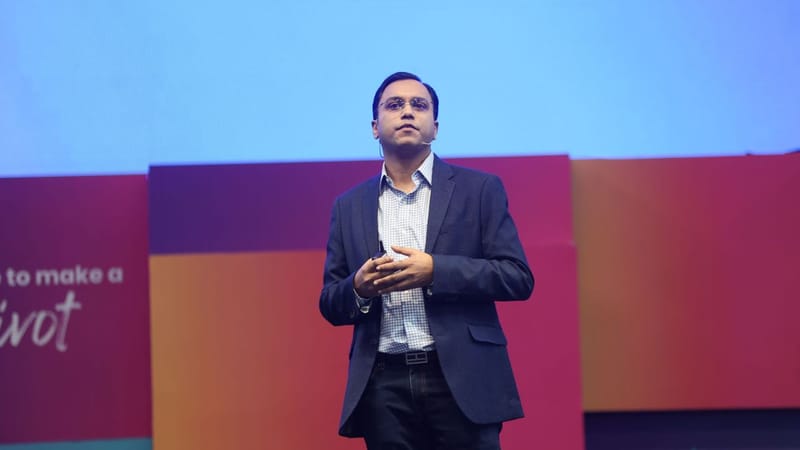
Nimish Kulshrestha warns leaders: buying AI recruitment beats costly in-house builds. Focus on ROI, data, and flexibility.
At People Matters TechHR 2025, Nimish Kulshrestha, Executive Vice President & Product Head at Naukri.com, delivered a clear message to HR and business leaders about the pitfalls of building AI recruitment tools in-house. His point was straightforward: many organisations overestimate their ability to develop effective AI capabilities internally, when buying proven platforms often delivers better, faster, and more cost-effective results.
Drawing on over 20 years of experience working with AI across global companies, Kulshrestha cut through the noise of hype and quick-fix solutions to focus on what really matters—making thoughtful, strategic decisions that improve long-term hiring outcomes.
“Building AI factories isn’t easy. It’s costly, time-consuming, and success is never guaranteed,” he said. “Without the right data scale, infrastructure, and ongoing investment, companies risk pouring resources into projects that stall or fail.”
Why buying AI platforms often beats building them
Kulshrestha explained that AI for recruitment isn’t just another piece of software; it’s a constantly learning engine that improves with every interaction—each candidate profile updated, each application processed, every recruiter engagement fine-tuning the system’s intelligence.
This requires vast amounts of high-quality data—a challenge most organisations can’t realistically meet on their own. Using Naukri.com’s own AI platform as an example, he described a self-reinforcing ‘flywheel’ of millions of jobseekers and recruiters interacting daily, generating data that sharpens their algorithms continuously.
“This ongoing data advantage creates a barrier to entry for internal builds,” he said. “It’s about more than technology—it’s about the scale and quality of data powering the AI.”
For companies attempting to develop AI in-house, the road is long and uncertain, often marked by underestimating the complexities of data, operations, and continual improvements.
Looking through the ROI lens
Kulshrestha acknowledged that the drive to build AI internally often stems from a desire for control or prestige. However, he urged leaders to prioritise return on investment. “Are you really seeing measurable gains in hiring speed, quality, or candidate experience? AI demands ongoing resources, not just one-off spending.”
For businesses where AI capabilities are central to their core model, building in-house may be justified. But for most, he advised buying from providers with proven platforms, robust infrastructure, and a track record of continuous learning.
“This isn’t about avoiding innovation,” he added, “but about knowing where your organisation’s strengths lie. Leveraging specialised providers lets internal teams focus on strategy and people, while still benefiting from cutting-edge AI.”
He also stressed the need for humility in adopting AI, noting that its evolution remains unpredictable. “Despite all the excitement, experts agree the next five years could hold surprises. We need strategies that are flexible and grounded in measurable outcomes.”
Four takeaways for talent leaders
He boiled down his message into four practical imperatives:
-
Anchor AI investments in clear ROI metrics — don’t adopt technology just for the sake of it.
-
Understand the power of data — it’s the fuel behind effective AI.
-
Think compounding, not one-off — AI improves exponentially over time with real usage.
-
Stay humble about forecasts — be ready to adapt as AI’s real-world impact unfolds.
The recruitment risk no leader should ignore
Kulshrestha’s key warning: the biggest risk isn’t missing out on the latest AI tool but rushing into building in-house capabilities without the scale, expertise, or resources to make it work. Such missteps can lead to wasted investment and missed opportunities to attract the right talent.
As AI becomes an integral part of recruitment, his insights remind leaders that success depends on strategic clarity, honest evaluation of capabilities, and willingness to partner with established providers. Only then can AI deliver meaningful improvements in talent acquisition and business outcomes.
Topics
Author
Loading...