







HR Technology
Trust by design: Rethinking talent risk and integrity in a disrupted world






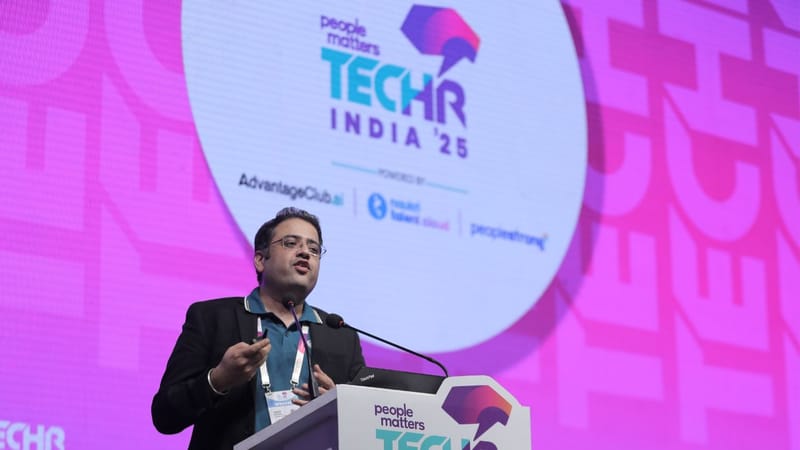
OnGrid’s Aman Duggal makes the case for embedding trust into every stage of the employee lifecycle, turning verification into a living system.
Trust has always been the invisible currency of business, painstakingly built, easily broken, and almost impossible to restore once lost. In today’s decentralised, digital-first workplace, that currency is under unprecedented strain. The shift to remote work, virtual hiring, and borderless teams has dissolved the physical boundaries that once anchored workplace relationships. What remains is a complex and fast-moving talent ecosystem where identity, integrity, and compliance risks can emerge and escalate in days rather than years.
This was the centre of a thought-provoking address by Aman Duggal, Director, Business Development, OnGrid, at Tech HR 2025. Aman explained that in such an environment, trust can no longer be treated as a compliance checkpoint before onboarding. It must instead be architected into the entire employee lifecycle, forming a living and adaptive system capable of protecting organisations not just at the point of hire but at every stage of engagement.
Why traditional verification frameworks fail in the new work order
Conventional digital verification networks were built for static, in-office work models. Given today’s borderless environment, where employees may be working remotely across multiple jurisdictions, often with minimal direct supervision, those systems are increasingly porous. Too often, organisations rely on professional references provided by candidates themselves, an approach prone to bias and manipulation.
Compounding the problem is the fact that many organisations focus their background verification processes solely on the pre-joining stage, ignoring the ongoing trust risks that emerge once an employee is onboarded. This narrow approach leaves blind spots that can translate into reputational damage, compliance failures, and costly turnover.
What does a trust-first talent strategy look like?
Aman highlighted the key components of a robust, trust-first talent strategy:
From episodic checks to continuous trust: Background verification (BGV) must move beyond a one-time pre-joining ritual to an embedded, lifecycle-wide practice. Continuous re-verification is essential to detect risks such as moonlighting, legal infractions, or compliance breaches that may arise post-hire.
Identity integrity as the first defence: Impersonation and credential fraud are rising sharply in remote and hybrid hiring. AI-powered solutions like OnGrid’s Identity Bot can capture and match candidate facial data in real time, flagging anomalies instantly, without adding recruiter overhead.
Instant verification at the top of the funnel: Using only a name and mobile number, instant pre-employment background profiling (PGP) can deliver identity, employment, and criminal checks within 30 seconds -- enabling faster, safer shortlisting while reducing early attrition.
Sector-wide applicability: From gig platforms onboarding thousands of drivers monthly to BFSI institutions screening tens of thousands of merchants, continuous verification enhances safety, strengthens compliance, and builds operational resilience.
Closing the loopholes: Traditional reference checks, often based on candidate-provided contacts, are no longer reliable. Instead, organisations should implement multi-layered verification, regulatory compliance checks (e.g., MSME status, CST filings, ITR verification), and AI-driven monitoring to proactively address emerging risks.
The rise of impersonation and identity fraud
One of the most striking challenges highlighted was the surge in identity fraud. In some cases, an entirely different individual attends interviews on behalf of the actual candidate, leveraging falsified credentials or “borrowed” professional histories. Such impersonation can slip past manual checks, only to be discovered after onboarding, by which point damage has already been done.
OnGrid’s AI-driven, real-time verification tools address this risk by capturing facial snapshots during the hiring process, matching them to a verified “anchor” image, and flagging anomalies instantly, all without disrupting the candidate experience. This enables organisations to protect against fraud seamlessly, without adding overhead for recruiters.
Operationalising trust for a dynamic workforce
As talent ecosystems become more distributed and technology-driven, the mechanisms for building and maintaining trust must evolve at the same pace. Static, pre-hire verification models are no longer sufficient in an environment where risks can emerge well after onboarding. OnGrid’s AI-enabled solutions exemplify how trust can be operationalised as an always-on capability, ensuring that organisations remain secure, compliant, and competitive in a workforce landscape that is changing faster than ever.
Author
Loading...